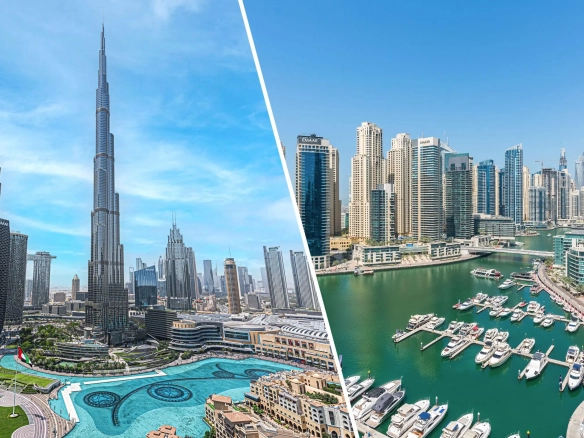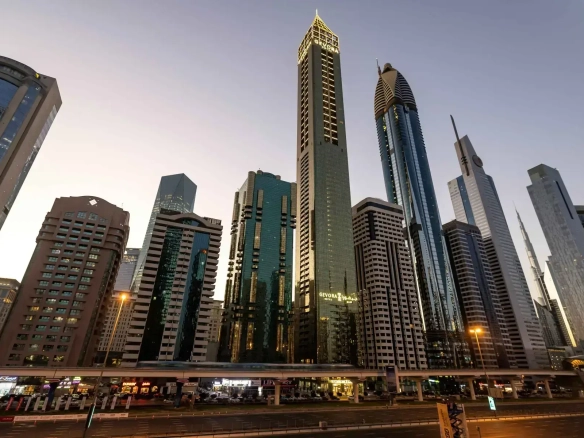

While prime waterfronts like Downtown Dubai and Palm Jumeirah remain primary targets for capital preservation, mid-market communities such as Jumeirah Village Circle (JVC) and Discovery Gardens continue to generate peak interest among yield-focused investors. Gross rental returns in these accessible districts regularly range between 7% and 9.5%. However, sophisticated buyers are increasingly looking past headline gross figures to evaluate net yields, taking into account service charges, property management fees, and community maintenance costs to protect long-term cash flow.
The Surge in Ultra-Prime Investments Beyond Traditional Hotspots
Dubai’s ultra-luxury segment continues to demonstrate strong momentum, recording hundreds of sales exceeding the $10 million mark in the first half of the year. While legacy locations maintain premium price points per square foot, high-net-worth capital is steadily diversifying into new luxury developments like Dubai Islands and inland master-planned estates. This shift highlights a growing demand for lower-density living, customized architectural layouts, and secluded residential enclaves tailored for long-term family occupancy.
Flexible Payment Plans Driving Rent-to-Own Transitions
The transition of Dubai from a investor-heavy market to a primary home marketplace has been significantly accelerated by developer innovation in financing options. Extended post-handover payment plans and reduced initial deposit structures are enabling middle-income residents to convert monthly rental expenses into home equity. By lowering the entry barrier for end-users, developers are building a highly resilient market foundation backed by genuine residential occupancy rather than speculative flips.
Infrastructure Expansion as a Capital Growth Catalyst
Capital appreciation strategies are becoming closely tied to major municipal infrastructure projects and urban transport links. Suburban zones near expanding transit corridors and strategic logistics hubs are seeing increased interest from long-term investors. Buying into these emerging corridors allows investors to secure lower entry valuations while positioning their portfolios to capture capital growth as surrounding commercial centers, schools, and retail hubs reach completion.
Evaluating Developer Track Records in an Off-Plan Driven Market
With off-plan developments accounting for the majority of market transactions, developer selection remains the most critical component of risk management. Buyers are prioritizing builders with strong balance sheets, transparent construction schedules, and proven records of timely handover. Due diligence on escrow account compliance and historical build quality ensures that projected yield timelines are maintained without unexpected delays or unexpected post-handover maintenance costs.
Global Capital Security in a Tax-Efficient Environment
In an environment of shifting international tax policies and financial volatility, Dubai’s tax-neutral real estate framework and currency stability continue to offer a safe haven for international capital. The combination of zero property tax, peg-hedged stability, and robust legal protections enforced by the Dubai Land Department ensures that foreign investors can deploy capital with confidence, enjoying both operational clarity and uninterrupted income repatriation.