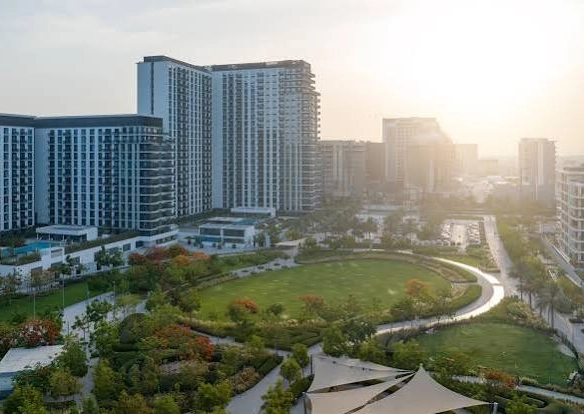
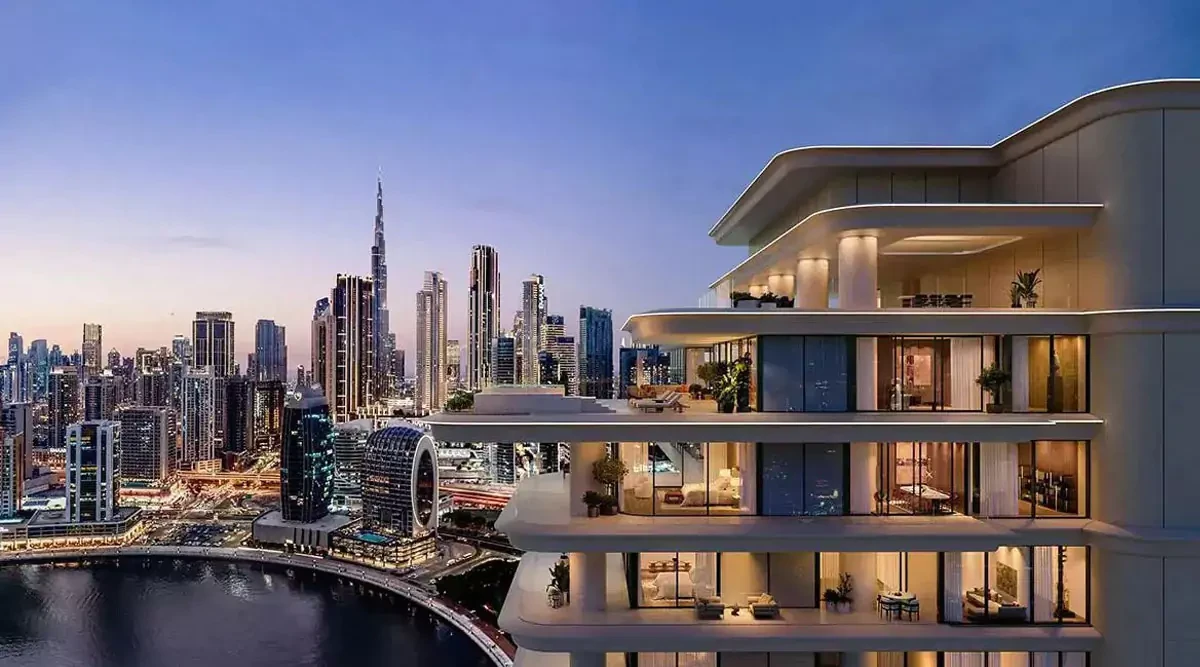
Dubai’s high-end residential market has moved well beyond conventional luxury apartments. Today’s Dubai luxury real estate market includes beachfront mansions, penthouses occupying entire floors, branded residences with hotel-level services, golf-course villas, waterfront estates and highly limited homes designed for ultra-high-net-worth buyers.
The scale of capital entering this segment is significant.
Dubai Land Department reported AED87.71 billion in luxury real estate investments during Q1 2026, representing a 26% year-on-year increase. Foreign real estate investment across the wider Dubai market reached AED148.35 billion during the same quarter.
Activity at the very top of the market has also remained substantial. Knight Frank recorded 296 Dubai residential sales above US$10 million during the first half of 2026, worth a combined US$5.1 billion. That value was 14% higher than in H1 2025.
Those numbers demonstrate the depth of demand, but luxury property should not be bought simply because the wider market has performed strongly.
At this level, differences between two properties can amount to millions of dirhams. Waterfront position, plot size, privacy, architecture, floor height, view protection, brand affiliation, service charges, developer quality and future competing supply can all affect value.
This guide explains how to approach Dubai luxury property as both a home and an investment.
What Is Considered Luxury Real Estate in Dubai?
There is no single price at which every Dubai property automatically becomes “luxury.”
The term describes a combination of factors rather than price alone.
A genuine luxury property may distinguish itself through:
- prime location
- scarcity
- waterfront or beachfront position
- large internal or plot area
- exceptional architecture
- high-quality materials
- privacy
- unobstructed views
- limited inventory
- private facilities
- exceptional building services
- internationally recognised branding
- strong developer reputation
A large apartment with an expensive price tag is therefore not necessarily a prime asset.
Likewise, a comparatively smaller residence in an extremely scarce location can command a substantial premium because buyers are paying for characteristics that are difficult to replicate.
Prime and super-prime property
Property consultancies frequently use terms such as prime, super-prime and ultra-prime when analysing the upper end of Dubai’s residential market.
There is no universal official DLD price threshold separating these categories.
One useful market indicator is the US$10 million-plus segment tracked by Knight Frank. In H1 2026, 296 homes above this level changed hands in Dubai, including 26 transactions above US$25 million.
These thresholds are useful for studying market activity, but buyers should evaluate property fundamentals rather than relying on labels.
Dubai’s Luxury Property Market in 2026
Luxury residential property has become an important component of Dubai’s wider real estate market.
DLD reported AED87.71 billion in luxury real estate investment in Q1 2026, up 26% from the corresponding period a year earlier.
Knight Frank’s analysis provides another perspective.
During H1 2026:
- 296 homes sold for more than US$10 million
- 165 of those transactions occurred in Q1
- 131 occurred in Q2
- 26 homes sold for more than US$25 million
- US$10 million-plus sales totalled US$5.1 billion
Demand has also coincided with significant longer-term price growth. Knight Frank’s Wealth Report 2026 states that Dubai luxury residential values increased 25.1% during 2025, making Dubai one of the strongest-performing luxury markets in the report for that period.
However, buyers should not extrapolate historical growth indefinitely.
Knight Frank noted in July 2026 that while prime neighbourhoods had demonstrated greater resilience than the mainstream market, there were also signs of price weakening amid regional uncertainty.
That distinction matters.
A record number of high-value transactions and rising long-term prices do not mean buyers should disregard valuation or negotiate less carefully.
Why Wealthy Buyers Choose Dubai Luxury Property
Different buyers have different motivations.
For some, Dubai is a primary residence. Others use their property seasonally, hold it as part of an international property portfolio or combine lifestyle use with investment objectives.
International ownership
Foreign residents and non-residents can acquire qualifying freehold property in areas designated for foreign ownership in Dubai.
This makes many of Dubai’s most important luxury communities accessible to international purchasers.
High-quality residential choice
Dubai’s upper residential market ranges from beachfront villas to central penthouses, branded residences, golf-course mansions and newly developed waterfront estates.
This gives buyers significantly different property formats rather than one standard luxury product.
Global buyer market
The scale of foreign investment provides evidence that the market has a substantial international buyer base. Foreign investment across Dubai real estate reached AED148.35 billion in Q1 2026.
A broad international buyer pool can be important for resale liquidity, although liquidity will still differ considerably between individual properties.
Residency planning
Qualifying property ownership can also support an application for Dubai’s real estate investor Golden Visa where current requirements are satisfied.
Residency should nevertheless be treated as an additional consideration rather than the sole reason to buy a multimillion-dirham property.
The Best Areas for Luxury Real Estate in Dubai
Different prime communities offer different combinations of scarcity, privacy, waterfront access, views and investment characteristics.
The right area therefore depends on the buyer.
Palm Jumeirah
Palm Jumeirah remains one of Dubai’s most internationally recognised luxury residential locations.
Its appeal comes from genuine waterfront scarcity.
Buyers can find:
- beachfront villas
- signature villas
- luxury apartments
- penthouses
- hotel residences
- branded residences
- waterfront mansions
Knight Frank recorded 50 residential transactions above US$10 million on Palm Jumeirah during H1 2026, placing it among Dubai’s busiest locations for ultra-high-value homes.
Why buyers choose Palm Jumeirah
The strongest properties can provide:
- direct beach access
- private pools
- sea views
- marina or skyline views
- substantial privacy
- resort facilities
- international recognition
What buyers should check
Not every Palm property has equal scarcity.
Consider:
- exact frond or building
- plot position
- beach frontage
- water depth and beach condition
- view direction
- neighbouring construction
- renovation quality
- plot size
- built-up area
- traffic accessibility
- service charges for apartments
For villas, substantial refurbishment costs can also change the economics of a seemingly attractive resale purchase.
Best suited to: Waterfront buyers, high-net-worth owner-occupiers and investors seeking an internationally recognised luxury address.
Dubai Hills Estate
Dubai Hills Estate has become increasingly important at the upper end of the villa market.
Knight Frank recorded 51 homes above US$10 million in Dubai Hills Estate during H1 2026, slightly more than Palm Jumeirah’s 50 and the highest total among the communities identified in its H1 analysis.
The community offers a different form of luxury from beachfront Dubai.
Buyers can find:
- golf-course mansions
- large custom residences
- premium villas
- luxury apartments
- branded or design-led projects
Why Dubai Hills attracts luxury buyers
Its appeal can include:
- large plots
- newer housing stock
- golf-course positioning
- landscaped surroundings
- family-oriented residential environment
- significant villa choice
For buyers who prioritise space over beachfront living, Dubai Hills can offer a compelling alternative to Palm Jumeirah.
What to check
With villas, compare:
- plot size
- golf-course frontage
- orientation
- architecture
- privacy
- landscaping
- road position
- renovation or construction quality
- neighbouring plots
Two villas in the same subcommunity may differ enormously in value because of these factors.
Best suited to: Families, villa buyers and investors targeting Dubai’s premium land-based residential market.
Emirates Hills
Emirates Hills is one of Dubai’s established mansion communities.
Unlike high-density apartment districts, its appeal is built around large plots, bespoke residences, privacy and golf-course surroundings.
Many homes have been individually designed rather than produced as identical units.
That makes valuation more complicated.
How to evaluate Emirates Hills property
Price-per-square-foot comparisons should be used cautiously.
A buyer should also compare:
- land area
- built-up area
- plot position
- architecture
- construction quality
- age
- renovation history
- golf-course frontage
- landscaping
- privacy
A substantially renovated or architecturally important villa may not be directly comparable to an older residence even when the plots appear similar.
Best suited to: Buyers prioritising privacy, large plots and individually designed mansions.
Jumeirah Bay Island
Jumeirah Bay Island represents one of Dubai’s most scarcity-driven luxury markets.
Its island setting and limited land supply create a fundamentally different proposition from large master-planned apartment communities.
At this level, the value of the land itself can be a major part of the investment case.
Buyers should pay particular attention to:
- exact plot
- water position
- view
- frontage
- privacy
- architecture
- development potential
- neighbouring plots
Best suited to: Ultra-high-net-worth buyers seeking scarce island property and extremely low-density luxury.
Downtown Dubai
Downtown Dubai delivers luxury through centrality rather than private beachfront land.
The area’s high-end segment includes:
- premium apartments
- penthouses
- duplex residences
- branded homes
- serviced residences
The strongest units can offer exceptional skyline, fountain or landmark views.
What matters most in Downtown
For premium apartments, the specific unit can matter almost as much as the building.
Compare:
- floor height
- view
- whether the view can be obstructed later
- internal area
- terrace size
- ceiling height
- building management
- services
- lift access
- parking
- service charges
An extraordinary penthouse and a conventional apartment in the same district should not be analysed using identical valuation assumptions.
Best suited to: Buyers wanting central Dubai, high-rise luxury and premium urban living.
Dubai Marina
Dubai Marina has a mature luxury apartment market and established waterfront infrastructure.
The upper end includes large penthouses, full-floor residences and premium waterfront towers.
Its established nature is an advantage for buyers who want to assess actual surroundings rather than purchase entirely into a future master plan.
However, building age varies widely.
What luxury buyers should examine
Pay attention to:
- building age
- management
- refurbishment
- lift ratios
- parking
- marina or sea view
- noise
- service charges
- unit size
- future surrounding construction
Best suited to: Buyers seeking mature waterfront high-rise living.
Palm Jebel Ali
Palm Jebel Ali has emerged as a significant future luxury villa market.
Knight Frank recorded 40 US$10 million-plus transactions there during H1 2026, making it the third-highest community in its ranking behind Dubai Hills Estate and Palm Jumeirah.
Because Palm Jebel Ali is still developing, buyers are making a different type of decision from purchasing a completed Palm Jumeirah villa.
The investment thesis depends more heavily on:
- future completion
- developer execution
- infrastructure
- eventual community maturity
- beachfront characteristics
- surrounding supply
It should therefore be evaluated as a long-term luxury development rather than as an already mature residential location.
Best suited to: Buyers comfortable with a longer investment horizon and future waterfront development.
Dubai Islands
Dubai Islands is another location where luxury beachfront and resort-oriented residential supply is emerging.
The wider proposition includes waterfront residences, villas, apartments and branded projects.
Because much of the luxury inventory is new or off-plan, buyers should carefully compare:
- developer
- completion schedule
- exact island and location
- beach frontage
- surrounding future development
- competing projects
- payment structure
Best suited to: Buyers seeking new-generation waterfront and resort-oriented property.
Luxury Villas vs Luxury Apartments
The decision between a villa and apartment has a significant effect on both lifestyle and investment characteristics.
| Factor | Luxury Villa | Luxury Apartment |
|---|---|---|
| Privacy | Usually higher | Depends on development |
| Private land | Often included | No separate plot |
| Private pool/garden | Common | Usually shared facilities |
| Maintenance | Potentially substantial | More centralised |
| Service charges | Community dependent | Can be significant |
| Security/concierge | Varies | Often extensive |
| View | Plot dependent | Premium floors can command major premiums |
| Scarcity | Prime plots can be exceptionally scarce | Scarcity depends on building/unit |
| Management | More owner responsibility | Often building-managed |
| Lock-and-leave convenience | Lower | Usually stronger |
Neither is inherently better.
A villa may suit a family seeking land, privacy and outdoor space.
A penthouse may suit an international buyer who wants security, concierge services and the ability to leave the property unattended for extended periods.
Branded Residences in Dubai
Branded residences have become increasingly important within Dubai’s luxury market.
A branded residence is generally a privately owned residential property associated with a recognised hotel, hospitality, design or lifestyle brand, often with professionally managed services.
Knight Frank described Dubai in early 2026 as the global capital of branded residences, with approximately 39,000 units of supply.
Savills has also identified Dubai and the wider Gulf as major drivers of branded-residence growth.
Why buyers choose branded residences
Potential attractions include:
- recognised brand
- concierge
- housekeeping options
- valet
- wellness facilities
- hotel-level amenities
- professional management
- consistent design standards
- lock-and-leave convenience
But the brand alone should not determine the purchase.
Questions to ask before buying a branded residence
Check:
- Who owns the brand?
- Who operates the property?
- How long does the branding agreement last?
- What happens if the operator changes?
- What services are compulsory?
- What are the annual service charges?
- Are there additional management fees?
- Can the owner rent independently?
- Is a rental programme available?
- What restrictions apply to personal use?
- Does the property command a justified premium over non-branded alternatives?
Brand recognition can improve desirability, but a very large acquisition premium can also reduce future return if buyers overpay.
Waterfront Property: Why Scarcity Matters
A large portion of Dubai’s ultra-prime market is connected to water.
But “waterfront” can mean very different things.
It may describe:
- direct private beach
- open-sea frontage
- canal frontage
- marina frontage
- lagoon frontage
- partial water view
- elevated sea view without direct access
These should not carry the same valuation.
Questions for waterfront buyers
Confirm:
- Is the water directly accessible?
- Is the beach private?
- Can the view be built out?
- What is planned on neighbouring plots?
- Is a marina nearby?
- Are there restrictions on boats or private docks?
- What are the erosion and maintenance arrangements?
- Is the waterfront natural, reclaimed or artificial?
At the very high end, a truly irreplaceable waterfront position can be more important to long-term value than interior decoration.
Interiors can be rebuilt. Land position cannot.
Ready Luxury Property vs Off-Plan
Dubai’s luxury market includes both completed homes and major off-plan developments.
Buying ready luxury property
A completed residence gives buyers the advantage of inspecting exactly what they are purchasing.
You can assess:
- architecture
- workmanship
- view
- actual surroundings
- noise
- privacy
- building condition
- amenities
- landscaping
- service charges
This is especially valuable when paying a substantial premium for physical characteristics.
Buying luxury off-plan property
Off-plan can give buyers access to newly launched properties and sometimes a wider selection of prime units.
But it introduces additional variables.
Check:
- developer
- project registration
- escrow account
- construction progress
- exact specifications
- handover provisions
- payment schedule
- permitted design changes
- service-charge expectations
- future supply
- resale restrictions
DLD requires qualifying off-plan sales to be provisionally registered through its framework, and its Initial Sale Registration service currently lists a 2% registration charge against the seller and 2% against the purchaser.
High purchase price does not eliminate off-plan risk.
How to Buy Luxury Property in Dubai
Luxury transactions deserve more due diligence, not less.
Step 1: Define the purpose
Determine whether the property will be:
- a primary home
- a second home
- a seasonal residence
- a long-term investment
- a rental asset
- part of a wider family property portfolio
- a combination of these
Your objective influences the right location and property type.
Step 2: Establish the full budget
A AED20 million budget should not automatically mean purchasing a property priced at AED20 million.
Allow for:
- DLD registration
- trustee charges
- brokerage where applicable
- professional inspections
- legal advice where required
- mortgage expenses
- refurbishment
- furnishing
- service charges
- maintenance
- insurance
- cash reserves
For luxury villas, renovation and fit-out costs can be particularly significant.
Step 3: Choose the area based on priorities
A beachfront Palm Jumeirah villa and an Emirates Hills mansion may occupy a similar price range but offer fundamentally different lifestyles.
Likewise, a Downtown penthouse provides something very different from a Dubai Hills golf-course villa.
Start with the desired property characteristics rather than simply searching everything within the budget.
Step 4: Compare genuine alternatives
Luxury properties can be difficult to value because there may be few directly comparable transactions.
Look at:
- recent transactions
- plot size
- built-up area
- view
- waterfront access
- condition
- architecture
- floor
- brand
- service level
- scarcity
Do not compare properties merely because they have the same number of bedrooms.
Step 5: Verify the broker
DLD provides official services for checking licensed real estate brokers and brokerage companies.
This remains important regardless of how valuable the transaction is.
Step 6: Verify title and property status
Dubai Land Department provides title-deed and property-status verification services.
For a major acquisition, independent legal review may also be appropriate.
Step 7: Conduct physical due diligence
For a high-value resale property, consider professional inspection.
This becomes particularly important for:
- large villas
- extensively renovated properties
- waterfront homes
- older residences
- custom-built mansions
Finishes that appear impressive during a viewing do not necessarily demonstrate the quality of mechanical, electrical, plumbing, waterproofing or structural work.
Step 8: Review the contract
Do not treat the contractual documents as administrative paperwork.
Check:
- property description
- price
- deposit
- included furnishings
- art or decorative items
- transfer deadline
- financing conditions
- vacant possession
- existing tenancy
- default provisions
- representations made about the property
Where significant bespoke terms exist, independent legal advice can be appropriate.
Step 9: Complete DLD registration
DLD’s Property Sale Registration service currently lists a 2% registration fee for the seller and 2% for the purchaser, plus title, mapping and Registration Trustee charges.
The transaction is completed through the applicable authorised DLD process and an electronic title deed is issued.
How Much Does It Cost to Buy Luxury Property in Dubai?
The same registration framework applies even when the property price is very high.
DLD currently lists:
| Official charge | Current DLD-listed amount |
| Seller registration charge | 2% of sale value |
| Purchaser registration charge | 2% of sale value |
| Combined registration charge | 4% |
| Title deed certificate | AED250 |
| Apartment/villa map | AED250 |
| Knowledge fee | AED10 |
| Innovation fee | AED10 |
| Registration Trustee fee for AED500,000+ sale | AED4,000 + VAT |
Additional land-map charges can apply depending on property type.
The 4% combined registration charge becomes substantial at luxury price points.
For example, on a hypothetical AED25 million transaction:
4% = AED1 million
DLD officially lists this as 2% against the seller and 2% against the buyer. Contractual allocation between the parties should be checked within the actual transaction documentation.
Other luxury buying costs
Depending on the property, additional expenditure can include:
- broker commission
- legal advice
- technical inspection
- valuation
- mortgage fees
- insurance
- interior design
- furniture
- renovation
- landscaping
- smart-home upgrades
- property management
At the super-prime level, refurbishment can materially alter the total acquisition cost.
Luxury Property Service Charges
Service charges deserve particular attention when purchasing premium apartments and branded residences.
DLD’s Service Charge Index allows buyers and owners to check approved service fees for jointly owned property.
Luxury buildings can have extensive common facilities such as:
- concierge teams
- pools
- spas
- gyms
- private lounges
- valet
- landscaped areas
- security
- elevators
- beachfront facilities
These services cost money to operate.
A lower-priced building with exceptionally high recurring charges may ultimately cost more to own than expected.
Why branded residence charges need extra attention
Branded residences may involve more extensive service offerings than standard apartment buildings.
Before purchasing, distinguish between:
- mandatory service charges
- optional hotel services
- management fees
- rental-programme fees
- housekeeping
- utility arrangements
- reserve-fund contributions
Ask for the actual fee structure rather than relying on a generic estimate.
Financing Luxury Real Estate in Dubai
High-net-worth buyers do not necessarily purchase entirely in cash.
Mortgage finance can be used where the buyer and property satisfy lender requirements.
For expatriates, CBUAE rules set maximum loan-to-value ratios, including a 60% ceiling for second/subsequent homes or investment properties, while off-plan mortgages are capped at 50%.
These are maximum regulatory limits, not guaranteed loan amounts.
Banks can approve less depending on:
- borrower profile
- residency
- income
- liabilities
- age
- property valuation
- property type
- lender policy
Mortgage registration
DLD currently charges 0.25% of the mortgage value for an ordinary mortgage, with additional applicable registration and service-partner charges.
Luxury buyers using leverage should incorporate financing expenses into the total cost rather than focusing solely on the cash deposit.
Buying Luxury Property as a Foreigner
Foreign residents and non-residents can acquire qualifying freehold property within designated Dubai areas.
A foreign buyer therefore does not have to become a UAE resident before acquiring qualifying Dubai property.
DLD’s property registration framework accommodates non-resident foreign buyers through passport documentation.
International buyers should also consider
Cross-border buyers may need professional advice regarding:
- tax residence
- succession
- foreign asset reporting
- source of funds
- company ownership
- estate planning
- currency exposure
Dubai property rules are only one part of an international buyer’s legal and financial position.
Luxury Property and the Dubai Golden Visa
Luxury-property buyers may qualify for the UAE’s long-term real estate investor residence route.
DLD’s current Golden Visa service states that a property investor can apply where qualifying property value is AED2 million or more, subject to the applicable conditions. One or more properties can be used where the requirements are met.
The service provides a renewable 10-year residence permit.
DLD also states that mortgaged property can potentially qualify, subject to bank documentation confirming the relevant financial position.
Do not buy solely for the visa
Many luxury properties comfortably exceed the minimum qualifying value.
That does not mean visa considerations should determine which property to purchase.
First select an asset that makes sense as:
- a residence
- an investment
- a wealth-holding asset
Then consider the residency benefits.
Immigration requirements can change, so verify eligibility before relying on a property purchase for residency planning.
How to Evaluate a Luxury Villa
At the upper end of the villa market, conventional apartment-style comparisons become less useful.
Plot size
Land scarcity can be one of the strongest value drivers.
Compare both absolute plot size and the quality of its position.
Built-up area
A very large house is not automatically better.
Efficient planning, room proportions and usable space matter.
Architecture
Well-designed residences can command premiums, particularly when architecture is difficult to replicate.
However, buyers should distinguish genuine architectural quality from expensive finishes alone.
Privacy
Check sightlines from:
- neighbouring villas
- roads
- pathways
- towers
- beaches
Privacy can materially affect the desirability of an ultra-prime residence.
Waterfront frontage
For beachfront homes, compare actual frontage and water access.
A view of the water and direct waterfront ownership are different propositions.
Construction quality
Luxury fit-outs can conceal defects.
For expensive villas, professional technical inspection may be worthwhile.
Renovation potential
A dated villa on an exceptional plot can sometimes have stronger underlying value than a beautifully renovated property on an inferior plot.
Land cannot be relocated.
Interiors can.
How to Evaluate a Luxury Apartment or Penthouse
The most expensive apartment in a building is not automatically its best unit.
Floor level
Higher floors often command premiums, but the value depends on view and surrounding development.
View protection
Ask what can legally or practically be built nearby.
An exceptional view can be one of the property’s most valuable characteristics.
Layout
Very large apartments can still have inefficient plans.
Evaluate usable space rather than headline square footage alone.
Private lift access
For ultra-luxury buyers, private or controlled lift access can materially improve privacy.
Terrace and outdoor space
Large usable terraces can differentiate otherwise similar residences.
Parking
Check the number, position and access to allocated spaces.
For super-prime property, insufficient parking can be a genuine drawback.
Building services
Assess:
- concierge
- security
- valet
- housekeeping
- wellness facilities
- building management
- private amenities
Service charges
High-rise luxury comes with recurring operating costs. Verify approved charges through DLD where applicable.
Luxury Property as an Investment
Luxury-property economics differ from mass-market apartment investment.
A buyer paying AED40 million for a villa is often not pursuing the same strategy as somebody buying a studio primarily for rental yield.
Rental yield may be lower
Prime and ultra-prime property can produce lower percentage rental yields because the purchase price is very high.
That does not automatically make the investment poor.
The investment thesis may instead depend partly on:
- asset scarcity
- capital preservation
- long-term appreciation
- personal use
- international demand
Rental demand is narrower
The tenant pool for an AED1 million annual rental is naturally smaller than the tenant pool for a mainstream apartment.
Vacancy planning becomes important.
Scarcity can matter more
A truly unique property may have few direct substitutes.
Prime beachfront plots, exceptional penthouses and low-density mansion communities can behave differently from high-volume apartment markets.
Liquidity can be uneven
A luxury property may be highly desirable while still taking time to sell.
The future buyer pool can be small at very high price levels.
That should be incorporated into the investment horizon.
Understanding Resale Liquidity
One of the most overlooked luxury-property questions is:
Who will buy this property from me later?
A property’s eventual resale audience might include:
- international HNWIs
- UAE residents
- family offices
- entrepreneurs
- executives
- lifestyle purchasers
- investors
The broader that genuine audience, the easier resale may be.
Factors that can improve liquidity
These include:
- recognisable location
- sensible layout
- protected view
- scarce plot
- strong developer
- respected building
- manageable ownership costs
- exceptional condition
Factors that can reduce liquidity
These may include:
- extreme customisation
- obsolete interiors
- poor road position
- weak view
- very high service charges
- unusual layout
- excessive price relative to alternatives
Luxury does not automatically mean liquid.
Due Diligence for High-Value Property
Large transactions deserve institutional-quality discipline.
Verify the broker
Use DLD’s licensed broker services.
Verify the title
Use DLD’s official title verification tools.
Check property status
Confirm relevant property information through official channels.
Review service charges
DLD provides approved service-charge information for jointly owned properties.
Inspect the physical property
Consider an independent technical specialist for major villas or older luxury homes.
Verify renovations
Where major structural changes or extensions have been completed, confirm appropriate documentation and approvals where applicable.
Understand what is included
Luxury properties may be marketed fully furnished.
Establish precisely what remains after transfer.
Do not assume that:
- artwork
- sculptures
- loose furniture
- designer accessories
- electronics
are included unless the contract says so.
Confirm payment details
Luxury transactions involve substantial transfers.
Verify banking instructions independently and through authenticated channels.
Never rely solely on an unexpected email or messaging-app instruction changing account details.
New-Build Luxury vs Resale Luxury
Both can work, but the risk profile is different.
New-build advantages
Potential advantages include:
- contemporary design
- new building systems
- modern amenities
- latest layouts
- first occupancy
- current aesthetic standards
New-build considerations
Check:
- developer
- future supply
- actual completion
- service costs
- build quality
- surrounding construction
Resale advantages
A resale property gives you direct visibility over the actual asset.
You can assess:
- final view
- completed landscaping
- neighbourhood maturity
- real building quality
- actual service charges
- property condition
Resale considerations
Older luxury property may require extensive modernisation.
A low acquisition price can be misleading if major refurbishment is necessary.
Renovating a Luxury Dubai Property
Some of Dubai’s most valuable homes sit on exceptional plots but were constructed years ago.
That creates opportunities for buyers willing to renovate.
Before buying a renovation project, understand:
- structural condition
- permissible alterations
- developer/community approvals
- architectural restrictions
- MEP condition
- pool condition
- landscaping
- smart-home systems
- expected construction period
- total fit-out cost
Avoid treating the renovation budget as an afterthought.
A major luxury renovation can be a substantial project in its own right.
Common Luxury Property Buying Mistakes
Buying the brand instead of the property
A prestigious name does not excuse an inferior unit, weak view or excessive price.
Paying for interior decoration
Furniture and finishes can be changed.
Location, plot and view cannot.
Assuming expensive means scarce
Some luxury developments contain substantial inventory.
Understand the true supply.
Ignoring service charges
High-end amenities have ongoing operating costs.
Looking only at price per square foot
Luxury property can contain characteristics that make simple averages misleading.
Assuming recent appreciation will continue
Dubai’s luxury market has delivered strong historical performance, but future appreciation is not guaranteed. Knight Frank has also highlighted signs of price softening in parts of the market during 2026.
Buying off-plan without analysing future supply
A spectacular launch does not tell you how many competing luxury units may exist at handover.
Over-customising an investment property
A highly personal design can reduce the future buyer pool.
Ignoring exit liquidity
A AED100 million home does not have the same number of potential purchasers as a mainstream apartment.
Skipping technical inspection
An expensive property can still have construction or maintenance problems.
Luxury Property Buyer Checklist
Before committing to a Dubai luxury property, confirm:
- Is the ownership structure appropriate?
- Is the location genuinely scarce?
- Is the asking price supported by relevant comparables?
- Is the plot or unit positioning among the best in the development?
- Is the view protected?
- What future construction is planned nearby?
- Is the broker licensed?
- Has the title been verified?
- What are the service charges?
- Is the property mortgaged?
- What exactly is included with the sale?
- Has the property been technically inspected where appropriate?
- Are renovations properly documented?
- What are the total acquisition costs?
- If off-plan, is the project correctly registered?
- What are the payment and handover obligations?
- Who is the likely future buyer?
- How long could resale realistically take?
- Does the investment still make sense without aggressive capital-growth assumptions?
A luxury purchase should become clearer after due diligence, not more complicated.
Frequently Asked Questions
What qualifies as luxury real estate in Dubai?
There is no single official price threshold. Luxury property is usually differentiated through location, scarcity, size, architecture, quality, privacy, views, waterfront position, services and branding. Industry research also commonly tracks US$10 million-plus transactions when analysing Dubai’s ultra-high-value market.
How strong is Dubai’s luxury property market?
DLD recorded AED87.71 billion in luxury real estate investment in Q1 2026, up 26% year on year. Knight Frank recorded 296 Dubai home sales above US$10 million during H1 2026, with a combined value of US$5.1 billion.
Where are the best luxury properties in Dubai?
Major luxury markets include Palm Jumeirah, Dubai Hills Estate, Emirates Hills, Jumeirah Bay Island, Downtown Dubai and Dubai Marina, with newer luxury development also occurring in locations such as Palm Jebel Ali and Dubai Islands. The best location depends on whether the priority is beachfront living, privacy, centrality, large plots or investment.
Which area recorded the most US$10 million-plus sales in H1 2026?
Knight Frank reported 51 such transactions in Dubai Hills Estate, followed by Palm Jumeirah with 50 and Palm Jebel Ali with 40.
Can foreigners buy luxury property in Dubai?
Yes. Foreign residents and non-residents can own qualifying properties within areas designated for foreign ownership.
Can a foreign buyer purchase a Dubai luxury property without residency?
Yes. Qualifying foreign ownership does not generally require the purchaser to become a UAE resident first. DLD’s sale-registration process accommodates non-resident foreign buyers.
How much are DLD fees on a luxury property?
DLD currently lists 2% of sale value for the seller and 2% for the buyer, producing a combined 4% registration charge, plus applicable title, map and Registration Trustee fees.
What is a branded residence?
It is generally a privately owned residential property affiliated with a recognised hotel, hospitality, design or lifestyle brand and commonly supported by professional services or management. Dubai has become one of the world’s largest markets for this property format.
Can luxury property qualify for a Golden Visa?
Potentially. DLD’s current real estate investor Golden Visa service requires qualifying property value of at least AED2 million, subject to the applicable conditions and documentation.
Should I buy a luxury villa or penthouse?
A villa generally suits buyers prioritising land, privacy and private outdoor space. A penthouse can provide exceptional views, security, building services and easier lock-and-leave ownership. The better choice depends on lifestyle and investment objectives.
Is Dubai luxury real estate a good investment?
It can be appropriate for certain investors, but no luxury property should be judged purely by Dubai-wide market performance. Entry price, scarcity, location, ownership costs, future supply, rental demand and resale liquidity all matter.
Buying Dubai Luxury Real Estate With Discipline
Dubai’s luxury residential market has achieved a scale that places it firmly within the global high-end property landscape.
DLD’s AED87.71 billion of luxury investment in Q1 2026 and Knight Frank’s record 296 US$10 million-plus residential transactions during H1 demonstrate the depth of capital operating at the top of the market.
But the defining feature of luxury property is differentiation.
A prime beachfront plot cannot be evaluated like an ordinary villa. A full-floor penthouse with protected views is not directly comparable with a standard apartment. A branded residence can provide exceptional service while carrying higher ongoing costs. A mansion on an outstanding plot may retain value differently from a heavily customised home in a less scarce location.
The strongest buying process therefore starts with the characteristics that cannot easily be changed:
location, land, view, privacy, scarcity and ownership quality.
Architecture, fit-out, amenities and branding come next.
Then examine the financial side: purchase costs, service charges, renovation, financing, rental potential and resale liquidity.
HAMZ International Real Estate can assist buyers and international investors in comparing Dubai luxury residences, waterfront villas, penthouses, branded developments and off-plan opportunities according to their lifestyle priorities, capital allocation and long-term property strategy.
Sources & Fact-Checking
Dubai Land Department — Q1 2026 Real Estate Market Performance
Supports: AED252 billion in Q1 2026 real estate transactions, AED173 billion in investments, AED87.71 billion in luxury property investment and AED148.35 billion in foreign investment.
Direct source URL:
https://dubailand.gov.ae/en/news-media/dubai-s-real-estate-transactions-surge-31-to-reach-aed-252-billion-in-q1-2026/
Knight Frank — Dubai US$10 Million+ Residential Sales, H1 2026
Supports: 296 Dubai homes sold above US$10 million in H1 2026, US$5.1 billion combined value, US$25 million-plus transaction activity and luxury sales volumes in Dubai Hills Estate, Palm Jumeirah and Palm Jebel Ali.
Direct source URL:
https://www.knightfrank.ae/newsroom/article/2026/7/dubai-us%24-10m-residential-sales-analysis-q2-2026
Knight Frank — The Wealth Report 2026
Supports: Dubai’s 2025 luxury residential price performance and wider high-net-worth wealth trends.
Direct source URL:
https://www.knightfrank.ae/research/articles/2026/6/the-wealth-report-2026
Knight Frank — Dubai Residential Market Review Q1 2026
Supports: current prime and mainstream Dubai residential market analysis and performance trends.
Direct source URL:
https://www.knightfrank.ae/research/reports/dubai-residential-market-review-2365
UAE Government — Expatriates Buying Property in the UAE
Supports: foreign and non-resident ownership of qualifying property within designated Dubai freehold areas.
Direct source URL:
https://u.ae/en/information-and-services/moving-to-the-uae/expatriates-buying-a-property-in-the-uae
Dubai Land Department — Property Sale Registration
Supports: completed-property transfer procedures, registration charges, title-deed fees, map fees, Registration Trustee fees and documentation for non-resident foreign buyers.
Direct source URL:
https://dubailand.gov.ae/en/eservices/property-sale-registration/
Dubai Land Department — Initial Sale Registration
Supports: off-plan provisional registration and current registration charges for off-plan property transactions.
Direct source URL:
https://dubailand.gov.ae/en/eservices/request-to-register-the-initial-sale/
Dubai Land Department — Service Charge Index
Supports: RERA-approved service-charge enquiries for jointly owned property in Dubai.
Direct source URL:
https://dubailand.gov.ae/en/eservices/service-charge-index-overview/
Dubai Land Department — All Real Estate Services
Supports: official title verification, Property Status Enquiry, licensed brokers, licensed developers, project-status checks and other due-diligence tools.
Direct source URL:
https://dubailand.gov.ae/en/eservices/all-services/
Dubai Land Department — Golden Visa Application for Real Estate Investors
Supports: AED2 million qualifying property threshold, mortgaged-property provisions and current requirements for Dubai’s 10-year real estate investor residence permit.
Direct source URL:
https://dubailand.gov.ae/en/eservices/request-for-golden-visa-investor/
Dubai Land Department — Mortgage Registration
Supports: the 0.25% mortgage registration charge and documentation requirements for Dubai property mortgages.
Direct source URL:
https://dubailand.gov.ae/en/eservices/request-for-mortgage-registration/
Central Bank of the UAE — Regulations Regarding Mortgage Loans
Supports: residential mortgage regulations and maximum loan-to-value requirements, including investment and off-plan property.
Direct source URL:
https://rulebook.centralbank.ae/en/rulebook/regulations-regarding-mortgage-loans
Knight Frank — Branded Residences Market
Supports: Dubai’s position within the global branded-residence market and approximately 39,000 branded residential units referenced in 2026 research.
Direct source URL:
https://www.knightfrank.ae/newsroom/article/2026/1/branded-residences-in-ras-al-khaimah-whats-driving-demand-and-investment-growth
Savills — Branded Residences 2025/2026
Supports: growth of branded residences across Dubai, the Gulf and the wider international luxury-property market.
Direct source URL:
https://dubai.savills.ae/research_articles/244449/386765-0
Read Also: Can Foreigners Buy Property in Dubai?