
Making an offer is an important milestone in the property-buying process, but it does not make you the legal owner. Several financial, contractual and administrative steps must still be completed before the title deed is issued in your name.
After submitting a Dubai property offer, the buyer and seller negotiate the price and other terms. If they reach an agreement, the transaction usually proceeds to due diligence, Contract F, the deposit, mortgage arrangements, the developer’s no-objection certificate and final registration.
The process differs slightly for cash purchases, mortgage transactions, tenanted properties and off-plan units.
1. The Seller Reviews Your Offer
A property offer should contain more than a proposed price.
A well-prepared offer may include:
- Offered purchase price
- Cash or mortgage status
- Mortgage pre-approval status
- Proposed deposit
- Preferred completion date
- Required fixtures or furniture
- Vacant-possession requirement
- Conditions relating to inspection
- Offer expiry date
The seller may:
- Accept the offer
- Reject it
- Make a counteroffer
- Request proof of funds
- Request mortgage pre-approval
- Change the proposed completion date
- Negotiate furniture or other inclusions
Until the important terms are documented, the parties may have different understandings of what was agreed.
Is an Accepted Offer the Same as a Completed Sale?
No. An accepted offer is only an early step.
The buyer still needs to:
- Verify the property
- Confirm the seller’s authority
- Review the title deed
- Agree on the contract
- Arrange financing
- Protect the deposit
- Complete the developer NOC process
- Register the transfer
Legal ownership changes through official registration, not merely because the seller accepts a price.
2. The Final Terms Are Negotiated
Once the price is broadly accepted, the buyer and seller should settle the remaining commercial terms.
These may include:
- Exact purchase price
- Deposit amount
- Transfer deadline
- Mortgage arrangements
- Vacant or tenanted status
- Furniture and appliances
- Property defects
- Repairs before transfer
- Developer NOC fee
- Agency commission
- Allocation of registration costs
- Treatment of service charges
- Consequences of default
Every important agreement should appear in the final contract. Verbal promises are difficult to rely on if they are missing from the written terms.
3. The Buyer Completes Due Diligence
An accepted offer should not stop the verification process.
Before signing Contract F or paying substantial money, check:
- Seller’s identity
- Title deed
- Property status
- Registered area
- Ownership share
- Existing mortgage
- Service charge balance
- Tenancy status
- Property condition
- Alteration approvals
- Parking allocation
- Agency and broker credentials
For a completed property, independently verify the title deed through official Dubai Land Department services.
A viewing alone does not confirm ownership, registered size or whether the seller is authorised to complete the transaction.
4. The Buyer Reviews the Property’s Condition
Arrange a detailed inspection before the contract becomes unconditional where possible.
Check:
- Air-conditioning
- Plumbing
- Water pressure
- Electrical systems
- Doors and windows
- Walls and ceilings
- Leakage or mould
- Kitchen
- Bathrooms
- Flooring
- Balcony
- Appliances
- Parking
- Building facilities
- Common areas
For villas, also inspect the roof, garden irrigation, drainage, water tanks, external walls and swimming pool where applicable.
If defects are discovered, the parties may negotiate:
- Repairs before transfer
- A reduced price
- A financial allowance
- Acceptance of the property in its current condition
Any agreement should be added to the contract.
5. The Broker Prepares Contract F
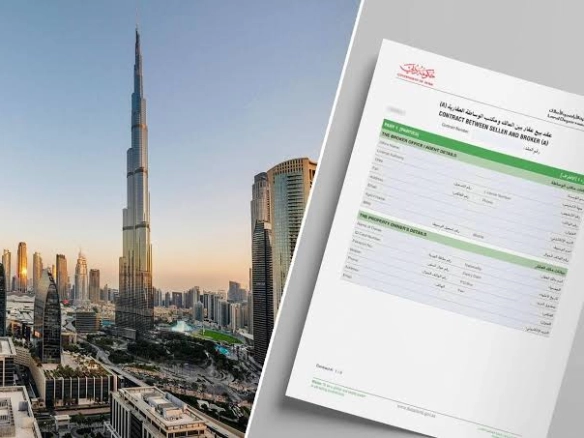
Contract F commonly serves as the memorandum of understanding between the buyer and seller in a Dubai resale transaction.
The form records information such as:
- Owner details
- Buyer details
- Property details
- Mortgage details
- Purchase price
- Commission
- Transaction terms
The broker normally prepares the contract after the main terms have been agreed.
What to Check in Contract F
Before signing, review:
- Buyer’s legal name
- Seller’s legal name
- Passport or Emirates ID information
- Title deed details
- Unit or plot number
- Registered area
- Purchase price
- Deposit amount
- Transfer date
- Mortgage status
- Vacant or tenanted status
- Furniture and fixtures
- Agency commission
- NOC responsibilities
- Registration costs
- Default provisions
- Additional conditions
Do not sign a contract containing blank fields or vague additional terms.
Check the Completion Deadline
The contract should provide enough time for:
- Mortgage valuation
- Final loan approval
- Seller’s mortgage settlement
- Developer NOC
- Service charge clearance
- Payment preparation
- Transfer booking
An unrealistic deadline can place one party in default even when they are actively trying to complete the transaction.
6. The Buyer Provides the Deposit
A resale buyer is commonly asked to provide a security deposit after signing Contract F. A deposit of around 10% of the purchase price is common in the market, but the actual amount and conditions are contractual.
The deposit may be provided by cheque or another agreed instrument and held according to the terms of the transaction.
What the Deposit Terms Should Explain
The contract should specify:
- Deposit amount
- Named holder
- Whether the cheque may be deposited
- Circumstances allowing a refund
- Consequences of buyer default
- Consequences of seller default
- Treatment of mortgage rejection
- Dispute procedure
Obtain written acknowledgement whenever a deposit cheque or other payment instrument is handed over.
Do not assume that the buyer always loses the deposit or that the seller always pays twice the deposit. The actual consequences depend on the signed contract, circumstances and applicable dispute process.
7. The Buyer Starts or Finalises the Mortgage
A mortgage buyer should ideally have pre-approval before making a serious offer.
After Contract F is signed, the buyer submits the selected property to the bank for final assessment.
The process may include:
- Property valuation
- Legal review
- Final credit assessment
- Verification of the deposit
- Insurance arrangements
- Final mortgage offer
- Mortgage contracts
- Loan disbursement planning
The Bank Values the Property
The bank appoints a valuer to estimate the property’s market value.
If the valuation is lower than the agreed price, the bank may calculate its loan using the lower assessed value. The buyer may then need to contribute more cash.
The buyer should understand how a low valuation affects the contract and deposit before signing.
Pre-Approval Is Not Final Approval
Mortgage pre-approval does not guarantee that the bank will finance every property.
Final approval can depend on:
- Property valuation
- Building eligibility
- Buyer’s financial position
- Legal documentation
- Insurance
- Bank underwriting
- Completion of outstanding conditions
A mortgage-related condition in Contract F should be written clearly if the buyer expects protection when financing is refused.
8. An Existing Seller Mortgage Is Addressed
If the seller has a mortgage, the existing loan must be settled or transferred through the appropriate procedure.
The seller may need to obtain:
- Liability letter
- Outstanding balance statement
- Mortgage settlement instructions
- Bank release documents
- Developer statement of any remaining amount
The transaction may require separate manager’s cheques for:
- Seller’s bank
- Seller’s remaining proceeds
- Dubai Land Department fees
A mortgaged-property sale usually takes longer than a cash purchase involving an unencumbered property.
The buyer should not simply transfer the full price to the seller and trust that the mortgage will be cleared later.
9. The Seller Applies for the Developer NOC
For many completed properties in freehold developments, the seller must obtain an electronic no-objection certificate from the developer before transfer.
The developer may check:
- Seller’s identity
- Title deed details
- Service charge balance
- Community penalties
- Developer instalments
- Property alterations
- Access cards
- Other community obligations
The buyer may be asked to attend or provide identification, depending on the developer’s procedure.
What Can Delay the NOC?
Common causes of delay include:
- Unpaid service charges
- Unapproved modifications
- Missing documents
- Outstanding community fines
- Incorrect buyer or seller information
- Unpaid developer amounts
- Expired identification
Confirm the NOC’s fee, processing time and validity period.
10. Service Charges Are Reconciled
Before transfer, the seller generally needs to settle outstanding service charges required for the NOC.
The parties should also agree on how current-period charges will be divided.
For example, if the seller has paid service charges covering a period after the transfer date, the buyer may reimburse a proportional amount. The method should be clearly calculated and documented.
The buyer should request:
- Recent service charge statement
- Evidence of payment
- Approved service charge rate
- Details of any special assessment
- Cooling or community charges
11. A Transfer Appointment Is Scheduled
Once the contract, mortgage and NOC requirements are ready, the parties arrange the final registration.
The transfer may be completed through an authorised registration channel, depending on the transaction.
Before the appointment, confirm:
- Date and location
- Required identification
- Validity of the NOC
- Final purchase amount
- Manager’s cheque instructions
- Registration fee
- Trustee charges
- Title deed and map fees
- Agency commission
- Mortgage documents
- Seller’s mortgage release documents
- Power of attorney where applicable
Incorrect names or amounts on manager’s cheques can delay completion.
12. The Buyer Prepares the Final Payments
The buyer may need to prepare payments for:
- Purchase balance
- Dubai Land Department registration
- Registration trustee
- Title deed
- Property map
- Agency commission
- Mortgage registration
- Service charge adjustment
- Seller’s mortgage bank
The official property registration charge is generally 4% of the sale value in total, allocated under the official schedule as 2% to the seller and 2% to the buyer. The contract may specify how the parties will bear this amount, and buyers commonly budget for the full 4%.
Mortgage registration generally carries an additional fee calculated at 0.25% of the registered mortgage value, plus applicable administrative charges.
13. The Property Is Officially Transferred
At the transfer stage:
- Parties or authorised representatives are identified
- Property details are checked
- Payment instruments are verified
- Required fees are paid
- Mortgage procedures are completed where applicable
- The sale is registered
- The new title deed is issued electronically
Dubai Land Department’s sale registration service requires the Emirates IDs of the buyer and seller or valid passports for non-resident foreigners, together with the required developer e-NOC in applicable freehold areas.
When Does the Buyer Become the Owner?
The buyer becomes the registered owner when the transfer is officially recorded and the title deed is issued in the buyer’s name.
Paying a deposit, signing Contract F or handing over the purchase cheque does not by itself complete the ownership transfer.
14. The Buyer Checks the New Title Deed
Review the electronic title deed immediately after registration.
Confirm:
- Buyer’s full legal name
- Property number
- Project or building
- Unit or plot number
- Registered area
- Ownership percentage
- Property type
- Mortgage status where applicable
Report errors promptly.
Retain the title deed, map, transfer receipt and payment records.
15. The Property Is Handed Over
The physical handover may take place at or shortly after registration.
The buyer should receive:
- Property keys
- Access cards
- Parking remotes
- Building instructions
- Appliance documents
- Maintenance records
- Relevant warranties
- Utility information
- Furniture inventory where applicable
Record meter readings and photograph the property’s condition when possession changes.
If the Property Is Tenanted
For a tenanted property, the buyer should receive:
- Tenancy agreement
- Ejari information
- Tenant contact details
- Rent payment records
- Post-dated cheques where applicable
- Security deposit
- Maintenance history
- Copies of notices
- Access and management information
The transfer of ownership does not automatically end the existing tenancy.
What Happens After an Off-Plan Property Offer?
The process is different when buying directly from a developer.
1. The Buyer Selects a Unit
The buyer chooses the unit, layout, view and payment plan.
2. The Buyer Signs a Reservation Form
The reservation document may contain:
- Buyer details
- Project and unit
- Purchase price
- Reservation payment
- Payment deadline
- Refund conditions
- Time allowed to sign the main agreement
3. The Buyer Completes KYC Checks
The developer may request identification, contact information and source-of-funds documents.
4. The Buyer Pays the Booking Amount
Payment should follow the verified instructions for the project’s approved escrow account.
Retain the invoice, bank confirmation and official receipt.
5. The Buyer Signs the Sale and Purchase Agreement
Review the agreement carefully, including:
- Completion date
- Grace period
- Payment schedule
- Size variations
- Changes to plans
- Delay provisions
- Cancellation
- Resale restrictions
- Handover
- Defect liability
6. The Sale Is Registered in Oqood
The developer registers the transaction in Dubai’s provisional property register.
Dubai Land Department states that the signed sale and purchase agreement should be registered within 90 days of signing.
Confirm that the Oqood record correctly identifies the buyer, developer, project, unit and price.
Typical Timeline After a Dubai Property Offer
The completion period depends on the transaction.
A straightforward cash purchase may move relatively quickly once the documents and NOC are ready. A mortgage transaction or sale involving an existing seller mortgage normally takes longer.
Factors affecting the timeline include:
- Contract negotiation
- Property inspection
- Mortgage valuation
- Final bank approval
- Seller’s mortgage settlement
- Developer NOC
- Service charge clearance
- Document corrections
- Transfer appointment availability
- Overseas powers of attorney
The contract should use a realistic completion date that reflects the transaction’s complexity.
Common Problems After an Offer Is Accepted
Low Bank Valuation
The buyer may need to increase the cash contribution or renegotiate the price.
Mortgage Rejection
The outcome depends on the mortgage condition and default provisions in Contract F.
Seller Changes Their Mind
The signed contract and deposit terms determine the available remedies.
Buyer Cannot Complete
The buyer may risk contractual consequences, including potential loss of the deposit, depending on the agreement and circumstances.
NOC Is Delayed
Outstanding charges, unauthorised alterations or missing documents may need to be resolved.
Property Inspection Finds Defects
The parties may negotiate repairs, compensation or another written arrangement.
Transfer Deadline Is Approaching
Any extension should be agreed in writing before the original deadline expires.
Dubai Property Offer Checklist
After your offer is accepted, confirm that you have:
- Recorded the agreed price
- Agreed on cash or mortgage status
- Set a realistic completion date
- Verified the seller
- Verified the title deed
- Checked the property status
- Reviewed the tenancy
- Inspected the property
- Agreed on repairs
- Reviewed Contract F
- Protected the deposit
- Completed the bank valuation
- Obtained final mortgage approval
- Addressed the seller’s mortgage
- Confirmed service charge settlement
- Obtained the developer NOC
- Prepared transfer payments
- Confirmed the transfer appointment
- Completed official registration
- Checked the new title deed
- Collected keys and access cards
- Saved every contract and receipt
Frequently Asked Questions
Is a Dubai property offer legally binding?
The legal effect depends on how the offer was made, whether it was accepted and what documents were signed. Contract F is generally the main written agreement for a resale transaction.
How much deposit is paid after an offer is accepted?
A deposit of around 10% is common in Dubai resale transactions, but the amount and conditions are contractual rather than automatically identical in every sale.
Who holds the deposit?
The deposit should be handled according to Contract F and documented brokerage procedures. Obtain written acknowledgement identifying the holder and the conditions under which it may be used.
Can the buyer change the offer after an inspection?
The buyer can request a price change or repairs, but the seller does not have to agree. The buyer’s rights depend on the contract and whether inspection-related conditions were included.
What happens if the bank values the property below the price?
The bank may calculate the mortgage using the lower valuation. The buyer may need to provide additional cash, renegotiate or rely on any financing condition written into the agreement.
Can a buyer withdraw after signing Contract F?
Withdrawal may result in contractual consequences. Review the default and deposit clauses and obtain legal advice before attempting to cancel.
How long does the buying process take after an offer?
The timeline depends on financing, seller mortgage status, NOC processing and document readiness. Cash transactions are generally simpler, while mortgage transactions can take longer.
When does the buyer receive the title deed?
The electronic title deed is issued after the sale is officially registered in the buyer’s name.
Final Thoughts
An accepted Dubai property offer begins the formal buying process rather than ending it. The next stages include property verification, Contract F, the deposit, mortgage approval, the developer NOC, final payments and official registration.
Buyers should make sure every important promise is written into the contract and avoid transferring money through unverified channels.
HAMZ helps buyers navigate Dubai property negotiations, review transaction requirements and move from an accepted offer to successful ownership with greater confidence.
Read Also: What Documents Do You Need to Buy Property in Dubai?