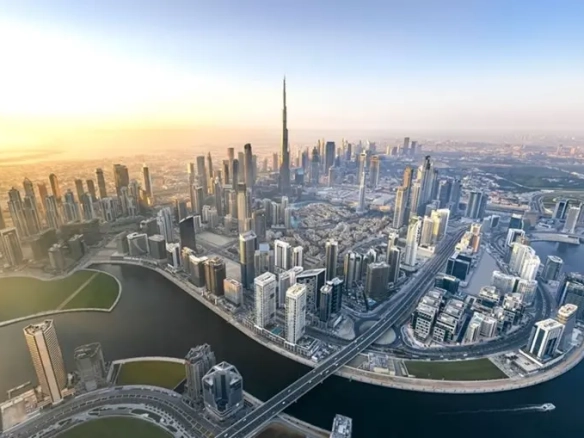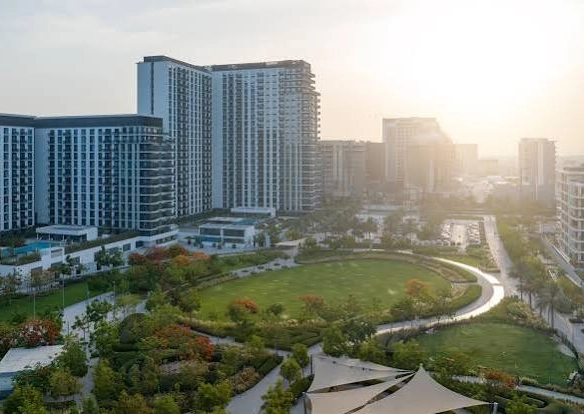
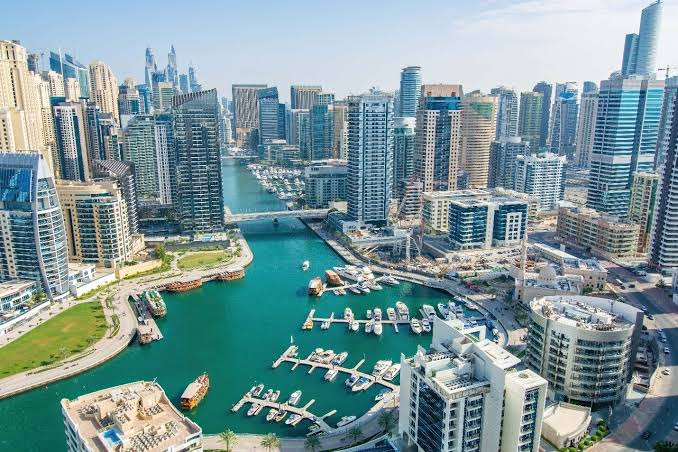
The best property for long-term investment in Dubai is rarely the development with the loudest launch campaign or the easiest payment plan.
Long-term investing requires a different question:
Will people still want to rent, buy and live in this property five, ten or more years from now?
That shifts the focus from short-term price movements toward fundamentals such as location, population growth, transport, employment, family demand, scarcity, construction quality, service charges and the amount of competing property likely to enter the market.
Dubai’s broader investment environment remains substantial. Dubai Land Department recorded AED252 billion in real estate transactions during Q1 2026, up 31% in value year on year. Investments reached AED173 billion across 57,744 investments.
Yet long-term buyers should not interpret those numbers as evidence that every property will continue rising automatically. CBRE reported that Dubai’s residential market moderated during Q2 2026 as demand softened, transaction activity declined and new supply helped ease pricing pressures.
For disciplined investors, that can actually be useful.
A more balanced market creates room to compare projects, negotiate on ready properties and reject launches whose prices already assume years of future appreciation.
The strongest Dubai long-term property strategy is therefore not simply to buy Dubai and wait.
It is to buy the right type of property, in the right micro-market, at a price that remains sensible even under conservative assumptions.
Best Dubai Long-Term Property Opportunities at a Glance
| Property Strategy | Areas Worth Comparing | Current Income Profile | Long-Term Investment Case |
|---|---|---|---|
| 1–2BR family apartments | Dubai Hills Estate | Around 6% gross | Family/end-user demand |
| Ready waterfront apartments | Dubai Creek Harbour | Around 5.6% gross | Blue Line + community maturity |
| Affordable growth apartments | Dubai South | Around 6.6%–7.6% for selected smaller units | Airport and employment growth |
| Townhouses/villas | Emaar South | Around 5%+ in current market estimates | Airport corridor + family housing |
| Established waterfront apartments | Dubai Marina | Roughly 6%–8% depending on tower/unit | Mature rental and resale market |
| Prime beachfront property | Palm Jumeirah | Around 5%–6% | Scarcity and luxury demand |
| Studios/1BR income properties | JVC | Roughly 7%–8.5% | Strong rent, but supply needs monitoring |
| Metro-linked apartments | Al Furjan | Around 7%+ in current portal data | Transport + established community |
| Core-city premium apartments | Downtown Dubai | Around 5.5% | Global location and established demand |
These figures are market and portal indicators rather than guaranteed returns or official property valuations. Performance varies materially by building, unit, view, purchase price, service charges and tenancy.
What Makes a Dubai Property Good for Long-Term Investment?
A long-term property needs more than a high projected ROI.
Ideally, it should have several different reasons for people to want it.
End-user demand
Properties bought by people who actually want to live in them can have a more diversified resale market than assets marketed almost entirely to investors.
Family communities with:
- schools
- healthcare
- parks
- supermarkets
- established roads
- recreational facilities
can therefore become particularly interesting over longer holding periods.
Rental demand
A property that generates rent gives the investor income while waiting for potential appreciation.
Dubai’s rental market remains extensive. DLD reported rental contracts worth AED32.2 billion during Q1 2026.
Infrastructure
New Metro connections, airports and employment centres can materially improve an area’s long-term accessibility.
But infrastructure should be treated as upside rather than permission to overpay.
Scarcity
There is a major difference between a property that can be replicated thousands of times and one where equivalent land or positioning is genuinely limited.
Scarcity is particularly relevant to:
- beachfront property
- golf-facing villas
- established villa plots
- landmark views
- mature central communities
Reasonable future supply
Development is healthy, but investors should understand how much competing stock will be available when they eventually rent or sell.
Sensible entry price
Perhaps most importantly, even an outstanding long-term community can become a poor investment if the buyer pays too much.
Why Long-Term Investing Is Different From Flipping Property
A short-term investor may care heavily about:
- launch discount
- next developer price increase
- resale before handover
- immediate market momentum
A long-term investor should care more about:
- tenant quality
- recurring expenses
- building durability
- population growth
- transport
- employment
- community maturity
- long-term resale demand
A beautiful launch brochure might matter for six months.
An inefficient floor plan can matter for 15 years.
That is why long-term buyers should evaluate the actual asset rather than only the sales story.
Dubai’s Population Growth Supports Long-Term Housing Demand
Dubai’s population reached approximately 4.58 million at the end of 2025, increasing by about 332,000 people, or 7.5%, from 2024.
Population expansion can support long-term property demand because additional residents need:
- apartments
- villas
- rental housing
- schools
- transport
- retail
- employment-linked accommodation
But population growth alone is not enough to justify a purchase.
An investor still needs to compare housing demand against future supply in the exact community.
1. Dubai Hills Estate Apartments for Balanced Long-Term Investment
Dubai Hills Estate is one of the strongest communities to consider when the objective is a combination of rental demand, end-user appeal and long-term resale potential.
Current Property Finder data places apartment yields at approximately 6% gross, with tenant demand supported by families and professionals. One- and two-bedroom apartments attract particularly strong investor activity.
Current apartment prices average roughly AED2.4 million–AED2.5 million, with price per square foot around AED2,427 in the latest portal data.
Why Dubai Hills works for a long-term investor
The community has already developed many of the things that future buyers usually want:
- Dubai Hills Mall
- schools and education access
- healthcare
- parks
- road connectivity
- golf
- apartments, townhouses and villas
Property Finder describes Dubai Hills Estate as a family-oriented master community with extensive green space, retail and an 18-hole golf course.
That gives the area a broader demand base than a development built predominantly for investor resales.
Best property type
For investors seeking liquidity and rental income, a well-laid-out one- or two-bedroom apartment can offer a useful balance.
For wealthier buyers with a longer horizon, villas and townhouses can introduce more scarcity because land is part of the asset.
Main risk
Dubai Hills is no longer an inexpensive emerging neighbourhood.
A strong community does not justify paying any price.
Investors should compare recent transactions carefully before accepting premiums for:
- park views
- golf views
- new launches
- branded residences
2. Dubai Hills Villas for Long-Term Family Demand
Villas deserve separate analysis from apartments.
A quality Dubai Hills villa can appeal to:
- owner-occupiers
- high-income families
- long-term tenants
- investors seeking scarce land
Current Property Finder market data puts the average Dubai Hills villa price above AED11 million, illustrating how different the villa investment market is from the apartment segment.
Why villas can work long term
You are buying more than internal floor area.
The investment may include:
- land
- garden
- privacy
- community position
- golf or park frontage
As Dubai becomes denser, established family housing with land can have different supply characteristics from apartments.
The trade-off
Villas usually require much more capital and may produce lower percentage rental yields.
This is therefore more of a:
long-term wealth + scarcity
strategy than a maximum-income strategy.
3. Dubai Creek Harbour Ready Apartments
Dubai Creek Harbour is one of the more compelling longer-term apartment markets because investors can combine an increasingly established waterfront community with future transport infrastructure.
Current Property Finder data places apartment rental yields at approximately 5.6%, with the latest asking-price data also showing modest year-on-year growth.
That yield is lower than JVC or Dubai Sports City.
The investment case is different.
Why Creek Harbour can make sense
Investors are buying into:
- waterfront living
- newer housing stock
- Downtown proximity
- an increasingly mature community
- future Metro connectivity
The strongest long-term approach may be to compare ready property against newly launched off-plan stock.
If a completed apartment already produces rent and costs materially less than a similar future apartment, the ready unit may offer a more defensible investment.
Dubai Metro Blue Line Strengthens the Creek Harbour Story
RTA’s Blue Line will run for 30 kilometres with 14 stations and is planned to serve Dubai Creek Harbour directly. The line’s opening is targeted for 9 September 2029.
RTA also says the route will serve districts expected to accommodate roughly one million residents by 2040.
This is relevant for long-term investors because transport can improve:
- tenant accessibility
- commute options
- buyer demand
- community connectivity
However, investors should not treat RTA’s estimates of potential value uplift around Metro stations as guaranteed appreciation for an individual property.
Buy because the property works today.
Treat the Metro as potential future improvement.
4. Dubai South Apartments for Infrastructure-Led Growth
Dubai South is one of Dubai’s clearest long-term infrastructure investment stories.
Current Property Finder data puts apartment prices from roughly AED465,000 at the lower end, with smaller units showing gross-yield indicators around 6.59%–7.57% depending on size and location.
This creates an attractive combination:
lower entry cost + current rental income + future infrastructure.
That can be healthier than buying purely for a future story.
Al Maktoum International Airport Changes the Long-Term Equation
The airport development is now more than a distant concept.
Dubai Government said in June 2026 that the project had entered a large-scale construction phase, with contracts worth more than AED13 billion already under execution and preparations underway for strategic packages worth more than AED55 billion. The first major phase remains on course to commence operations in 2032.
At full development, the airport is planned for capacity exceeding 260 million passengers annually, five parallel runways and more than 430 aircraft stands.
The broader master plan has been described as a AED128 billion airport terminal programme, with development of an entire city around the airport.
For Dubai South property, this matters because a large aviation and logistics ecosystem can support long-term employment and housing demand.
Dubai South Is Already an Employment Ecosystem
Dubai South reported 653 new companies during 2025, bringing the number of operational businesses in the development above 4,200.
The master development also delivered about 800 units in Pulse Beachfront and had approximately 1,300 units scheduled for handover across South Bay and South Living during 2026.
That second figure is equally important.
There is growth.
There is also supply.
Long-term investors need to analyse both.
Best Dubai South Property for Long-Term Investment
For investors seeking income, compact apartments can be attractive because their purchase prices are relatively low compared with central Dubai.
Current market estimates show roughly:
- studios around 7.57% gross
- one-bedrooms around 6.59%
- larger units producing lower percentage yields.
For family-oriented investors, townhouses and villas deserve consideration where the purchase price remains sensible.
The biggest mistake would be paying a huge premium today simply because the airport will be larger in the future.
5. Emaar South Townhouses for Longer-Term Family Growth
Emaar South provides another way to participate in southern Dubai’s development without relying exclusively on small apartments.
Current Property Finder data places Emaar South apartments broadly around AED1 million–AED2.5 million, while townhouses start lower than many established central villa communities. Current townhouse rental-yield indicators sit at roughly 5.2% in portal estimates.
Why townhouses can be interesting
Townhouses can capture family demand while still requiring less capital than many prime Dubai villas.
For long-term investors, desirable features include:
- practical three- or four-bedroom layouts
- gardens
- established community facilities
- reasonable service charges
- proximity to future employment
Investment thesis
The long-term case is essentially:
family housing + golf-community environment + Dubai South/airport growth corridor.
Main risk
The southern corridor has substantial development capacity.
Scarcity should not be assumed.
Buyers should favour properties with real advantages over neighbouring future supply.
6. Dubai Marina Ready Apartments for Established Demand
Not every long-term investment needs to be in a future growth area.
Dubai Marina offers the opposite strategy.
It is already mature.
Property Finder currently describes Marina apartment rental yields as typically around 6%–8% depending on tower and property type.
Current portal data also shows substantial rental demand, with studios averaging around AED78,000 annually and one-bedroom properties around AED110,000 in its latest community pricing information.
Why Dubai Marina can work for long-term investors
The area already has:
- Metro access
- Tram connectivity
- waterfront lifestyle
- restaurants
- retail
- established towers
- international recognition
The investor is not waiting for a community to exist.
That reduces one form of uncertainty.
The Opportunity in Older Dubai Marina Buildings
Building age can actually create opportunity.
Some established towers trade at meaningful discounts to newer waterfront property.
An investor may be able to:
- acquire below premium-new-build pricing
- renovate
- improve rental positioning
- hold a property in an established district
But older towers need careful technical due diligence.
Check:
- maintenance
- lifts
- air-conditioning systems
- common areas
- sinking/reserve funds where relevant
- service charges
- building management
A cheap Marina apartment can become expensive if the building is poorly maintained.
7. Palm Jumeirah for Long-Term Luxury and Scarcity
Palm Jumeirah represents a completely different long-term investment strategy.
Current Property Finder data puts broad rental yields around 5%–6%, with an overall indicator around 5.41% and apartment yields around 5.5%.
Those yields are considerably lower than JVC or Dubai Investments Park.
That is not necessarily a weakness.
The investment thesis centres more heavily on:
- beachfront scarcity
- international luxury demand
- globally recognised location
- branded residences
- unique villas
Best Palm Property for Long-Term Holding
There is no single answer because the Palm contains completely different assets.
Established apartments
Can provide a lower entry point into the island and generate rental income.
Branded residences
Can attract global luxury buyers but may carry high acquisition prices and recurring service costs.
Frond villas
Represent a scarcity-driven investment because direct beachfront villa plots cannot be produced indefinitely on the original Palm.
A long-term investor should distinguish between:
expensive
and:
scarce.
Not every expensive property is scarce.
8. JVC Studios and One-Bedrooms for Long-Term Income
JVC can work particularly well for investors whose long-term objective is recurring rental income.
Current Property Finder data shows gross rental yields of roughly 7%–8.5%, depending on unit type and location.
That makes JVC substantially more income-oriented than many prime communities.
Best property profile
Studios and one-bedroom apartments typically provide the strongest percentage returns.
They also have relatively broad tenant pools.
The long-term concern: supply
JVC contains a large amount of both ready and new development.
This means investors should not assume every apartment will appreciate strongly simply because rent is attractive.
A good JVC long-term investment should ideally have something that differentiates it:
- strong developer
- good building management
- efficient layout
- open view
- low service charges
- good location within JVC
- sensible purchase price
Rental income can provide the core return while capital appreciation remains a secondary benefit.
9. Al Furjan Apartments for Metro-Connected Long-Term Income
Al Furjan deserves more attention from investors looking for a middle ground between high-yield affordable districts and expensive premium communities.
Current Property Finder data places apartment gross rental yields around 7.5%, while broader property data puts the community around 6.8%.
The area benefits from established housing and Metro connectivity.
Why Al Furjan can work
The investment case combines:
- good rental income
- New Dubai location
- Metro access
- proximity to southern growth corridors
- apartments, villas and townhouses
This can make selected one-bedroom apartments particularly interesting.
Main risk
As with most growing Dubai districts, buyers should watch new project supply.
10. Downtown Dubai for Prime Long-Term Ownership
Downtown Dubai does not normally top Dubai’s rental-yield tables.
Property Finder currently places apartment rental yields at approximately 5.5%, with prices ranging widely according to tower, size and view.
But yield is not the only reason to invest.
Why Downtown remains relevant
The district offers:
- one of Dubai’s most internationally recognised addresses
- established tourism
- major retail
- central business access
- mature infrastructure
- globally recognised landmarks
For a long-term investor, an exceptional Downtown unit can therefore be more about:
location quality + resale depth + prestige
than maximum annual yield.
What to buy carefully
Not every Downtown apartment deserves a premium.
Pay particular attention to:
- exact tower
- age
- service charges
- layout
- Burj Khalifa/Fountain views
- whether the view is protected
- price per square foot
Which Property Type Is Best for Long-Term Investment?
The answer depends on the objective.
Studios: Best for Yield Efficiency
Studios can produce strong percentage rental yields because their acquisition prices are relatively low.
They are particularly relevant in areas such as:
- JVC
- Dubai South
- Dubai Investments Park
- International City
Property Finder’s current high-ROI research places several affordable apartment communities above 8% gross yield.
Main disadvantage
They can have high investor competition and many identical alternatives.
One-Bedroom Apartments: Often the Best All-Round Investment
For many investors, a good one-bedroom apartment provides the strongest compromise.
It can appeal to:
- single professionals
- couples
- investors
- some owner-occupiers
It remains relatively affordable compared with larger property and can have strong resale liquidity.
That makes one-bedroom units worth particular consideration in:
- Dubai Hills Estate
- Dubai Creek Harbour
- Dubai Marina
- JVC
- Al Furjan
- Dubai South
Two-Bedroom Apartments: Stronger End-User Appeal
Two-bedroom units cost more and often generate lower percentage yields.
But they can appeal to:
- couples needing extra space
- small families
- remote workers
- longer-term residents
For a long holding period, this broader end-user demand can be valuable.
In family communities such as Dubai Hills Estate, a two-bedroom can therefore make more sense than simply chasing the highest-yield studio elsewhere.
Townhouses: A Strong Middle Ground
Townhouses can provide:
- family demand
- outdoor space
- multiple bedrooms
- more affordable entry than many detached villas
They are particularly worth comparing in growth communities such as Emaar South and other master-planned family developments.
The investor should prioritise:
- practical layout
- plot size
- community maturity
- schools
- road access
- future competing supply
Villas: Stronger Scarcity Potential, Lower Yield
Villas generally need more capital and often produce lower percentage rent.
But the land component can become important over time.
Current Dubai villa listings show entry points around AED2 million–AED3 million in some outer family communities, while premium established communities can cost many times more.
Long-term villa investing makes most sense where:
- land is limited
- family demand is deep
- community infrastructure is established
- the plot or location is differentiated
Ready vs Off-Plan for a Long-Term Investor
Both can work.
But they solve different problems.
Why ready property can be stronger
With completed property you can verify:
- actual view
- building quality
- current rent
- occupancy
- service charges
- recent transactions
- exact neighbourhood condition
This greatly reduces uncertainty.
Why off-plan can work
Off-plan can provide:
- newer construction
- payment flexibility
- early unit selection
- exposure to developing communities
But long-term buyers should never assume new automatically means better.
Dubai Still Has Heavy Off-Plan Supply
Dubai’s current off-plan market contains thousands of active listings across growth corridors including JVC, Dubai South, Business Bay, Dubai Hills Estate and Dubai Creek Harbour.
That abundance of choice increases the importance of pricing.
If a future apartment is substantially more expensive than a comparable ready unit, ask what justifies the premium.
Possible valid answers include:
- significantly better specification
- superior location
- better view
- stronger layout
- genuinely scarce project
A long payment plan alone is not sufficient.
The Best Long-Term Off-Plan Property Is Not Always the Cheapest Launch
Cheap can simply mean:
- less desirable location
- weaker developer
- excessive supply
- smaller unit
- poor layout
A better long-term off-plan property generally has:
- credible developer
- registered project
- realistic completion schedule
- sensible price per square foot
- usable layout
- strong future tenant profile
- manageable supply nearby
The SPA must also be properly registered in Dubai’s provisional system. DLD’s current Initial Sale Registration service states that the SPA should be registered in the provisional register within 90 days of signing.
Rental Yield Still Matters for Long-Term Investors
Capital appreciation receives enormous attention, but rental income can help an investor hold through market cycles.
Suppose:
Purchase price:
AED1,200,000
Annual gross rent:
AED90,000
Gross yield:
7.5%
If the property remains roughly flat in value for several years, rental income still provides a return.
That is fundamentally different from buying an asset whose entire investment thesis depends on resale at a higher price.
Net Yield Matters More Than Gross Yield
Suppose:
Property price:
AED1.2 million
Annual rent:
AED90,000
Gross yield:
7.5%
Annual service charges:
AED12,000
Maintenance reserve:
AED3,000
Management:
AED4,500
Vacancy allowance:
AED3,000
Net operating income:
AED67,500
Simplified net yield against purchase price:
5.63%
That is a much more realistic investment measure.
Service Charges Can Change the Long-Term Winner
Service charges compound over time.
An extra AED10,000 every year becomes:
AED100,000 over ten years
before considering increases.
Dubai Land Department’s Service Charge Index allows investors to check RERA-approved service fees for jointly owned property, with 2026 available in the current system.
For a long-term investor, service charges are not a minor detail.
They are part of the asset’s economics.
Entry Price Can Matter More Than the Area
Consider two identical apartments in the same building.
Investor A pays:
AED1,000,000
Investor B pays:
AED1,150,000
Both receive:
AED75,000 annual rent
Investor A gross yield:
7.5%
Investor B:
6.52%
If both later sell for AED1.3 million:
Investor A gains:
AED300,000
Investor B gains:
AED150,000
The building performed exactly the same.
The investors did not.
This is why negotiation and comparable-sale research matter so much.
Long-Term Investors Should Avoid Buying Only on Future Promises
Marketing may mention:
- future Metro
- airport growth
- new mall
- future schools
- new business districts
- expected appreciation
These can all be relevant.
But the property should still make sense if one of those benefits is delayed.
Dubai’s current residential market is already showing why conservative underwriting matters: CBRE says additional supply helped ease pricing pressure during Q2 2026.
Do not build a ten-year investment thesis around a perfect five-year forecast.
What About Dubai’s Highest-Yield Areas?
Long-term investors focused almost entirely on income may still prefer affordable communities.
Property Finder’s July 2026 research gives indicative apartment yields of:
- Dubai Investments Park: 9.59%
- Dubai Sports City: 8.76%
- International City: 8.71%
- Dubai Silicon Oasis: 8.47%
- Discovery Gardens: 8.30%
- JVC: 8.12%.
These can be excellent rental investments.
But long-term investors should investigate why the yield is high and whether the property will remain competitive after ten years.
Building condition becomes increasingly important over a long holding period.
Long-Term Strategy by Budget
Below AED1 million
Investors are more likely to focus on:
- studios
- affordable one-bedrooms
- high-yield established communities
JVC, Dubai South and selected affordable districts can provide opportunities.
The strategy should normally emphasise:
income + low acquisition price.
AED1 million–AED2 million
The options widen significantly.
Buyers can compare:
- Dubai Hills apartments
- Creek Harbour
- Marina
- JVC
- Al Furjan
- Emaar South
- larger high-yield units
At this budget, an investor can start balancing current income against long-term quality more effectively.
AED2 million–AED5 million
This opens:
- premium apartments
- townhouses
- selected villas
- larger waterfront property
- premium family communities
The current DLD Golden Visa real estate route also uses AED2 million as its qualifying property purchase-value threshold, subject to the applicable conditions.
The visa should remain an additional benefit rather than the reason to overpay.
AED5 million+
Investors can increasingly consider:
- prime villas
- golf-front property
- luxury waterfront apartments
- selected Palm Jumeirah assets
- premium Downtown property
At this level, property-specific scarcity becomes increasingly important.
Should You Diversify Across Several Dubai Properties?
An investor with AED4 million could buy:
one AED4 million property
or:
four AED1 million properties.
Neither is automatically better.
Multiple properties can diversify:
- tenant risk
- building risk
- vacancy
But they can also create:
- multiple transaction costs
- multiple service-charge obligations
- more management
- more maintenance
One high-quality scarce property may offer a different long-term return profile.
Diversification should be intentional rather than simply buying more units.
Foreign Investors Can Buy Qualifying Dubai Freehold Property
Foreigners who do not live in the UAE, as well as expatriate residents, can acquire qualifying freehold ownership in Dubai’s designated ownership areas.
That means many of the long-term investment markets discussed here are accessible to international buyers.
The exact title and property should still be verified before purchase.
Buying Costs Matter More Over Shorter Holding Periods
For completed-property sales, DLD’s current fee schedule lists:
- seller registration portion: 2%
- buyer registration portion: 2%
- AED250 title deed
- AED250 apartment/villa map
- AED10 Knowledge fee
- AED10 Innovation fee
- Registration Trustee fee of AED4,000 + VAT when the sale value is AED500,000 or more.
The commercial sale agreement can determine how the parties ultimately allocate some costs.
For long-term investors, transaction costs are spread over more years of ownership.
For short-term flippers, they can consume a much larger portion of the return.
Example: Ten-Year Long-Term Investment
Assume a ready apartment costs:
AED1,500,000
Annual gross rent:
AED105,000
Gross yield:
7%
Assume annual net operating income after recurring costs averages:
AED78,000
Over ten years, ignoring rental increases and time value of money:
AED780,000 net operating income
Now suppose the property eventually sells for:
AED1,950,000
Capital appreciation:
AED450,000
Combined simplified gain before sale costs:
AED1,230,000
This example illustrates why long-term real estate can benefit from two separate engines:
income + appreciation.
But neither should be assumed.
A good investment should be stress-tested.
Stress-Test the Property Before Buying
Instead of assuming:
- rent grows 5% every year
- property appreciates 8% annually
- vacancy is zero
- maintenance is minimal
test a less comfortable scenario.
Ask:
What if rent falls 10%?
What if property prices remain flat for five years?
What if service charges rise?
What if another 1,000 similar apartments are delivered nearby?
If the investment remains acceptable, the long-term thesis is much stronger.
Best Property for Long-Term Rental Income
For investors prioritising recurring income, the strongest candidates are generally compact apartments in communities where purchase prices remain relatively affordable.
Current market data points toward areas such as:
- Dubai Investments Park
- Dubai Sports City
- International City
- Dubai Silicon Oasis
- JVC
- Al Furjan.
The exact building determines whether the headline community yield becomes a good net return.
Best Property for Long-Term Family Demand
Dubai Hills Estate is one of the clearest options.
A quality one- or two-bedroom apartment can target professional and family tenants, while townhouses and villas can serve longer-term owner-occupier demand.
Current Dubai Hills apartment yields of around 6% provide income while the community’s established amenities strengthen its end-user proposition.
Best Property for Infrastructure-Led Growth
Two locations stand out for very different reasons:
Dubai Creek Harbour
Long-term catalyst:
Dubai Metro Blue Line.
Dubai South
Long-term catalyst:
Al Maktoum International Airport and the surrounding aviation/logistics economy.
The key difference is entry price.
Dubai South remains substantially more affordable.
Creek Harbour offers a more premium waterfront product.
Best Property for an Established Waterfront Strategy
Dubai Marina remains difficult to ignore.
It provides current rent, existing public transport and a mature resale market instead of depending primarily on future development.
Current portal data indicates rental yields broadly in the 6%–8% range depending on the property and tower.
For long-term buyers, established towers purchased at sensible prices can be particularly interesting.
Best Property for Long-Term Luxury Exposure
Palm Jumeirah remains one of the clearest choices for investors who prioritise prime waterfront scarcity over maximum yield.
Current apartment yield estimates remain around 5.5%, while the island’s wider property market sits around 5%–6%.
The investment needs to be highly property-specific.
A rare beachfront villa and a standard apartment are not interchangeable assets.
Long-Term Dubai Property Checklist
Before committing, ask:
- Is the property ready or off-plan?
- Who will realistically rent it?
- Who will realistically buy it from me later?
- What have comparable properties actually sold for?
- What is the realistic rent today?
- What is the net rental yield?
- What are the approved service charges?
- How old will the building be when I eventually sell?
- How much similar property is under construction?
- Is the view protected?
- Is there real scarcity?
- Is future infrastructure already priced in?
- Is the layout still likely to be desirable in ten years?
- Is the developer or building management credible?
- Can I comfortably hold the property through a weak market?
- Does the investment still work without aggressive appreciation assumptions?
If several answers are unclear, more research is needed before committing capital.
Frequently Asked Questions
What is the best Dubai property for long-term investment?
There is no single winner. Dubai Hills Estate is strong for balanced family demand, Dubai Creek Harbour offers waterfront growth with future Metro connectivity, Dubai South provides lower-cost infrastructure exposure, Dubai Marina offers established rental demand, and Palm Jumeirah provides prime scarcity.
Is Dubai Hills Estate good for long-term investment?
It can be. Current apartment rental yields are around 6%, while the community has established family infrastructure, parks, retail and healthcare.
Is Dubai Creek Harbour good for long-term investment?
It can suit investors seeking newer waterfront property and longer-term infrastructure exposure. Current apartment yields are roughly 5.6%, and the planned Blue Line will include a Dubai Creek Harbour station.
Is Dubai South good for long-term investment?
Dubai South combines comparatively affordable prices, current rental income and exposure to the Al Maktoum International Airport expansion. Selected smaller apartments currently show gross-yield indicators above 6%.
Is Dubai Marina still good for long-term investment?
It remains a mature waterfront market with established infrastructure and tenant demand. Current apartment yields generally fall around 6%–8% depending on the tower and unit.
Is Palm Jumeirah good for long-term investment?
It can suit investors prioritising luxury, waterfront scarcity and capital preservation rather than maximum rental yield. Current broad yield estimates are around 5%–6%.
Are apartments or villas better for long-term investment?
Apartments generally require less capital and often produce higher rental yields. Villas can provide stronger land scarcity and family demand. The better option depends on budget and investment objective.
Are studios good for long-term investment?
Studios can be excellent income properties where purchase prices are low and tenant demand is strong. However, they may face more competition from identical units, so building quality and future supply matter.
Are one-bedroom apartments good long-term investments?
They are often one of the most balanced property types because they appeal to both tenants and resale buyers while requiring less capital than larger homes.
Is ready or off-plan better for long-term investment?
Ready property offers greater certainty over rent, view, building condition and service charges. Off-plan can provide payment flexibility and access to developing areas but introduces more assumptions about delivery, rent and future supply.
How long should I hold Dubai investment property?
There is no universal period, but long-term strategies generally make more sense when the buyer is prepared to hold through property-market cycles rather than depending on an immediate resale.
What rental yield is good for a long-term Dubai investment?
Current market guidance identifies roughly 6%–8% gross yield as strong in many Dubai communities, although prime property can produce lower yields and affordable apartments can exceed 8%.
Should I buy for rental yield or capital appreciation?
A balanced investment can be more resilient because rental income provides cash flow while capital appreciation provides potential asset-value growth. The weighting depends on the investor’s objectives.
Can foreigners buy long-term investment property in Dubai?
Yes. Foreign non-residents and expatriate residents can purchase qualifying property in Dubai’s designated foreign-ownership areas.
Can long-term property qualify for the Dubai Golden Visa?
Potentially. DLD’s current real estate investor service requires qualifying property with a purchase value of at least AED2 million for the renewable 10-year residence route, subject to the applicable requirements.
What is the biggest risk to long-term Dubai property investment?
Overpaying and excessive competing supply are among the biggest risks. CBRE’s Q2 2026 assessment already shows additional supply helping ease residential pricing pressure.
Where the Best Long-Term Dubai Property Opportunities Stand
For long-term investors, Dubai’s size is an advantage because different parts of the city can serve completely different strategies.
Dubai Hills Estate stands out for investors wanting family demand, established infrastructure and a balance between rental income and long-term resale quality.
Dubai Creek Harbour offers a newer waterfront environment with approximately 5.6% current gross-yield indicators and a planned Metro Blue Line station opening with the line in 2029.
Dubai South and Emaar South offer a lower entry point into a district whose long-term employment and housing story is increasingly linked to the massive expansion of Al Maktoum International Airport.
Dubai Marina offers the opposite proposition: an already established waterfront district where investors can examine actual buildings, rents and resale histories today.
Palm Jumeirah remains relevant for investors who value prime scarcity and luxury demand more than maximum percentage rental yield.
And JVC or Al Furjan can be stronger choices for investors whose long-term objective centres on cash flow, with current gross-yield estimates materially above many prime communities.
The correct selection process is therefore:
investment objective → community → property type → building/project → exact unit → purchase price.
Do not begin with the developer.
Do not begin with the payment plan.
Do not begin with an advertised ROI.
Begin with the reason people will still want that property many years from now.
Then calculate whether today’s price gives you enough return for the risks you are taking.
For income-focused investors, prioritise realistic net yield.
For growth investors, prioritise scarcity, infrastructure and end-user demand.
For balanced investors, look for a property capable of generating respectable rent while also remaining attractive to future owner-occupiers.
And in every case, stress-test the investment against slower rent growth, flat property prices and additional supply.
A property that only works when everything goes perfectly is not a strong long-term investment.
HAMZ International Real Estate can help investors compare ready and off-plan properties across Dubai, examine rental yields and acquisition costs, assess community fundamentals and identify properties aligned with a longer holding period and investment strategy.
Sources & Fact-Checking
Dubai Land Department — Q1 2026 Real Estate Market Performance
Supports current transaction and investment activity, including AED252 billion in Q1 transactions and AED173 billion in investments.
CBRE — UAE Real Estate Market Review Q2 2026
Supports the current moderation in Dubai residential demand, transaction activity and pricing pressure as new supply enters the market.
Dubai Government Media Office — Dubai Population
Supports Dubai’s population reaching approximately 4.58 million at the end of 2025, up 332,000 or 7.5%.
Dubai Land Department — Q1 2026 Rental Market
Supports the AED32.2 billion value of rental contracts recorded during Q1 2026.
Dubai Land Department — Property Sale Registration
Supports current buyer and seller registration fees, title/map charges and Registration Trustee fees.
Dubai Land Department — Service Charge Index
Supports RERA-approved service-charge enquiries for jointly owned property.
Dubai Land Department — Service Charge Index Tool
Supports project-level approved service charges and current 2026 budget-year information.
Dubai Land Department — Initial Sale Registration
Supports provisional registration requirements for off-plan SPAs, including the current 90-day registration requirement.
UAE Government — Expatriates Buying Property in the UAE
Supports foreign and non-resident ownership of qualifying Dubai property in designated areas.
Dubai Land Department — Golden Visa for Real Estate Investors
Supports the current AED2 million qualifying property purchase-value threshold and renewable 10-year real estate investor residence route.
RTA — Dubai Metro Blue Line
Supports the Blue Line’s 30-kilometre route, 14 stations, Dubai Creek Harbour connection and planned 2029 completion.
RTA — Blue Line Construction Progress
Supports the targeted 9 September 2029 opening and current construction progress.
Dubai Government Media Office — Al Maktoum International Airport Development
Supports the airport’s current large-scale construction phase, 2032 first-phase operations target, AED13 billion of packages under execution, planned future awards and ultimate capacity.
Dubai Government Media Office — Al Maktoum Airport Master Plan
Supports the AED128 billion passenger-terminal programme and long-term 260-million-passenger capacity.
Dubai South — 2025 Performance and 2026 Residential Pipeline
Supports Dubai South’s 653 new companies, more than 4,200 operating businesses, completed residential units and scheduled 2026 handovers.
Property Finder — Dubai Hills Estate Apartments
Supports current Dubai Hills apartment pricing and approximately 6% gross rental-yield indicators.
Property Finder — Dubai Creek Harbour Apartments
Supports current Creek Harbour pricing and approximately 5.6% rental-yield information.
Property Finder — Dubai South Apartments
Supports current Dubai South apartment entry prices and unit-level gross rental-yield indicators.
Property Finder — Emaar South Properties
Supports current apartment, townhouse and villa pricing and rental-yield indicators in Emaar South.
Property Finder — Dubai Marina Apartments
Supports current Dubai Marina rental-yield ranges and established apartment-market information.
Property Finder — Palm Jumeirah Properties
Supports current Palm Jumeirah price and rental-yield indicators.
Property Finder — JVC Properties
Supports current JVC apartment pricing and roughly 7%–8%+ gross-yield indicators.
Property Finder — Al Furjan Apartments
Supports current Al Furjan apartment pricing and approximately 7.5% gross rental-yield estimates.
Property Finder — Downtown Dubai Properties
Supports current Downtown apartment pricing and approximately 5.5% rental-yield estimates.
Property Finder — Highest ROI Areas for Dubai Apartments
Supports current high-yield comparisons for Dubai Investments Park, Sports City, International City, Dubai Silicon Oasis, Discovery Gardens and JVC.
Read Also: Capital Appreciation vs Rental Yield in Dubai Real Estate