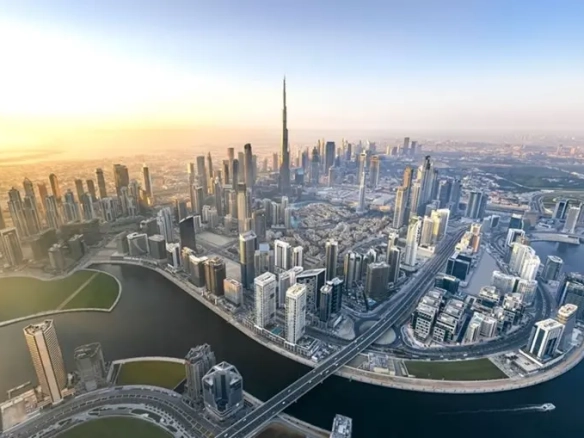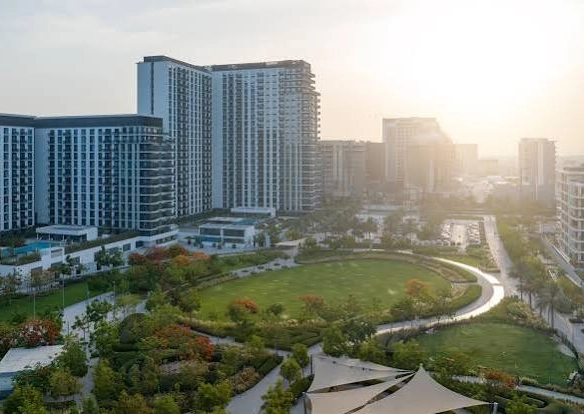
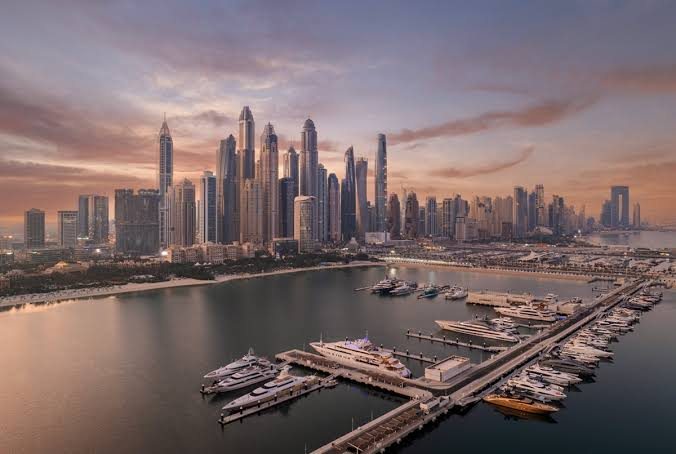
Choosing where to invest in Dubai matters at least as much as deciding to enter the property market in the first place.
Dubai is not one uniform investment market. A studio in Jumeirah Village Circle, a waterfront apartment in Dubai Marina, a villa in Dubai Hills Estate and an ultra-luxury residence on Palm Jumeirah serve different tenants, buyers and investment strategies. They also carry different entry prices, service charges, rental yields and resale characteristics.
The wider market remained highly active in 2026. Dubai Land Department recorded AED252 billion in real estate transactions during Q1 2026, up 31% year on year. Real estate investments reached AED173 billion, while foreign investment increased to AED148.35 billion.
Rental-market activity was also substantial. DLD reported AED32.2 billion in rental-contract value during Q1 2026, with 118,385 new rental contracts and 135,607 renewals.
Strong citywide activity, however, does not make every neighbourhood equally attractive.
The best area depends on whether the investor wants rental income, a lower entry point, luxury exposure, family demand, future infrastructure growth or a property with broad resale appeal.
This guide compares some of Dubai’s most relevant investment locations and explains what each is best suited to.
Best Dubai Investment Areas at a Glance
The rental-return figures below come from Bayut’s H1 2026 Dubai sales market analysis. They should be treated as market indicators rather than guaranteed returns. Individual property performance can differ significantly according to building, unit, purchase price, service charges, vacancy and management costs.
| Area | Best Suited To | H1 2026 Indicative Apartment ROI* |
|---|---|---|
| Jumeirah Village Circle | Balanced mid-market investment | 7.15% |
| Dubai Silicon Oasis | Higher-yield affordable apartments | 8.23% |
| Al Furjan | Rental-income-focused investors | 7.69% |
| Dubai South | Longer-term growth strategy | 7.24% |
| Dubai Creek Harbour | Waterfront growth and off-plan exposure | Project-specific |
| Dubai Hills Estate | Premium apartments and family property | 6.30% |
| Business Bay | Central-city rental demand | 6.29% |
| Dubai Marina | Established waterfront investment | 5.88% |
| Downtown Dubai | Prime central property | 5.46% |
| Palm Jumeirah | Ultra-luxury and scarcity-led strategy | 4.48% |
*Bayut H1 2026 reported or segment data. These are indicative gross ROI figures rather than guaranteed net returns.
How to Choose Where to Invest in Dubai
An investor should not select an area solely because it has the highest advertised rental yield.
Yield is only one part of the investment.
A stronger comparison considers:
- purchase price
- actual achievable rent
- annual service charges
- tenant demand
- property age and quality
- upcoming residential supply
- transport and accessibility
- developer reputation
- resale liquidity
- financing requirements
- expected holding period
Dubai Land Department provides official transaction and rental datasets, while its Rental Index and Service Charge Index can help buyers assess rental conditions and recurring building costs.
The strongest location for a high-yield investor may therefore be different from the strongest area for someone seeking capital preservation in prime real estate.
1. Jumeirah Village Circle: Strong All-Round Investment Potential
Jumeirah Village Circle, commonly called JVC, remains one of Dubai’s most closely watched mid-market residential areas.
For investors, its attraction lies largely in the combination of relatively accessible entry prices, a substantial apartment market and an established rental audience.
Bayut’s H1 2026 analysis ranked JVC as its most popular mid-tier apartment purchase area. The report placed average apartment transaction value at approximately AED1.08 million, average price at AED1,470 per square foot and indicative ROI at 7.15%.
Why JVC appeals to investors
JVC accommodates a broad mix of studios, one-bedroom apartments, larger units, townhouses and villas.
That diversity gives investors several price points to work with.
It can suit:
- first-time Dubai property investors
- buyers targeting studios or one-bedroom apartments
- rental-income investors
- investors wanting a lower entry point than central prime districts
Bayut’s H1 2026 rental analysis also identified JVC among the popular mid-tier apartment rental locations, supporting the case for an established tenant market.
What to watch in JVC
JVC contains a large number of buildings from different developers and construction periods.
That makes building selection especially important.
Compare:
- construction quality
- developer reputation
- service charges
- parking
- building occupancy
- unit layout
- surrounding construction
- competing rental inventory
Buying “in JVC” is not an investment strategy by itself. The individual building and unit still determine much of the outcome.
Best for: Investors seeking a balance between entry cost, rental demand and potential yield.
2. Dubai Silicon Oasis: Stronger Yield at an Accessible Entry Point
Dubai Silicon Oasis deserves attention from investors whose priority is rental income rather than prestige branding.
Bayut’s H1 2026 sales analysis reported an indicative apartment ROI of 8.23%, the highest among its three highlighted affordable apartment communities. Average transaction value was approximately AED863,000 and average price per square foot was AED1,086.
The area also has a significant infrastructure catalyst underway.
Dubai’s Roads and Transport Authority states that the 30-kilometre Dubai Metro Blue Line will serve Dubai Silicon Oasis as part of a 14-station route. The line is targeted to open on 9 September 2029.
Why Dubai Silicon Oasis stands out
The investment case combines:
- relatively accessible apartment pricing
- established residential stock
- employment and education-related demand
- future Metro connectivity
- potentially stronger rental yield than prime areas
The Blue Line is an important future infrastructure improvement, but investors should avoid simply pricing anticipated infrastructure benefits into a property without considering the current value.
What to watch
Higher gross yield does not automatically mean higher total return.
Compare building age, service charges, maintenance requirements and eventual resale demand.
Best for: Yield-oriented investors seeking relatively affordable apartments.
3. Al Furjan: Strong Rental-Yield Potential With Established Connectivity
Al Furjan can appeal to investors looking beyond Dubai’s most heavily marketed central districts.
Bayut’s H1 2026 data placed Al Furjan at the top of its mid-tier apartment ROI comparison, with an indicative return of 7.69%.
The same report identified Al Furjan as the most searched mid-tier villa purchase area in H1 2026, although villa ROI was lower at 4.56%, reflecting the different economics of larger family homes.
Why Al Furjan can work
The area offers apartments, villas and townhouses and can serve both investor and end-user demand.
Its investment characteristics include:
- existing Metro access
- proximity to established residential and commercial corridors
- a mixture of apartment and family housing
- comparatively strong apartment rental-return indicators
Apartment or villa?
Investors should avoid treating both asset types as the same strategy.
Apartments may suit yield-focused buyers, while villas can appeal more to longer-term family tenants and end users.
Best for: Investors seeking rental income with established transport connectivity.
4. Dubai South: Longer-Term Infrastructure and Growth Play
Dubai South represents a different type of investment proposition.
Rather than competing principally on an established central-city lifestyle, much of the area’s investment case is connected to its expanding residential, aviation, logistics and commercial ecosystem.
Bayut’s H1 2026 analysis reported an indicative apartment ROI of 7.24%, an average apartment transaction value of approximately AED842,000 and an average price of AED1,190 per square foot.
Dubai South’s official development organisation describes the district as an integrated aviation, logistics, business and residential hub. Current development continues: in 2026 Dubai South Properties awarded an AED2 billion construction contract for multiple phases of the HAYAT residential community near Al Maktoum International Airport.
Why investors consider Dubai South
The area may suit buyers looking for:
- a longer investment horizon
- relatively accessible pricing
- exposure to an expanding economic district
- apartment or family-property opportunities
- future population and employment growth
What to watch
Growth areas normally involve greater forecasting risk.
Future infrastructure and employment can support demand, but incoming development can also produce substantial competing supply.
An investor should study not only today’s price but also how many comparable units may exist when it is time to rent or sell.
Best for: Patient investors targeting longer-term growth rather than immediate prime-location scarcity.
5. Dubai Creek Harbour: Waterfront Growth With Major Infrastructure Ahead
Dubai Creek Harbour is particularly relevant for investors who want a waterfront community with substantial future development still underway.
Emaar describes Dubai Creek Harbour as one of its major freehold master-planned communities. The developer has continued expanding the wider district, including Dubai Square and additional residential development.
Transport infrastructure is also changing.
RTA confirms that the Dubai Metro Blue Line will pass through Dubai Creek Harbour. The 30-kilometre line is planned to connect areas including Dubai Festival City, Dubai Creek Harbour, Ras Al Khor, International City and Dubai Silicon Oasis.
Why Dubai Creek Harbour is interesting
Its investment case includes:
- waterfront positioning
- continued master-plan development
- significant new retail and commercial infrastructure
- planned Metro connectivity
- substantial new-build and off-plan inventory
This makes the area attractive to buyers comfortable investing into the future development of a district rather than only its current state.
What to watch
The same pipeline that creates growth potential can create supply risk.
Compare the project’s handover date with other residential completions in the area.
Investors should also distinguish between completed units with observable rents and off-plan units where future rental assumptions remain estimates.
Best for: Investors seeking waterfront property with a medium- to long-term growth thesis.
6. Dubai Hills Estate: Premium Family Demand and Quality Residential Stock
Dubai Hills Estate has become an important premium residential market spanning apartments, townhouses and villas.
Bayut’s H1 2026 sales report listed Dubai Hills Estate among the three popular luxury apartment areas, with an indicative apartment ROI of 6.30% and average transaction value of approximately AED2.39 million.
For villas, Dubai Hills Estate also ranked as Bayut’s most popular luxury home-purchase location in H1 2026. The reported villa ROI was lower at 4.30%, consistent with the generally different yield characteristics of large premium homes.
Rental data also showed continuing interest in larger homes within the community during H1 2026.
Why Dubai Hills Estate stands out
The area can serve:
- premium apartment investors
- family-focused villa investors
- end users
- investors seeking a master-planned community rather than a high-rise-only district
Its combination of residential types broadens the potential future buyer and tenant pool.
What to watch
Entry prices are materially higher than in affordable and many mid-market areas.
An investor should therefore assess the absolute capital required alongside the percentage return.
For villas especially, compare rental income with maintenance, landscaping and other ownership costs.
Best for: Premium investors targeting family and upper-mid-market demand.
7. Business Bay: Central Dubai With Broad Rental Appeal
Business Bay is one of the most recognisable central mixed-use districts in Dubai.
Its investment appeal comes from its location and large pool of apartments serving professionals seeking access to central Dubai.
Bayut’s H1 2026 data placed Business Bay among the leading mid-tier apartment purchase areas, reporting an indicative ROI of 6.29%, average price of AED2,124 per square foot and average transaction value of roughly AED2.06 million.
Its rental report also listed Business Bay among popular mid-tier choices during H1 2026.
Why Business Bay works for investors
The area has:
- central positioning
- substantial existing apartment stock
- office and residential activity
- proximity to Downtown Dubai
- a wide choice of buildings and price points
What to watch
Business Bay is not one standardised product.
There can be significant differences between individual towers in:
- building age
- finishing
- views
- management
- service charges
- apartment layout
- tenant positioning
Investors should compare tower against tower rather than relying solely on the Business Bay name.
Best for: Investors targeting centrally located apartments with broad professional-tenant appeal.
8. Dubai Marina: Established Waterfront Investment
Dubai Marina remains one of Dubai’s most established high-rise waterfront communities.
Unlike newer development districts, it already has a mature combination of residential towers, leisure amenities, retail, waterfront activity and public transport.
Bayut ranked Dubai Marina as its most popular luxury apartment purchase location in H1 2026. It reported an indicative ROI of 5.88%, an average price of AED2,111 per square foot and an average transaction value of approximately AED2.4 million.
The area was also among the leading high-end apartment rental locations in Bayut’s H1 2026 rental report.
Why Dubai Marina remains relevant
Investors may value:
- established waterfront demand
- existing transport
- broad international recognition
- substantial rental inventory
- mature lifestyle infrastructure
- a diversified tenant and buyer audience
What to watch
Many Marina towers are no longer new.
Building age, maintenance, service charges and refurbishment requirements can materially change an investment’s net economics.
View also matters. Two units of the same size in the same building can have different investment characteristics.
Best for: Investors wanting an established waterfront market rather than a purely future-development proposition.
9. Downtown Dubai: Prime Central Real Estate
Downtown Dubai serves a different investment objective from areas such as JVC or Dubai Silicon Oasis.
It is principally a prime-location strategy.
Bayut’s H1 2026 analysis reported an indicative apartment ROI of 5.46%, average price of AED3,179 per square foot and average transaction value of approximately AED4.09 million.
The area also remained among the prominent high-end rental destinations in H1 2026.
Why Downtown attracts investors
The district’s investment appeal rests on factors including:
- central location
- globally recognised address
- established high-end residential market
- proximity to major business, hospitality and leisure destinations
- strong owner-occupier as well as investor appeal
A lower percentage rental yield than some mid-market districts does not automatically mean Downtown is a weaker investment.
Prime property can serve investors prioritising asset quality, location scarcity and a different resale audience.
What to watch
The initial capital requirement is high.
Service charges can also vary significantly between buildings.
Investors should therefore focus on net return and unit quality rather than assuming that any Downtown address will perform equally well.
Best for: Investors prioritising central prime property and international resale appeal.
10. Palm Jumeirah: Ultra-Luxury and Scarcity-Led Investment
Palm Jumeirah belongs to a different investment category again.
It is not primarily an affordable yield strategy.
Bayut’s H1 2026 data reported an indicative apartment ROI of 4.48%, average price of AED3,529 per square foot and average transaction value of about AED6.8 million for the highlighted ultra-luxury apartment segment.
For ultra-luxury villas, Bayut reported average transaction value above AED50 million and indicative ROI of 3.95% in its H1 2026 dataset.
Rental demand remained active as well. Bayut recorded a 5.31% increase in overall Palm Jumeirah apartment rents in its H1 2026 rental analysis.
Why investors buy on Palm Jumeirah
The investment case is more closely associated with:
- waterfront scarcity
- global recognition
- premium residences
- luxury hospitality
- high-net-worth buyer demand
- limited prime coastal positioning
What to watch
Percentage rental returns can be lower than in more affordable communities.
Purchase and ownership costs are also much higher.
Investors should therefore understand whether the objective is income, capital preservation, lifestyle use, luxury-market exposure or a combination.
Best for: High-net-worth investors seeking ultra-prime Dubai residential exposure.
Which Dubai Areas Offer the Highest Rental Yields?
Yield-focused investors may not need to concentrate on Dubai’s most famous locations.
Bayut’s H1 2026 analysis identified particularly strong indicative apartment ROIs in several communities:
| Area | Segment | H1 2026 Indicative ROI |
| Discovery Gardens | Affordable | 9.06% |
| Dubai Silicon Oasis | Affordable | 8.23% |
| Dubai Sports City | Affordable | 8.12% |
| Al Furjan | Mid-tier | 7.69% |
| Jumeirah Village Circle | Mid-tier | 7.15% |
| Arjan | Mid-tier | 7.10% |
| Sobha Hartland | Luxury | 6.41% |
| Dubai Hills Estate | Luxury | 6.30% |
| Dubai Marina | Luxury | 5.88% |
Bayut’s figures are useful for screening locations but should not be treated as expected returns for an individual property.
Gross yield ignores several expenses.
The investor’s actual net return may be reduced by:
- service charges
- repairs
- management
- vacancy
- furnishing
- insurance
- finance costs
- acquisition expenses
Dubai Land Department’s Service Charge Index allows investors to check RERA-approved service fees for jointly owned properties.
Best Areas for Capital Growth Potential
Capital appreciation is harder to forecast than rental income because future property prices cannot be known.
Instead of promising which area will rise most, investors can assess the factors that may support future values.
Dubai Creek Harbour
The investment thesis is tied partly to continued master-plan development, Dubai Square and future Blue Line connectivity.
Dubai South
The area combines new residential development with the wider aviation, logistics and commercial ecosystem around Dubai South and Al Maktoum International Airport.
Dubai Silicon Oasis
Its existing residential market is being supplemented by future Metro Blue Line access.
Infrastructure can strengthen an investment thesis, but it should never be treated as a guarantee of price appreciation.
The purchase still has to make sense at today’s price.
Best Areas for Luxury Property Investment
For luxury investors, the strongest areas are not necessarily those producing the highest percentage yield.
Palm Jumeirah
Best suited to ultra-luxury waterfront exposure and a scarcity-based investment strategy. Bayut continued to rank it among Dubai’s leading ultra-luxury purchase markets in H1 2026.
Downtown Dubai
Suitable for investors prioritising central location, global recognition and prime apartment stock.
Dubai Hills Estate
Particularly relevant to investors seeking premium family homes and high-quality apartments within a master-planned environment.
Dubai Marina
Suitable for investors wanting a mature luxury waterfront apartment market with established rental activity.
The luxury market remains significant: DLD recorded AED87.71 billion of luxury real estate investment in Q1 2026, up 26% year on year.
Best Areas for More Affordable Investment
Investors with smaller budgets can look beyond Dubai’s prime central areas.
Bayut’s H1 2026 data highlighted Dubai Silicon Oasis, Dubai Sports City and Dubai South among its affordable apartment markets, with average transaction values considerably below those reported in Downtown Dubai, Palm Jumeirah or Dubai Marina.
JVC and Arjan occupy a middle ground, providing significant apartment supply while remaining below the average purchase values reported for central premium districts.
Affordable should still mean good value, not simply low price.
A cheap property with weak tenant demand, high service charges or poor resale liquidity may prove more expensive in the long term.
Ready or Off-Plan Property in These Areas?
Several of the areas in this guide contain both completed and off-plan properties.
The choice changes the investment analysis.
Ready property
A completed unit allows an investor to examine:
- actual building quality
- current rents
- existing service charges
- occupancy
- maintenance condition
- immediate rental potential
This can make financial forecasting easier.
Off-plan property
An off-plan investment requires more assumptions about:
- future rental demand
- handover market conditions
- competing supply
- eventual service charges
- development progress
Dubai’s provisional-sale framework requires off-plan transactions to be registered, while DLD states that the SPA must be entered in the provisional register within 90 days of signing.
Investors should verify the developer, project registration and escrow arrangements before purchasing.
What Foreign Investors Should Know
Foreign nationals can acquire freehold property in designated Dubai areas under the applicable ownership framework. The UAE Government confirms that non-resident foreigners and expatriate residents can acquire freehold ownership in designated areas.
That means many of the communities discussed in this guide are accessible to international investors where the specific property qualifies for foreign ownership.
Completed-property transactions are registered through Dubai Land Department.
DLD’s current Property Sale Registration schedule lists a 2% registration charge against the seller and 2% against the buyer, creating a combined 4% registration charge, in addition to relevant title, map and trustee fees.
Acquisition costs must be incorporated into investment-return calculations.
How to Compare Two Dubai Investment Areas
Suppose an investor is comparing a higher-yield property in JVC with a more expensive apartment in Downtown Dubai.
The correct comparison is not simply:
7.15% versus 5.46%.
Instead compare:
Purchase cost
How much capital is required after registration and transaction expenses?
Net rent
What remains after service charges, management, maintenance and vacancy?
Tenant depth
How broad is the likely tenant market?
Building quality
Will one property require greater maintenance?
Future supply
How many competing units are scheduled to complete nearby?
Financing
Does the higher-priced property require significantly more debt?
Exit market
Who is likely to buy each property in five or ten years?
Personal strategy
Is the objective cash flow, capital preservation, growth or lifestyle?
Only after considering these factors does the yield comparison become meaningful.
Risks to Consider Before Choosing an Area
Paying too much because the location is popular
A good area can still contain overpriced properties.
Following historical price growth
Past appreciation does not establish what will happen next.
Ignoring new supply
An area may have strong demand and still face significant future competition.
Comparing gross yields
Net returns are more useful.
Ignoring service charges
Recurring building costs can materially change apartment economics. DLD provides an official Service Charge Index for this reason.
Buying only because a Metro station is planned
Infrastructure can improve connectivity, but expected benefits may already be reflected partly in property prices.
Assuming every building in the same area performs similarly
Building quality, management, age, layout and service charges can create large differences within the same neighbourhood.
Frequently Asked Questions
What is the best area to invest in Dubai?
There is no single best location for every investor. JVC and Al Furjan can suit yield-focused mid-market investors, Dubai Silicon Oasis offers strong affordable-sector yield indicators, Dubai Hills Estate serves premium family demand, and Palm Jumeirah targets a very different ultra-luxury strategy.
Which Dubai area has the highest rental yield?
In Bayut’s H1 2026 apartment analysis, Discovery Gardens recorded the highest ROI among its highlighted segment leaders at 9.06%. Dubai Silicon Oasis recorded 8.23%, while Al Furjan reached 7.69%. These are indicative market figures, not guaranteed returns.
Is JVC good for property investment?
JVC remained Bayut’s most popular mid-tier apartment purchase area in H1 2026 and recorded an indicative ROI of 7.15%. Its large amount of stock means investors should carefully compare individual buildings, service charges and competing supply.
Is Dubai Marina still a good investment area?
Dubai Marina remained Bayut’s leading luxury apartment purchase area in H1 2026, with an indicative 5.88% ROI, and also remained a prominent high-end rental location. Its maturity and waterfront positioning can appeal to investors, although building age and service charges deserve close attention.
Is Dubai South good for long-term investment?
Dubai South can be considered by investors who are comfortable with a longer-term development thesis. Residential expansion continues alongside the area’s aviation, logistics and commercial ecosystem, while Bayut reported a 7.24% indicative apartment ROI in H1 2026.
Is Dubai Creek Harbour a good investment?
Dubai Creek Harbour combines waterfront residential development with substantial future infrastructure, including Dubai Square and a planned Dubai Metro Blue Line station. That creates potential but also means investors must account for future competing supply and project-specific pricing.
Should I choose the area with the highest ROI?
Not necessarily. High gross yield can be offset by service charges, maintenance, vacancy, weaker capital liquidity or greater property-specific risk. Investors should compare net income and long-term resale prospects.
Finding the Right Dubai Investment Area
The best place to invest is ultimately the location that fits the investor’s strategy rather than the neighbourhood attracting the most publicity.
For income-focused buyers, areas such as Dubai Silicon Oasis, Al Furjan and JVC deserve attention based on current rental-return indicators.
For premium family-oriented property, Dubai Hills Estate presents a different investment profile. Dubai Marina and Downtown Dubai offer established prime urban markets, while Palm Jumeirah serves the ultra-luxury segment.
Dubai Creek Harbour and Dubai South provide more development-led investment theses in which future infrastructure and community expansion play a larger role.
The decision should then move from area to building, and from building to the individual unit.
Check the purchase price. Verify comparable transactions. Assess realistic rent. Review service charges. Understand future supply. Examine the developer or building. Calculate the net return and decide who is likely to buy the asset from you later.
HAMZ International Real Estate can help buyers compare Dubai communities, ready properties and off-plan developments according to budget, rental-income objectives and long-term investment strategy.
Sources & Fact-Checking
Dubai Land Department — Q1 2026 Real Estate Market Performance
Supports: Q1 2026 transaction value, investment activity, foreign investment and luxury real estate figures.
Direct source URL:
https://dubailand.gov.ae/en/news-media/dubai-s-real-estate-transactions-surge-31-to-reach-aed-252-billion-in-q1-2026/
Dubai Land Department — Q1 2026 Rental Market
Supports: rental contract values, new rental contracts, renewals and overall Dubai rental-market activity.
Direct source URL:
https://dubailand.gov.ae/en/news-media/dubai-s-rental-market-charts-stable-trajectory-reflecting-integrated-regulatory-environment-and-sustained-public-confidence
Dubai Land Department — Real Estate Open Data
Supports: official Dubai property transaction, rental, project, land, valuation, building and unit datasets.
Direct source URL:
https://dubailand.gov.ae/en/open-data/real-estate-data/
Dubai Land Department — Rental Index
Supports: official rental-market information and area-based rental enquiries in Dubai.
Direct source URL:
https://dubailand.gov.ae/en/eservices/rental-index/
Dubai Land Department — Service Charge Index
Supports: RERA-approved service charges for jointly owned properties in Dubai.
Direct source URL:
https://dubailand.gov.ae/en/eservices/service-charge-index-overview/
Bayut — Dubai Sales Market Report H1 2026
Supports: H1 2026 community popularity, indicative rental ROI, average transaction values and price-per-square-foot comparisons used in the article.
Direct source URL:
https://www.bayut.com/mybayut/dubai-sales-market-report-h1-2026/
Bayut — Dubai Rental Market Report H1 2026
Supports: H1 2026 rental trends and demand observations across Dubai Marina, Downtown Dubai, Palm Jumeirah, Business Bay, JVC, Dubai Hills Estate and other communities.
Direct source URL:
https://www.bayut.com/mybayut/dubai-rental-market-report-h1-2026/
Roads and Transport Authority — Dubai Metro Blue Line
Supports: Blue Line route, stations serving Dubai Creek Harbour and Dubai Silicon Oasis, project status and planned opening.
Direct source URL:
https://www.rta.ae/wps/portal/rta/ae/home/news-and-media/AllProjects/ongoing-project-details/dubai-metro-blue-line
Dubai South — HAYAT Development
Supports: continued residential expansion within Dubai South and the development of the HAYAT residential community.
Direct source URL:
https://www.dubaisouth.ae/en/newsroom/dubai-south-awards-aed-2-billion-contract-for-the-development-of-multiple-phases-of-hayat-project
Emaar Properties — Dubai Creek Harbour and Dubai Square
Supports: ongoing master-plan development and expansion of Dubai Creek Harbour and Dubai Square.
Direct source URL:
https://www.emaar.com/en/press-release-listing/emaar-unveils-dubai-square
UAE Government — Expatriates Buying Property in the UAE
Supports: foreign ownership rights and the ability of non-residents to purchase property in designated Dubai freehold areas.
Direct source URL:
https://u.ae/en/information-and-services/moving-to-the-uae/expatriates-buying-a-property-in-the-uae
Dubai Land Department — Property Sale Registration
Supports: property transfer procedures, DLD registration charges, title deed fees and Registration Trustee charges.
Direct source URL:
https://dubailand.gov.ae/en/eservices/property-sale-registration/
Read Also: Dubai Property Investment: Complete Guide for International Investors