Dubai’s most expensive homes operate in a market of their own. A mansion on Jumeirah Bay Island, a customised Emirates Hills villa and a branded penthouse overlooking the Arabian Gulf may all belong to the Dubai ultra-luxury property segment, yet their buyers, supply constraints and investment characteristics can be very different.
This is not simply the upper end of the conventional housing market. Ultra-luxury properties are typically distinguished by scarce locations, substantial space, exceptional design, privacy, views and services that cannot be reproduced easily. Their value often depends as much on exclusivity and provenance as it does on floor area.
The market has attracted entrepreneurs, family offices, investors and internationally mobile high-net-worth individuals. However, rising demand and headline-making transactions should not obscure the need for careful valuation, legal verification and property-specific due diligence.
What Counts as Ultra-Luxury Property in Dubai?
Dubai does not have a legal definition of an ultra-luxury home. Different research firms, developers and estate agencies use terms such as luxury, prime, super-prime and ultra-prime according to their own methodologies.
Savills has used transactions above AED 10 million when analysing Dubai’s prime residential market. International super-prime research often focuses on homes selling for more than US$10 million, equivalent to approximately AED 36.7 million under the UAE dirham’s dollar peg.
These thresholds are useful for market analysis, but price alone does not make a property ultra-luxury.
A genuine ultra-luxury home will normally combine several of the following:
- A scarce beachfront, island, golf-course or skyline location
- Considerable internal and external space
- High levels of privacy and security
- Bespoke architecture or interior design
- Premium construction and finishes
- Unobstructed views
- Private pools, gardens, lifts or wellness facilities
- Limited availability within its location
- Hotel-style services or respected brand affiliation
- Strong provenance, developer reputation or architectural identity
A large but poorly positioned villa may cost more than a beautifully designed waterfront residence without offering the same long-term desirability. Buyers should therefore distinguish between an expensive property and an irreplaceable one.
Prime, Super-Prime and Ultra-Luxury Compared
| Segment | Common market interpretation | Typical characteristics |
|---|---|---|
| Luxury | Premium homes above the mainstream market | High-quality finishes, desirable community and good amenities |
| Prime | Homes in the top section of a recognised location | Superior position, views, size or building quality |
| Super-prime | Exceptionally expensive and scarce residences | Major villas, penthouses, beachfront homes and branded residences |
| Ultra-luxury | The market’s rarest and most distinctive homes | Bespoke design, exceptional privacy, limited supply and trophy-asset appeal |
These descriptions overlap. Buyers should focus on the property’s actual attributes instead of relying on a marketing label.
Why Dubai’s Ultra-Luxury Market Has Expanded
Dubai’s position in global luxury real estate reflects several long-term changes rather than a single property cycle.
Savills reported nearly 6,000 Dubai residential transactions above AED 10 million by mid-November 2025, an increase of 24.4% from the equivalent period in 2024. Knight Frank’s 2026 global research also identified Dubai as a major contributor to the Middle East’s strong prime-residential performance during 2025.
These figures describe different sections of the luxury market, but together they show the depth of demand at its upper end.
International wealth and business migration
Dubai has attracted business founders, investors, executives and families looking for a stable base connected to markets across Asia, Europe and Africa.
For some buyers, a Dubai property is primarily a residence. For others, it forms part of a wider relocation, wealth-preservation or international business strategy.
Limited supply of genuinely exceptional homes
Dubai has a large development pipeline, but only a limited number of plots offer direct beachfront access, protected views or substantial land in established prime communities.
New luxury units can be constructed. A specific island position, mature golf-course plot or unobstructed view cannot be replicated as easily.
This distinction is central to the ultra-luxury market. Scarcity is usually more defensible when it comes from the location itself rather than a developer’s marketing campaign.
A comparatively modern housing stock
Many wealthy buyers want contemporary layouts, large windows, integrated smart-home systems, private wellness areas and indoor-outdoor living. Dubai has a relatively strong supply of homes designed around these requirements.
However, “new” should not be confused with “well built.” Technical inspections remain necessary even for recently completed villas and apartments.
Lifestyle and connectivity
Dubai combines private aviation facilities, marinas, international schools, hotels, restaurants, beaches and major business districts within a relatively compact metropolitan area.
This appeals to buyers who want a principal residence with international connectivity or a second home that can be reached easily from several global regions.
The growth of branded residences
Branded residences combine private ownership with a recognised hospitality, fashion, automotive or design name. Depending on the project, residents may receive hotel-style services, concierge support, property management and access to shared leisure facilities.
The sector has become a visible part of Dubai’s luxury development market. Nevertheless, the value of a branded residence depends on more than the name attached to it. The operating agreement, management quality, service charges, unit scarcity and long-term brand involvement all matter.
Dubai’s Most Important Ultra-Luxury Locations
The ultra-luxury market is concentrated in a relatively small group of neighbourhoods. Each has a different value proposition.
Palm Jumeirah
Palm Jumeirah is one of Dubai’s most internationally recognisable residential locations. Its luxury market includes beachfront villas, penthouses, hotel residences and apartments with views of the sea, marina or Dubai skyline.
What supports its appeal
The Palm offers direct waterfront living, established hospitality and a globally recognised address. Large villas on the fronds provide private beach access, while newer residential developments have introduced full-floor apartments and expansive penthouses.
What buyers should examine
Not every property on Palm Jumeirah has the same outlook or level of privacy. Position on the frond, orientation, water depth, beach condition, road access and neighbouring construction can all affect value.
For apartments, buyers should examine service charges, lift access, visitor management, beach rights and the exact services included in the ownership package.
Best suited to: Buyers seeking a globally recognised waterfront address and immediate access to resort amenities.
Emirates Hills
Emirates Hills is associated with custom-built villas, substantial plots and golf-course surroundings. It forms part of the wider Emirates Living master development.
What supports its appeal
The community offers privacy, established landscaping and architectural individuality. Some residences occupy especially valuable positions overlooking Address Montgomerie.
The limited number of major plots supports the scarcity of the best homes, particularly those with favourable orientation and uninterrupted views.
What buyers should examine
Because many villas were individually designed or subsequently altered, construction quality can vary. Buyers should review structural condition, waterproofing, mechanical systems, renovation approvals and maintenance history.
A newly refurbished interior does not automatically mean that the building’s underlying systems have been modernised.
Best suited to: Buyers who prioritise land, privacy and bespoke mansion living.
Jumeirah Bay Island
Jumeirah Bay Island is a seahorse-shaped island connected to the Jumeirah coastline by a private bridge. Its limited land supply and waterfront position have made it one of Dubai’s most exclusive residential areas.
What supports its appeal
The island combines scarcity, privacy and close proximity to central Dubai. It is also home to Bulgari Resort Dubai and Bulgari-branded residences, strengthening its association with hospitality-led luxury.
What buyers should examine
The market contains land, completed villas and extensively customised homes. Valuation can be difficult because no two properties are necessarily comparable.
Buyers should study plot position, coastline, view protection, approved built-up area and any development restrictions before attributing a premium to the address.
Best suited to: Buyers seeking a scarce island property close to Dubai’s central districts.
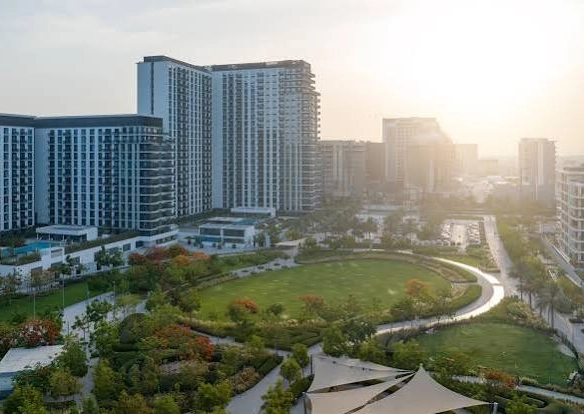
Dubai Hills Estate
Dubai Hills Estate has developed into a significant luxury market containing apartments, family villas, golf-course homes and residential plots.
What supports its appeal
It provides a more integrated family environment than many isolated ultra-prime locations. Dubai Hills Park, Dubai Hills Mall, schools, healthcare and an 18-hole golf course support year-round residential use.
Its large villas and golf-facing plots attract buyers who want contemporary homes within a modern master-planned community.
What buyers should examine
Dubai Hills Estate is extensive. Homes near the mall or major roads should not be valued in the same way as secluded golf-facing properties.
Buyers should assess the individual neighbourhood, plot orientation, traffic, landscaping maturity and possible future development around the property.
Best suited to: Families wanting luxury housing within a community offering broad everyday facilities.
District One
District One forms part of Mohammed Bin Rashid City and includes villas, mansions, apartments and homes positioned around a large lagoon.
What supports its appeal
The community provides low-rise residential living within comparatively easy reach of Downtown Dubai. Contemporary homes, water views and proximity to central business and leisure districts strengthen its appeal.
What buyers should examine
Buyers should distinguish between established phases, newer releases and surrounding development plans. Lagoon frontage, plot size, property condition and distance from construction activity can materially affect the living experience.
Best suited to: Buyers who want modern villa living close to Downtown Dubai.
Downtown Dubai
Downtown Dubai’s ultra-luxury market is primarily vertical. It consists of penthouses, full-floor residences, branded homes and apartments with direct views of the Burj Khalifa or Dubai Fountain.
What supports its appeal
The district offers access to major cultural, retail, hospitality and business destinations. Certain views and building positions are extremely difficult to reproduce.
Apartments may also provide professional management, concierge services and lock-and-leave convenience for internationally mobile owners.
What buyers should examine
View protection, traffic, building management and service charges are essential considerations. Two apartments with similar floor areas can have very different values because of their floor, orientation, lift access, ceiling height and outlook.
Best suited to: Buyers seeking a prestigious central address and hotel-style apartment living.
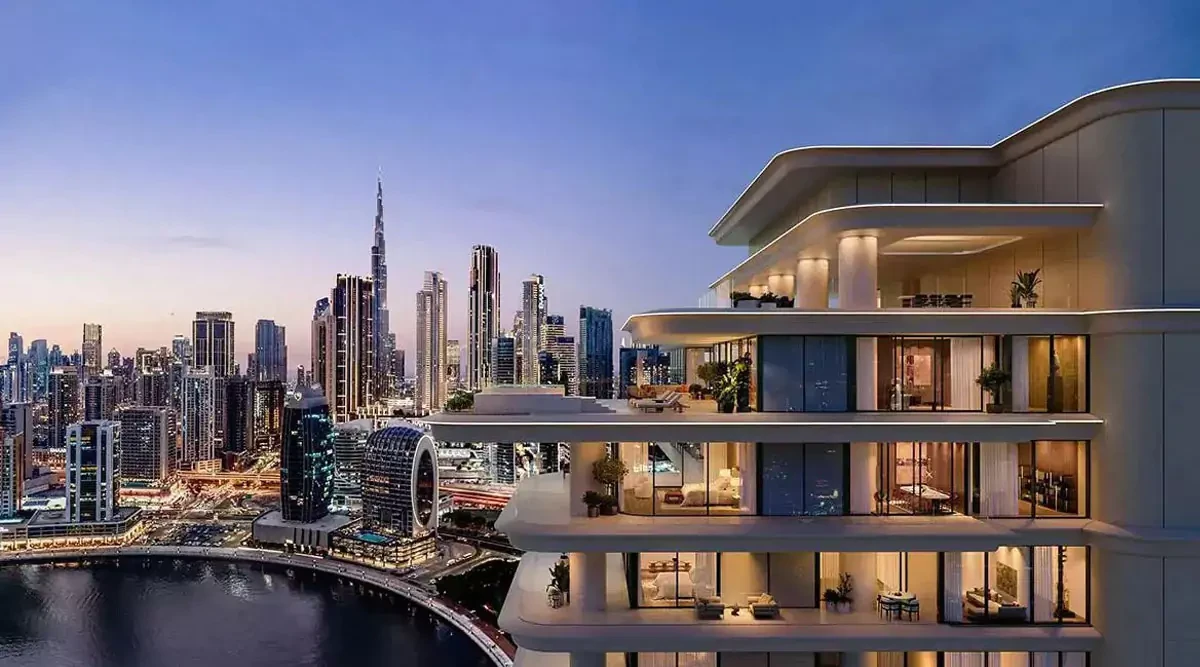
Dubai Water Canal and Jumeirah Waterfront Areas
The waterfront running through Jumeirah, Al Wasl and the Dubai Water Canal has attracted branded residences, low-density apartment buildings and private mansion developments.
What supports their appeal
These locations combine waterfront views with access to central Dubai. Selected developments offer large lateral apartments, private lifts and a limited number of residences.
What buyers should examine
The quality of the immediate surroundings matters. Buyers should investigate road access, neighbouring plots, construction plans and whether the advertised waterfront outlook can be obstructed later.
Best suited to: Buyers who want contemporary waterfront living without moving to the outer parts of the city.
What Ultra-Luxury Buyers Are Looking For
The highest-priced properties compete on attributes that go beyond bedroom count.
Privacy
Private entrances, limited shared corridors, screened outdoor areas and controlled visitor access can be more important than elaborate communal facilities.
In apartments, buyers may seek dedicated lift lobbies or full-floor layouts. In villas, plot position and landscaping often determine whether privacy is genuine.
Space that functions well
Very large homes can still have inefficient layouts. Ultra-luxury buyers increasingly examine ceiling heights, room proportions, storage, staff accommodation, parking and the relationship between formal and family spaces.
A property designed for impressive photographs may not work equally well as a full-time home.
Wellness facilities
Private gyms, treatment rooms, saunas, cold-plunge pools and landscaped outdoor spaces have become more common. Air quality, natural light and acoustics are also important, even when they receive less attention in property marketing.
Turnkey condition
Some buyers prefer completed homes with furniture, art, technology and operational systems already in place. This can be especially attractive to international purchasers who do not want to manage a multi-year design and construction process.
Turnkey premiums should still be assessed carefully. Furniture and decorative finishes depreciate differently from land and buildings.
Service and management
Branded residences and serviced developments appeal to owners who want concierge assistance, security, housekeeping or rental management.
The quality of these services should be tested against the contractual documents. Marketing descriptions may change, while the legal agreement determines what the owner is actually entitled to receive.
Provenance and design
Architecture, interior design and brand association can make a home more recognisable. In rare cases, this supports resale demand.
However, highly personalised design may reduce the future buyer pool. Distinctive architecture is not automatically the same as broadly marketable architecture.
Branded Residences in the Ultra-Luxury Market
Branded residences are an important but frequently misunderstood part of Dubai luxury property.
The branding arrangement may involve:
- A hotel operator
- A fashion or jewellery house
- An automotive brand
- A designer or architecture practice
- A restaurant, entertainment or lifestyle name
Not all partnerships provide the same level of involvement. In some developments, the brand operates the building and provides hospitality services. In others, it may contribute mainly to design, marketing or concept development.
Questions branded-residence buyers should ask
- What is the brand’s exact contractual role?
- How long does the branding or management agreement last?
- What happens if the brand withdraws?
- Which services are included?
- Which services carry additional charges?
- Can owners rent their properties independently?
- Are there restrictions on alterations or furnishing?
- How are service charges calculated?
- Does the brand manage resale or leasing?
- Are hotel facilities guaranteed or subject to availability?
A recognised name may support buyer confidence, but it cannot compensate for a weak location, poor layout or unsustainable operating costs.
Ready Homes Versus Off-Plan Ultra-Luxury Property
Dubai’s ultra-luxury market includes both completed residences and ambitious off-plan projects. Each requires a different buying approach.
| Factor | Ready property | Off-plan property |
|---|---|---|
| Inspection | The actual home can be examined | Assessment depends on plans, specifications and show units |
| Views | Existing outlook can be confirmed | Future buildings may affect the outlook |
| Occupancy | Usually available after transfer | Depends on construction and handover |
| Payment | Often requires substantial funds at transfer | May include staged payments |
| Property condition | Defects and renovations can be assessed | Final workmanship is not yet visible |
| Market comparison | Comparable transactions may be available | Pricing may reflect future positioning |
| Main risk | Hidden defects or overpaying for renovations | Delay, specification changes and execution risk |
For off-plan property, buyers should verify the developer, project registration, escrow arrangements, sale agreement and construction status through official channels.
At the ultra-luxury level, buyers should also examine whether promised materials, appliances, landscaping and branded services are clearly stated in the contract. Descriptions such as “equivalent quality” can leave considerable room for interpretation.
How Ultra-Luxury Properties Are Valued
Conventional price-per-square-foot comparisons can be misleading at the top of the market.
Two properties in the same neighbourhood may differ because of:
- Plot position
- Beach or water access
- View quality
- Architectural importance
- Privacy
- Renovation standard
- Ceiling height
- Internal efficiency
- Furniture and art packages
- Brand association
- Construction quality
- Handover timing
- Development restrictions
- Seller motivation
Price per square foot remains useful, but it should be adjusted for these property-specific characteristics.
Recent registered transactions are usually more reliable than asking prices. Yet even transaction comparisons require interpretation: a shell-and-core penthouse should not be compared directly with a fully furnished branded residence simply because they share a postcode.
Costs Beyond the Purchase Price
An ultra-luxury acquisition can involve significant costs after transfer.
Buyers should budget for:
- Dubai Land Department and registration-related charges
- Brokerage and conveyancing costs
- Mortgage or valuation expenses where applicable
- Annual service or community charges
- Building and contents insurance
- Pool and landscaping maintenance
- Cooling and utility expenses
- Staff and property management
- Furniture replacement
- Marine maintenance for properties with private berths
- Periodic refurbishment
- Hotel or branded-service charges
The difference between gross value growth and the owner’s net return can be substantial once these expenses are included.
Dubai Land Department’s Service Charge Index can help buyers check approved charges for jointly owned properties. For villas, owners should request recent utility and maintenance records to understand realistic operating costs.
Investment Advantages of Ultra-Luxury Dubai Property
Exposure to scarce locations
A carefully selected home can provide exposure to waterfront, island or golf-course land that has limited direct substitutes.
International buyer demand
Dubai’s luxury market attracts buyers from multiple regions. This can create a broader demand base than a market dependent mainly on domestic purchasers.
Personal use and wealth planning
Many purchases combine lifestyle and financial objectives. The property may serve as a primary residence, seasonal home or long-term family asset.
Potential rental demand
Well-located luxury homes may appeal to executives, entrepreneurs and relocating families. However, the tenant pool becomes narrower as the rent rises.
Projected rental income should be supported by completed leasing evidence, not merely an assumed percentage of the purchase price.
Risks Buyers Should Not Ignore
Paying for marketing rather than scarcity
An elaborate launch does not make a property scarce. Buyers should determine what cannot be reproduced: the land, view, architecture, brand contract or service offering.
Limited resale liquidity
A trophy home may take longer to sell because relatively few buyers can afford it or appreciate its design. Owners needing a quick exit may have to accept a significant discount.
High ownership costs
Large villas and heavily serviced buildings can be expensive to operate. Service charges and maintenance may reduce investment returns or deter future buyers.
Construction and handover risk
Ultra-luxury off-plan developments can be technically complex. Delays, specification disputes and snagging issues remain possible regardless of the purchase price.
Oversupply within a particular format
Dubai may have limited beachfront land while still developing many luxury apartments or branded residences. Scarcity must be assessed at the property-type level.
Market cycles
Prime property prices do not move upward indefinitely. Changes in global wealth, financing conditions, currencies, geopolitical risks and new supply can influence demand.
Over-customisation
A home designed closely around one owner’s taste may require expensive changes before it appeals to another buyer.
Due Diligence for an Ultra-Luxury Purchase
A thorough review should cover the property, seller, developer and transaction structure.
Verify ownership and property status
Check the title deed, ownership details, restrictions and property status through Dubai Land Department or an authorised registration trustee.
Confirm the broker and developer
Use a properly licensed real estate broker. For off-plan purchases, confirm that the developer and project are registered with the relevant authorities.
Review the sale agreement
The agreement should identify the property, payment terms, completion requirements, included fixtures and remedies for default. High-value buyers should obtain independent legal advice rather than relying solely on sales representatives.
Commission a technical survey
For a ready villa, assess the structure, roof, waterproofing, air-conditioning, electrical systems, lifts, pools and landscaping.
For apartments, inspect the unit while also reviewing the building’s maintenance history and management arrangements.
Investigate alterations
Confirm that extensions, structural changes and major renovations have the required approvals. Unauthorised work may cause problems during financing, insurance or resale.
Understand service charges
Request current statements, approved budgets and details of any special levies. In branded developments, establish which services are compulsory and which are optional.
Protect the view
Ask what may be built on neighbouring plots. A waterfront or skyline view should not be treated as permanent unless planning and ownership conditions support that conclusion.
Examine the exit market
Identify the likely future buyer. A property can be impressive but difficult to resell if its layout, price or design appeals to an extremely narrow audience.
Frequently Asked Questions
What price is considered ultra-luxury in Dubai?
There is no official threshold. Some market reports classify transactions above AED 10 million as prime, while super-prime international research often examines homes above US$10 million, or approximately AED 36.7 million. Location, scarcity and quality remain more important than a label.
Where are Dubai’s most expensive homes located?
Leading ultra-luxury locations include Jumeirah Bay Island, Palm Jumeirah, Emirates Hills, Dubai Hills Estate, District One and selected central waterfront districts. Exceptional penthouses are also found in Downtown Dubai and branded developments across the city.
Are branded residences a good investment?
They can provide service, design consistency and international recognition, but they may also carry premium prices and higher operating costs. Buyers should examine the brand agreement, location, supply and resale market before deciding.
Can foreigners buy ultra-luxury property in Dubai?
Foreign buyers can acquire freehold property in designated areas. Eligibility and title status should be confirmed for the individual property through Dubai Land Department or an appropriately qualified adviser.
Do ultra-luxury homes provide high rental yields?
Not necessarily. Prime homes may achieve substantial annual rents, but their purchase prices and operating expenses are also high. Percentage yields can be lower than those of smaller mainstream properties.
Is off-plan or ready property better for luxury buyers?
Ready homes provide certainty about views, construction and condition. Off-plan properties may offer new designs and staged payments but introduce delivery and execution risks. The better choice depends on the buyer’s timeline and risk tolerance.
How can buyers verify Dubai property transactions?
Dubai Land Department publishes market information and provides transaction and property services through its website and Dubai REST application. Professional valuation should still account for differences between individual homes.
Understanding Value at the Top of Dubai’s Market
Dubai’s ultra-luxury property market is no longer defined only by large villas and high prices. Its strongest assets combine scarce locations, privacy, thoughtful design, high construction standards and a lifestyle that is difficult to reproduce elsewhere in the city.
The market’s growth has created more choice, but it has also produced wider variations in quality. A branded name, record asking price or dramatic rendering should never replace property-specific analysis.
Buyers should compare completed transactions, investigate long-term costs, confirm the legal position and assess how easily the property could be resold. HAMZ International Real Estate can help buyers examine suitable ultra-luxury homes and compare opportunities based on location, quality, lifestyle and long-term objectives.
Sources & Fact-Checking
- Dubai Land Department — Official transaction data, title and project services: Dubai Land Department
- Dubai Land Department — Q1 2026 market-wide transaction performance: Dubai real estate transactions in Q1 2026
- Dubai Land Department — Property and ownership services available through Dubai REST: Dubai REST
- Dubai Land Department — Approved charges for jointly owned properties: Service Charge Index
- Savills — Transactions above AED 10 million and Dubai’s 2025 prime residential performance: Dubai Prime Residential Market Report
- Knight Frank — Dubai’s role in global prime-residential performance during 2025: Prime Residential Property Index 2026
- CBRE — Development and demand in the UAE branded-residences market: UAE Branded Residences Report 2025
- Nakheel — Palm Jumeirah’s scale, residences, waterfront amenities and development profile: Palm Jumeirah
- Emaar — Emirates Living and its luxury villa communities: Emirates Living
- Emaar — Dubai Hills Estate’s residential, golf, park, retail and education facilities: Dubai Hills Estate
Read Also: Best Dubai Beachfront Properties for Luxury Buyers