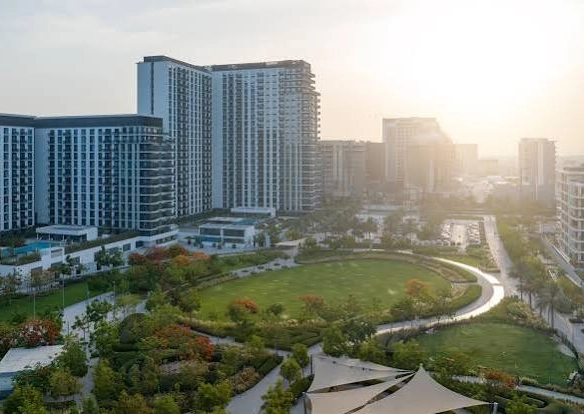
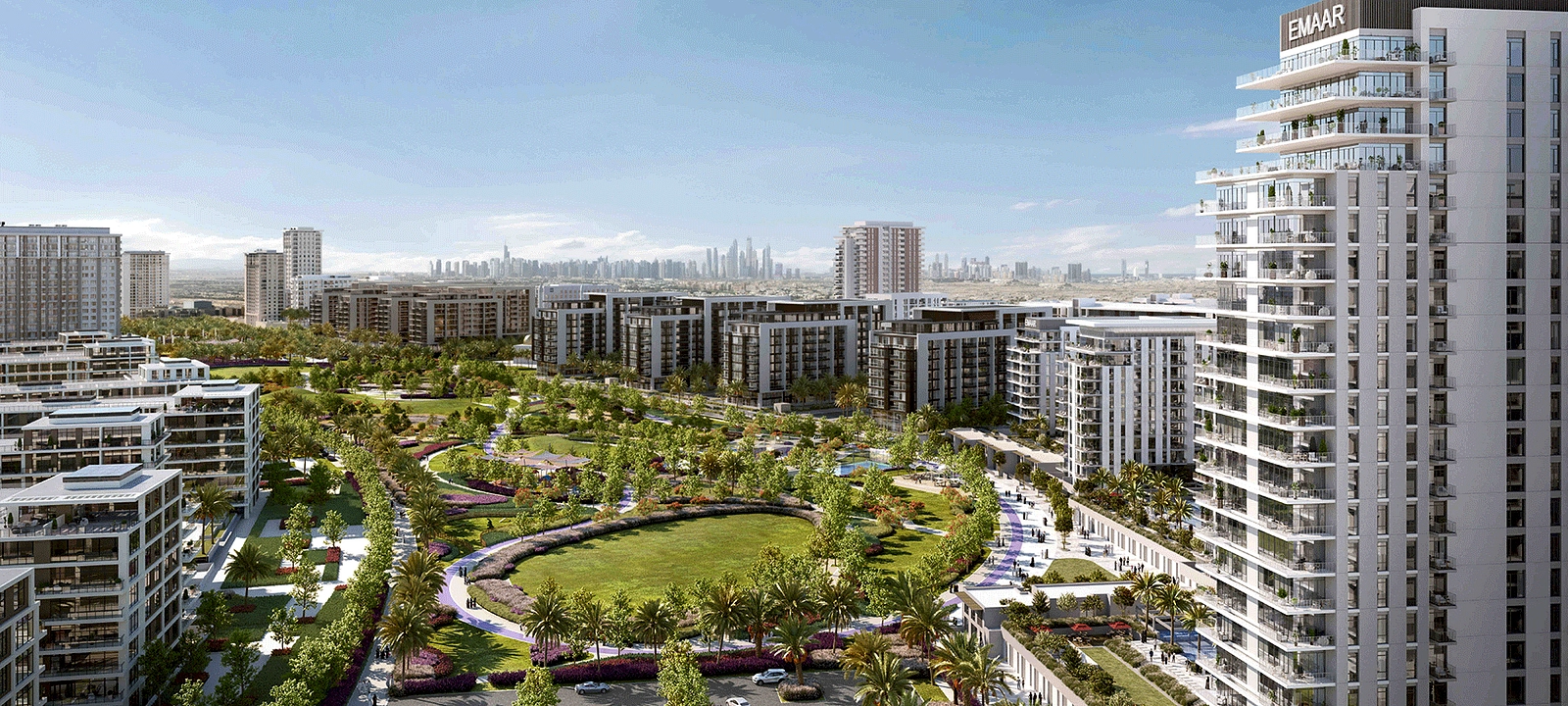
Buying off-plan property in Dubai means purchasing a home before construction is fully completed. Depending on the project, you might buy at launch, during construction or relatively close to handover.
The attraction is easy to understand. Off-plan developments can offer newer properties, staged payment plans, early unit selection and access to communities that may look very different by the time construction finishes.
But learning how to buy off-plan property properly involves much more than paying a reservation amount.
The buyer should verify the developer, confirm that the project is registered, check the project’s escrow details, understand the payment schedule, review the Sale and Purchase Agreement, ensure the transaction is provisionally registered and monitor construction through official channels.
Dubai’s off-plan market is substantial. Cavendish Maxwell reported that off-plan sales accounted for approximately 74.8% of residential transactions during H1 2026, representing 59,300 transactions.
Dubai also has a formal legal framework governing off-plan transactions. Dubai Land Department registers qualifying off-plan sales through its provisional registration system, while Dubai’s escrow legislation regulates how purchaser funds are handled for qualifying developments.
That regulatory framework is important.
It does not, however, mean every registered off-plan property is automatically a good investment.
Buyers still need to determine whether the particular unit is worth its price.
How to Buy Off-Plan Property in Dubai at a Glance
| Stage | What the Buyer Should Do |
|---|---|
| 1 | Set budget and investment objective |
| 2 | Choose the right area |
| 3 | Research the developer |
| 4 | Verify broker licensing if using an agent |
| 5 | Verify the project and escrow account |
| 6 | Compare off-plan price with ready property |
| 7 | Select the exact unit |
| 8 | Review reservation terms |
| 9 | Review and sign the SPA |
| 10 | Pay according to verified instructions |
| 11 | Ensure Oqood/provisional registration |
| 12 | Follow construction and instalments |
| 13 | Inspect at handover |
| 14 | Complete outstanding contractual obligations |
| 15 | Complete final registration/title process |
Each stage deserves attention.
A mistake made at the reservation stage can be much harder to fix after several instalments have been paid.
What Is Off-Plan Property in Dubai?
Off-plan property is real estate purchased before the development or unit is fully completed.
Dubai’s Interim Property Register framework regulates property sold during development. Law No. 13 of 2008 states that qualifying off-plan units are entered in the Interim Property Register and recognises registered dispositions involving those units.
The property might be:
- at launch
- under early construction
- halfway completed
- approaching handover
This is different from buying a completed property where the apartment, villa or townhouse already exists and can be fully inspected.
Can Foreigners Buy Off-Plan Property in Dubai?
Yes, foreign non-residents and expatriate residents can acquire qualifying property in Dubai’s designated foreign-ownership areas. The UAE Government confirms that foreign ownership is permitted in designated freehold areas in Dubai.
DLD’s current initial-sale registration requirements also expressly accept a valid passport for non-resident individual purchasers.
That means residency in the UAE is not, by itself, a requirement for every off-plan purchase.
However, the buyer should still verify that the exact development and property are available under the appropriate ownership structure.
Step 1: Decide Why You Are Buying
Before looking at projects, decide what the property is supposed to achieve.
Your objective might be:
Rental income
You intend to hold the property after completion and rent it.
In that case, focus on:
- expected tenant demand
- realistic future rent
- service charges
- unit size
- nearby employment
- competing rental supply
Capital appreciation
You are primarily looking for long-term growth in property value.
Then the focus shifts more toward:
- infrastructure
- land scarcity
- master-plan development
- future end-user demand
- entry price
Personal use
If you intend to occupy the home, factors such as:
- layout
- schools
- transport
- community amenities
- completion timing
may matter more than achieving the absolute highest rental yield.
Balanced investment
Many buyers want both rental income and long-term appreciation.
This can be a sensible approach because the property does not depend entirely on one source of return.
Step 2: Establish Your Real Budget
Do not begin with:
“How much is the booking fee?”
Begin with:
“How much is the entire property going to cost me?”
Suppose an apartment costs:
AED1,500,000
and the developer requires:
AED150,000 initially.
The investment is not AED150,000.
The contractual property price is:
AED1.5 million.
The remaining AED1.35 million still needs to be paid according to the agreed schedule.
Your budget should consider:
- purchase price
- registration obligations
- future instalments
- possible financing
- handover payment
- furnishing
- future service charges
- liquidity reserve
A low initial payment can make an expensive property feel more affordable than it really is.
Step 3: Choose the Area Before the Project
One of the most common mistakes in Dubai off-plan buying is starting with a development rather than the location.
A better sequence is:
investment strategy → area → developer → project → exact unit
rather than:
payment plan → project → hope
Ask what will support demand in the area after handover.
Look at:
- transport
- employment
- schools
- retail
- road access
- existing residents
- future population
- competing projects
The best area will depend on your strategy.
A rental investor may reach a very different conclusion from someone buying a premium waterfront home for ten years.
Step 4: Compare Off-Plan With Ready Property
Before reserving a new apartment, check what completed property already costs nearby.
Suppose:
New off-plan one-bedroom:
AED1.6 million
Comparable ready one-bedroom:
AED1.25 million
Difference:
AED350,000
The off-plan property carries a 28% premium.
That premium may be justified by:
- better construction
- better location
- larger unit
- superior amenities
- better view
- lower building age
- stronger developer
But you should be able to identify what you are receiving for the extra AED350,000.
A payment plan does not automatically justify the premium.
Step 5: Research the Developer
The developer is one of the most important variables in an off-plan purchase.
Research:
- previously completed projects
- delivery history
- finished construction quality
- building management after handover
- maintenance reputation
- past project performance
Do not evaluate a developer only from renders of the project currently being sold.
Visit completed developments where possible.
A developer’s finished properties can tell you considerably more than a showroom.
Step 6: Verify That the Project Is Registered
Do not rely exclusively on brochures, advertisements or statements from sales representatives.
Dubai Land Department provides a Project Status Enquiry service that allows users to search by project name, project number or land number and view official project information and completion data.
DLD’s project-registration process itself requires a developer to register the development before conducting qualifying off-plan sales. Its current registration framework includes project documentation, final building permits, master-developer approvals where applicable and establishment of the project’s escrow structure.
For buyers, the important point is straightforward:
Verify the project through DLD rather than assuming that a marketed development is properly registered.
Step 7: Check the Project’s Escrow Account
Escrow is one of the most important protections in Dubai’s off-plan system.
Under Law No. 8 of 2007, developers wishing to sell units off-plan must operate within the project’s escrow framework. Purchaser or project-financier payments are deposited into an account opened in the name of the real estate development.
The law also requires separate escrow accounts where a developer has multiple projects. The project account is dedicated to that specific development.
This means you should verify:
- project name
- project registration
- escrow-account information
- official payment instructions
before transferring substantial funds.
Why the Escrow Account Matters
The escrow account is not simply the developer’s normal corporate bank account.
Dubai law establishes it specifically for the real estate development project.
DLD describes the escrow account as the project’s bank account into which amounts from purchasers of off-plan units, project financiers or the developer are deposited.
Dubai REST can also provide off-plan beneficiaries with project information including the escrow account number.
That gives buyers an official way to cross-check project details.
Step 8: Verify the Real Estate Broker
If you are buying through a broker, confirm that the broker is properly licensed.
Dubai Land Department operates an official Licensed Real Estate Brokers service where customers can check brokers registered by RERA.
DLD also maintains a separate list of licensed real estate brokerage companies.
This should be a normal part of due diligence.
A professional-looking social-media account or business card is not a substitute for checking regulatory status.
Step 9: Choose the Exact Unit Carefully
Even within a strong development, individual apartments can have very different investment characteristics.
Compare:
- floor
- orientation
- unit size
- balcony
- layout
- parking
- distance from lifts
- expected view
- future construction nearby
Do not buy a unit merely because the floor-plan graphic looks attractive.
Ask whether the layout uses space efficiently.
A 900-square-foot apartment with awkward corridors can feel less useful than a well-designed 800-square-foot unit.
Check Whether the View Could Change
This matters especially in large master developments.
Today’s marketing material may show:
- skyline
- park
- sea
- golf
- open land
But ask what is planned on neighbouring plots.
A unit marketed as having an open view during construction may eventually face another building.
Try to understand the broader master plan rather than analysing only the tower being purchased.
Step 10: Calculate Price per Square Foot
Total price can hide significant differences in value.
Suppose:
Apartment A
Price: AED1.4 million
Size: 700 sq ft
Price per square foot:
AED2,000
Apartment B
Price: AED1.5 million
Size: 900 sq ft
Price per square foot:
AED1,667
Apartment B costs AED100,000 more overall but is considerably cheaper per square foot.
That does not automatically make Apartment B the better investment.
But it tells you something important that the headline property price does not.
Compare the project against:
- other launches
- completed nearby buildings
- recent resale property
using both total price and price per square foot.
Step 11: Understand the Payment Plan
Off-plan payment plans vary by development.
There is no universal Dubai schedule that every project must use.
One project might concentrate payments during construction.
Another might require a large amount at handover.
Another may offer payments after completion.
A hypothetical payment structure could look like:
| Stage | Example |
|---|---|
| Reservation | 10% |
| During construction | 50% |
| Handover | 40% |
Another project could be completely different.
What matters is whether you can comfortably meet every payment.
Do Not Judge a Property by the Monthly Instalment
An expensive property can look cheap when the price is divided into small instalments.
Suppose:
Property A:
AED1.4 million
Property B:
AED1.8 million
Property B offers a much longer payment plan.
It may feel financially easier.
But its underlying price is still:
AED400,000 higher.
Always judge the investment first by:
- total price
- unit quality
- location
- expected rent
- comparable market value
Then judge the payment plan.
Step 12: Review the Reservation or Booking Form
The booking form may look simple, but do not treat it casually.
Check:
- exact unit number
- project name
- purchase price
- reservation amount
- payment schedule
- reservation cancellation terms
- what happens if you do not proceed
- deadline for signing the SPA
Do not assume a reservation amount is automatically refundable.
The wording of the specific reservation agreement matters.
If a term is unclear or financially significant, obtain appropriate professional advice before signing.
Step 13: Review the Sale and Purchase Agreement
The SPA is one of the most important documents in the transaction.
Do not read only:
- the price
- handover date
- payment plan
Review the entire agreement.
Important provisions can include:
- exact property description
- purchase price
- instalment schedule
- completion provisions
- buyer default
- developer obligations
- delays
- assignment/resale provisions
- unit-area provisions
- notices
- dispute mechanisms
- handover requirements
DLD’s initial registration service requires a copy of the SPA for provisional sale registration.
The SPA is therefore not just promotional paperwork.
It forms a central part of the registered transaction.
Step 14: Understand What Happens if You Miss Payments
This is an area buyers should understand before signing, not when a problem occurs.
Dubai Law No. 19 of 2020 establishes procedures where a purchaser fails to meet contractual obligations under an off-plan agreement.
The developer must first notify DLD, after which DLD verifies the breach and serves a 30-day notice requiring the purchaser to fulfil the relevant obligations.
If the issue is not resolved, the remedies available to the developer depend partly on project completion.
Under the law:
- where completion exceeds 80%, specified remedies can include termination with retention of up to 40% of the contractual property value
- where completion is between 60% and 80%, the developer may terminate and retain up to 40%
- where construction has commenced but completion is below 60%, termination may allow retention of up to 25%, subject to the statutory procedure.
These are significant consequences.
Do not enter a payment plan unless you have a realistic strategy for funding the entire contract.
Step 15: Sign the SPA and Complete the Required Payments
Once you are satisfied with the project, unit, documents and financing plan, the SPA can be executed.
DLD’s current provisional-registration terms require the sale and purchase contract to be signed by both developer and purchaser.
Keep copies of:
- booking documents
- SPA
- receipts
- payment instructions
- correspondence
- registration certificates
Property purchases can last for several years from booking to handover, so good record keeping matters.
Step 16: Make Sure the Sale Is Registered in Oqood
This is one of the most important steps in buying off-plan property in Dubai.
DLD’s Initial Sale Registration service uses the Oqood portal to register qualifying sales in the provisional register.
The current DLD service states that the SPA must be registered in the provisional register within 90 days of signing.
After registration, the issued document is a:
Provisional Registration e-Certificate.
You may also hear this registration commonly referred to in the market as:
Oqood registration.
Why Oqood Registration Matters
The Interim Property Register exists to record transactions involving property that is still under development.
Dubai Law No. 13 of 2008 establishes that off-plan units entered in the Interim Property Register may subsequently be dealt with through recognised legal dispositions.
Registration therefore gives the transaction a formal position within Dubai’s property-registration system.
Do not settle for:
“Don’t worry, the developer has your booking in its internal system.”
Confirm provisional registration.
How Much Is Off-Plan Registration?
DLD’s current Initial Sale Registration schedule lists:
| Fee | Current DLD Schedule |
|---|---|
| Seller | 2% of sale value |
| Purchaser | 2% of sale value |
| Knowledge fee | AED10 |
| Innovation fee | AED10 |
| Developer Oqood self-registration fee | AED1,000 |
Dubai’s broader fee legislation states that the sale-registration fee is shared equally between buyer and seller unless agreed otherwise.
That distinction is important.
In practice, the commercial agreement may allocate costs differently, so buyers should check the booking terms and SPA rather than simply assume what they personally will pay.
Example: Registration on a AED1.5 Million Property
Suppose:
Property price:
AED1,500,000
DLD’s formally listed purchaser portion:
2% = AED30,000
Seller portion:
2% = AED30,000
Combined statutory sale-registration percentage:
4% = AED60,000
The actual commercial allocation should be checked in the contract because DLD’s fee framework permits the parties to agree otherwise.
Do not simply add 4% to the buyer’s budget without checking the transaction terms.
Step 17: Track Construction Through Dubai REST
After buying, do not rely solely on periodic developer marketing updates.
Dubai REST provides off-plan beneficiaries with real-time project information including:
- percentage of completion
- actual project photographs
- escrow account number
- payments due for the property.
DLD also provides Project Status Enquiry through its website and Dubai REST.
This makes construction monitoring considerably more transparent.
Step 18: Continue Paying Instalments According to the SPA
The purchase process does not end after Oqood registration.
Continue tracking:
- payment due dates
- instalment values
- receipts
- construction status
- developer notices
Do not assume that a rising market will allow you to sell the property before later payments become due.
Your safest financing plan is one that allows you to meet the contract even if resale before handover is difficult.
Can You Sell an Off-Plan Property Before Handover?
Potentially, yes.
Dubai Law No. 13 of 2008 recognises that off-plan property registered in the Interim Property Register may be subject to further legal dispositions.
DLD’s current FAQ also states that resale or assignment before final transfer can be possible after obtaining a No Objection Certificate from the developer.
However, the exact resale rules may depend on:
- developer
- SPA
- amount already paid
- project
- DLD requirements
Do not purchase on the assumption that you will definitely be able to flip the unit whenever you want.
Buying Off-Plan to Flip Before Handover
Some investors use a strategy such as:
buy at launch → pay initial instalments → resell during construction
This can work when:
- market prices rise
- demand remains strong
- assignment is permitted
- another buyer is willing to take over the remaining obligations
But it should not be treated as guaranteed.
If the market slows, the original purchaser remains responsible for the contractual payment schedule unless the property is successfully transferred or another lawful arrangement is reached.
For a first off-plan purchase, it is safer to buy something you would still be comfortable owning at completion.
Step 19: Consider Mortgage Financing Carefully
Off-plan financing is possible in qualifying circumstances, but it is not identical to buying ready property.
The current Central Bank of the UAE mortgage framework sets a maximum loan-to-value ratio of 50% for property being purchased off-plan, regardless of purchaser category, property value or purpose.
That is a regulatory ceiling.
It does not mean every bank will lend 50% on every project.
Actual financing can depend on:
- lender
- borrower eligibility
- developer
- project
- construction stage
- valuation
A developer payment plan and a bank mortgage should also be treated as two different things.
Do Not Assume You Can Mortgage the Handover Payment
Suppose your SPA requires:
40% at handover.
Do not automatically assume a bank will finance that entire amount when the time comes.
Mortgage approval depends on the borrower’s future eligibility and the bank’s requirements at that time.
If your investment only works because you expect financing several years from now, build a backup plan.
Step 20: Prepare for Handover Before Completion
As the project approaches completion, review what the developer requires.
This may include:
- outstanding instalments
- identification documents
- handover scheduling
- inspections
- final contractual procedures
Begin preparing early rather than waiting for the handover notice.
Step 21: Inspect the Property
The finished unit should be inspected against what was contractually purchased.
Check items such as:
- walls
- flooring
- doors
- windows
- sanitary fittings
- kitchen
- electrical fittings
- air-conditioning
- balconies
- finishes
Any snagging process should be handled according to the project’s handover arrangements.
For higher-value or technically complex properties, professional inspection can be worth considering.
What if the Final Unit Size Is Different?
Small changes between planned and completed dimensions can occur in property development.
The important point is that buyers should review how the SPA treats final area and compare the completed unit with the registered project information.
DLD’s FAQ provides specific guidance on area differences in off-plan transactions, so buyers facing a material discrepancy should check the current rule and their contract rather than rely on a salesperson’s informal explanation.
Step 22: Final Registration and Title
Off-plan registration is not the end state of property ownership.
Law No. 13 of 2008 provides that after a project is completed and receives its completion certificate, the developer must register completed projects in the Property Register, including sold units in the names of purchasers who have fulfilled their contractual obligations.
The legislation also provides a route for DLD to register qualifying units in the purchaser’s name where the purchaser has fulfilled those obligations.
In simple terms:
Oqood/provisional registration covers the property while it is under development.
After completion and satisfaction of the relevant requirements:
the property moves into the final property-registration framework.
What Happens if a Project Is Cancelled?
Dubai’s legislation includes provisions dealing with incomplete and cancelled projects.
Law No. 19 of 2020 states that where a project is cancelled by a final reasoned decision of RERA, the developer must refund payments made by purchasers in accordance with the applicable escrow-account procedures.
The Escrow Account Law also states that where an emergency results in a development not being completed, the escrow agent must, after consultation with DLD, take measures to preserve depositors’ rights and facilitate completion or repayment.
These protections are one reason verifying the project and escrow arrangement before buying is so important.
Off-Plan Property Buying Costs
A proper budget should separate the property’s price from the surrounding expenses.
Potential items include:
Property purchase price
The largest obligation.
Initial reservation payment
Varies by developer and project.
DLD registration
DLD currently lists 2% against the purchaser and 2% against the seller for initial sale registration, subject to the applicable contractual allocation.
Knowledge and Innovation fees
DLD currently lists AED10 for each under the initial-sale registration service.
Mortgage expenses
If financing is involved, mortgage-related costs may apply. DLD’s ordinary mortgage registration charge is currently 0.25% of the mortgage value, along with applicable additional charges.
Brokerage
Whether and how much the buyer pays depends on the arrangement.
Furnishing
An unfurnished apartment may require substantial setup expenditure before it can be rented.
Service charges
These generally become particularly relevant after handover and should form part of the rental-return calculation.
Example Off-Plan Budget
Imagine an apartment priced at:
AED1,200,000
Hypothetical developer plan:
10% reservation/initial stage:
AED120,000
50% during construction:
AED600,000
40% at handover:
AED480,000
That creates a total contractual property commitment of:
AED1.2 million
before considering registration and other expenses.
An investor should therefore ask:
Can I comfortably fund AED1.2 million according to the scheduled dates?
not simply:
Can I afford AED120,000 today?
How to Evaluate an Off-Plan Investment Before Buying
Use four separate tests.
Test 1: Price
Compare:
off-plan price per square foot
against:
ready-property price per square foot nearby.
Test 2: Rent
Estimate rent using comparable completed buildings rather than only the developer’s projection.
Test 3: Supply
Investigate how many competing properties may complete around the same time.
Test 4: Exit
Ask who is likely to buy the unit from you later.
If all four answers make sense, the project has a much stronger investment case.
Projected Rental Yield Example
Suppose:
Property price:
AED1,200,000
Developer marketing suggests future rent:
AED96,000
Projected gross yield:
8%
Now stress-test it.
If rent after handover is:
AED80,000
yield becomes:
6.67%
If annual service charges and other operating expenses total:
AED20,000
net operating income becomes:
AED60,000
Simplified net yield against the purchase price:
5%
The investment can move from an advertised 8% to a 5% simplified net return without anything unusual happening.
That is why projected yield should be treated conservatively.
What Makes a Good Off-Plan Property?
A strong off-plan investment usually has several positive characteristics working together.
These can include:
- competitive entry price
- credible developer
- registered development
- verified escrow arrangement
- practical unit layout
- reasonable size
- strong location
- realistic tenant demand
- manageable future supply
- attractive but sustainable payment plan
No single factor compensates for everything else.
A prestigious developer does not make an overpriced apartment cheap.
A low price does not make a poor location strong.
A good payment plan does not create rental demand.
Common Off-Plan Buying Mistakes
Buying because the project is almost sold out
A sold-out project shows that developer inventory has been purchased.
It does not prove future resale performance.
Focusing only on the booking amount
The entire purchase price matters.
Ignoring Oqood
Provisional registration should be verified.
Not checking escrow details
Dubai REST allows off-plan beneficiaries to view escrow account information and project progress.
Buying from an unverified broker
DLD provides an official broker-verification service.
Assuming resale before handover is guaranteed
DLD says resale can be possible subject to obtaining the developer’s NOC, but contract and project requirements still matter.
Ignoring buyer-default provisions
Failure to meet contractual obligations can trigger statutory procedures and significant financial consequences.
Assuming future mortgage approval
Financing conditions can change between booking and handover.
Paying a huge premium for a long payment plan
Payment flexibility is not the same thing as investment value.
Off-Plan Property Due Diligence Checklist
Before signing, confirm:
- developer name
- developer track record
- project registration
- DLD project status
- escrow account
- broker licence
- exact unit number
- unit size
- floor
- orientation
- expected view
- surrounding future construction
- total purchase price
- price per square foot
- payment plan
- reservation terms
- SPA provisions
- completion provisions
- buyer-default terms
- assignment/resale conditions
- registration fee allocation
- Oqood registration
- expected future service charges
- realistic rental estimate
- nearby ready-property prices
- competing future supply
- handover plan
- exit strategy
Do not allow marketing urgency to replace this checklist.
Frequently Asked Questions
How do I buy off-plan property in Dubai?
Start by setting your budget and strategy, choose an area and developer, verify the project and broker, confirm the escrow information, select the unit, review the booking terms and SPA, make payments according to verified instructions and ensure the transaction is registered in the provisional register through Oqood.
What is Oqood in Dubai?
Oqood is the system used for provisional registration of qualifying off-plan property transactions. DLD’s current Initial Sale Registration service operates through Oqood and issues a provisional registration e-certificate.
How quickly must an off-plan SPA be registered?
DLD currently states that the SPA must be registered in the provisional register within 90 days of signing.
Can foreigners buy off-plan property in Dubai?
Yes, qualifying foreign buyers can acquire property in designated foreign-ownership areas. DLD’s initial registration requirements accept valid passports for non-resident individual purchasers.
Do I need to live in Dubai to buy off-plan property?
Not necessarily. DLD’s current provisional registration requirements provide for non-resident individual purchasers using a valid passport.
What is an off-plan escrow account?
It is the project-specific account into which qualifying off-plan purchaser and project-financier payments are deposited under Dubai’s escrow framework.
How do I verify an off-plan project?
Use DLD’s Project Status Enquiry or Dubai REST. Project Status can be searched using the project name, project number or land number.
Can I check construction progress online?
Yes. Dubai REST provides off-plan beneficiaries with project completion percentages, actual photographs, escrow information and payment details.
Can I sell an off-plan property before completion?
Potentially. DLD’s FAQ states that resale or assignment is possible after obtaining the developer’s NOC, subject to the relevant requirements.
Is off-plan property always cheaper?
No. New developments can sometimes carry substantial premiums over completed properties nearby. Compare the full price and price per square foot rather than assuming off-plan means discounted.
Is the booking deposit refundable?
That depends on the specific reservation terms and circumstances. Buyers should read the booking agreement carefully before paying.
Can I mortgage off-plan property?
Potentially, subject to lender and project approval. The current CBUAE regulatory maximum LTV for off-plan property mortgages is 50%.
What happens if I stop paying instalments?
Dubai law establishes a formal process beginning with developer notification to DLD and a 30-day notice to the buyer. Potential developer remedies after that depend partly on the project’s completion percentage.
What happens when the project is completed?
After completion and receipt of the relevant completion certificate, qualifying units are moved from the interim framework toward final registration for purchasers who have fulfilled their contractual obligations.
Does buying off-plan guarantee appreciation?
No. Property prices may rise, remain flat or decline. Off-plan should be purchased on the basis of price, demand, project quality and a realistic holding strategy rather than guaranteed resale gains.
The Safest Way to Buy Off-Plan Property in Dubai
Off-plan property can provide access to some of Dubai’s newest communities and developments, but the purchase should be approached as a multi-year financial commitment rather than a simple reservation.
The safest process is:
choose the strategy → research the area → investigate the developer → verify the project → confirm escrow → analyse the unit → compare the price → review the SPA → register through Oqood → monitor construction → inspect at handover → complete final registration.
Dubai’s regulatory framework provides buyers with useful protections and verification tools.
Projects can be checked through DLD.
Licensed brokers can be verified.
Project escrow requirements are established by law.
Off-plan sales are provisionally registered through Oqood.
Construction progress and escrow information can be monitored through Dubai REST.
But none of those protections removes the need to assess investment value.
A properly registered apartment can still be overpriced.
A major developer can still launch units at a substantial premium.
A long payment plan can still create an unaffordable future obligation.
And a projected 8% rental yield can become considerably lower once the actual rent and operating costs are known.
So before buying, ask three final questions:
Would I still want this property if its value did not rise before handover?
Could I meet every instalment if I were unable to resell the contract?
Does the purchase price make sense compared with completed alternatives?
If the answer to all three is yes, the off-plan investment starts from a considerably stronger position.
HAMZ International Real Estate can help buyers compare Dubai off-plan projects, evaluate developers and payment plans, assess nearby ready-property alternatives and identify properties aligned with their budget, investment objectives and intended holding period.
Sources & Fact-Checking
Dubai Land Department — Initial Sale Registration
Supports Oqood registration procedures, documents for residents and non-residents, current registration fees, the 90-day SPA registration requirement and issuance of the provisional registration certificate.
Dubai Land Department — Project Status Enquiry
Supports official verification of a project’s completion percentage and project information.
Dubai Land Department — Dubai REST
Supports access to completion percentages, actual project photographs, escrow account numbers and payment information for off-plan beneficiaries.
Dubai Land Department — Register Project
Supports Dubai’s project-registration and escrow-opening process for developments intended for off-plan sales.
Dubai Land Department — Licensed Real Estate Brokers
Supports official verification of RERA-licensed real estate brokers.
Dubai Land Department — Licensed Brokerage Companies
Supports official verification of licensed brokerage companies operating in Dubai.
Dubai Legislation Portal — Law No. 8 of 2007 on Escrow Accounts
Supports project-specific escrow accounts, purchaser-payment protection and procedures where a development is not completed.
Dubai Legislation Portal — Law No. 13 of 2008 on the Interim Property Register
Supports the Interim Property Register, legal treatment of registered off-plan units, off-plan resale rights and conversion to final registration after completion.
Dubai Legislation Portal — Law No. 19 of 2020
Supports the current statutory process and remedies where an off-plan purchaser fails to meet contractual obligations.
Dubai Land Department — Frequently Asked Questions
Supports guidance on provisional registration, project escrow accounts, assignment/resale subject to developer NOC and other off-plan buyer questions.
UAE Government — Expatriates Buying Property in the UAE
Supports foreign and non-resident acquisition of qualifying property in Dubai’s designated ownership areas.
Central Bank of the UAE — Mortgage Loan Regulations
Supports the current maximum 50% LTV framework for mortgages on property being purchased off-plan.
Cavendish Maxwell — Dubai Residential Market Performance H1 2026
Supports the current market context, including off-plan property representing approximately 74.8% of H1 2026 residential transactions.
Read Also: Best Areas to Buy Off-Plan Property in Dubai