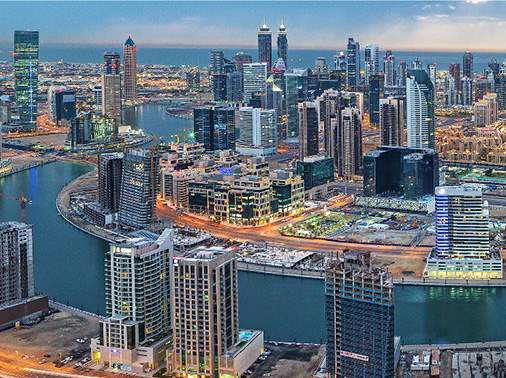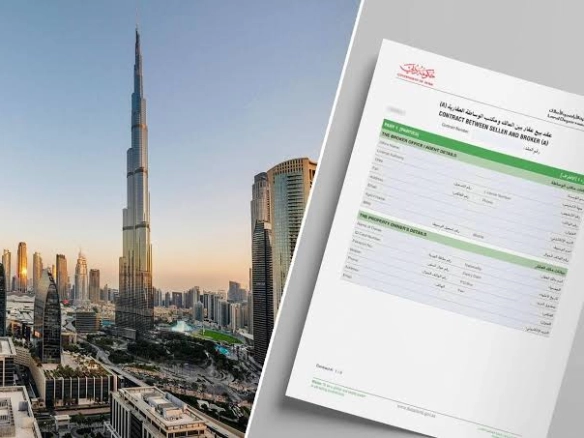

Yes. Foreigners can buy property in Dubai, including people who live outside the United Arab Emirates, provided the property is within an area where foreign ownership is permitted.
Dubai’s property ownership framework allows non-UAE nationals to acquire freehold property in designated areas. Foreign buyers can also acquire certain other real estate interests, including usufruct and long-term leasehold rights of up to 99 years in designated areas. The UAE Government confirms that these rights are available to expatriate residents as well as foreigners who do not live in the UAE.
This means an international buyer does not need to become a UAE resident before purchasing qualifying property in Dubai. Dubai Land Department’s current sale-registration requirements specifically allow a valid passport to be used for a non-resident foreign purchaser.
The important qualification is location and ownership status. Foreign nationals cannot simply assume that every plot or property throughout the Emirate has identical ownership rights.
This guide explains where foreigners can own property, the difference between freehold and leasehold ownership, what documents non-residents need, how much buying costs, whether foreigners can obtain mortgages, how off-plan purchases work and when property ownership may qualify for a Golden Visa.
Can Foreigners Buy Property in Dubai Without Residency?
Yes.
UAE residency is not a general requirement for foreign ownership of qualifying Dubai property.
The UAE Government states that foreigners who do not live in the UAE and expatriate residents can acquire freehold ownership in designated areas of Dubai.
Dubai Land Department reinforces this through its current Property Sale Registration requirements. For individual purchasers, DLD accepts either the relevant Emirates ID or a valid passport for a non-resident foreign buyer.
A person living in London, Nairobi, Mumbai, Singapore, New York or another international location can therefore potentially purchase qualifying Dubai property without first holding a UAE residence permit.
Residency and property ownership should nevertheless be treated as separate matters.
Buying property does not automatically mean that every buyer receives UAE residency. Property-linked residence programmes have their own eligibility requirements.
What Does Foreign Property Ownership in Dubai Mean?
Dubai’s property framework distinguishes between UAE and GCC ownership rights and those available to other foreign nationals.
Dubai Land Department’s investor guidance explains that foreign nationals may hold freehold title within areas specifically designated for foreign ownership. They can also acquire property interests such as usufruct and long-term leases of up to 99 years in those designated areas.
Freehold ownership
Freehold is the ownership structure most international buyers encounter when purchasing residential property in Dubai’s designated foreign-ownership areas.
DLD describes foreign freehold ownership within those areas as unrestricted by time and extending to the property interest covered by the title.
In practical terms, a qualifying freehold property can generally be:
- occupied by the owner
- rented to tenants subject to applicable rules
- sold
- mortgaged where financing is available
- transferred subject to applicable registration requirements
- inherited subject to the applicable legal framework
The precise rights always depend on the registered title and relevant Dubai law.
Leasehold ownership
Leasehold gives the buyer rights to a property for a specified period rather than permanent freehold title.
Dubai’s foreign-ownership framework allows qualifying long-term leasehold interests of up to 99 years within designated areas.
A buyer should therefore establish whether an advertised property is:
- freehold
- leasehold
- usufruct
- another permitted property interest
before making a financial commitment.
Where Can Foreigners Buy Property in Dubai?
Foreign nationals can purchase freehold property in areas designated for foreign ownership.
The legal basis includes Dubai’s property registration framework and regulations designating specific locations where non-UAE nationals may own property.
Dubai Land Department’s investor guidance has identified major designated areas including:
- Palm Jumeirah
- Downtown Dubai
- Business Bay
- Dubai Marina
- Jumeirah Lakes Towers
- Jumeirah Beach Residence
- Discovery Gardens
- Arabian Ranches
- Dubai Investment Park
- Dubai Sports City
- Dubai Motor City
- International City
- Jumeirah Islands
- Jumeirah Village
- Emirates Hills
- The World Islands
This should not be treated as an exhaustive permanent list. Dubai’s designated foreign-ownership areas have evolved over time.
For example, Dubai Land Department announced in January 2025 that private property owners in specified parts of Sheikh Zayed Road and Al Jaddaf could convert eligible properties to freehold ownership for all nationalities.
For this reason, buyers should verify the exact plot, project and title with DLD rather than assuming an entire district has one uniform ownership status.
Popular Freehold Areas for Foreign Buyers
Different freehold communities serve very different buyers and investment strategies.
Downtown Dubai
Downtown Dubai is one of the city’s best-known prime residential districts.
It typically appeals to buyers prioritising central positioning, premium apartments and access to major commercial, hospitality and leisure destinations.
For an investor, the individual building, purchase price and service charges matter just as much as the Downtown address.
Dubai Marina
Dubai Marina offers a mature high-rise waterfront market with apartments across a wide range of buildings and price points.
It can appeal to foreign investors looking for established residential and rental activity, but older buildings should be compared carefully for maintenance and recurring ownership costs.
Palm Jumeirah
Palm Jumeirah targets a more premium segment.
Foreign buyers can find apartments, villas and branded residences, but entry costs and ongoing ownership costs can be substantially higher than in many mid-market communities.
It is better viewed as a luxury-property strategy than automatically as a high-yield strategy.
Business Bay
Business Bay has a large apartment market close to central Dubai.
Investors should compare towers individually because building age, management, layouts, views and service charges can vary significantly.
Jumeirah Village Circle
Jumeirah Village Circle offers a broad range of apartments, townhouses and other residential options.
Its comparatively diverse entry points make it relevant to many first-time investors, but its large development pipeline makes unit and building selection important.
Dubai Hills Estate
Dubai Hills Estate attracts buyers looking for both apartments and larger family-oriented properties within a master-planned environment.
It may suit owner-occupiers as well as investors targeting family and premium residential demand.
Dubai Creek Harbour
Dubai Creek Harbour provides newer waterfront residential stock and a significant development pipeline.
For off-plan investors, future supply and expected community development should be analysed carefully alongside the individual project’s price.
The best foreign-ownership community is therefore not necessarily the most famous one.
It is the area that best matches the buyer’s budget, intended property use and investment strategy.
Can Foreigners Buy Apartments in Dubai?
Yes.
Foreign nationals can purchase apartments in qualifying freehold developments within designated foreign-ownership areas.
Apartments are particularly common among international investors because Dubai has substantial high-rise residential inventory.
Before purchasing an apartment, consider:
- building quality
- unit layout
- floor
- view
- parking
- service charges
- building age
- management
- occupancy
- rental demand
- competing supply
- resale market
DLD provides a Service Charge Index allowing buyers and owners to check service fees approved by RERA for jointly owned properties.
This is especially useful for investors because service charges reduce net rental income.
Can Foreigners Buy Villas in Dubai?
Yes, foreigners can purchase qualifying villas in designated ownership areas.
Freehold villa communities can provide a very different investment profile from apartments.
A villa buyer should examine:
- plot size
- built-up area
- community facilities
- landscaping
- maintenance requirements
- school access
- road connectivity
- family demand
- service or community charges
- future nearby development
For investment purposes, villas may produce lower percentage yields than some smaller apartments but can appeal to a different tenant and future buyer audience.
The correct comparison should be made using actual properties rather than assuming villas or apartments are universally better investments.
Can Foreigners Buy Land in Dubai?
Foreign ownership rights can extend to qualifying land within designated areas, but the exact plot and permitted ownership must be verified.
Dubai’s foreign-ownership regulations identify designated plots and locations where non-UAE nationals can acquire property rights.
Land ownership can also introduce additional questions around:
- permitted use
- development approvals
- planning controls
- construction obligations
- developer or master-community rules
- infrastructure
- plot restrictions
Foreign buyers interested specifically in land should verify the individual plot directly through DLD and obtain appropriate professional advice before entering into an agreement.
Can Foreigners Buy Commercial Property?
Foreign nationals can potentially acquire qualifying commercial property within areas and ownership structures permitted to them.
Commercial units can include offices and other income-producing assets.
However, commercial property should not simply be analysed like a residential apartment.
Investors need to consider issues such as:
- tenant type
- lease structure
- fit-out requirements
- vacancy periods
- building access
- parking
- business location
- service charges
- applicable tax treatment
- resale liquidity
Professional tax and legal advice can be particularly useful where a foreign investor is buying commercial real estate through a company or other investment structure.
Can a Foreign Company Buy Property in Dubai?
Company ownership is possible under qualifying structures, but it is more complicated than an individual foreign buyer purchasing in their personal name.
DLD’s published investor guidance explains that companies registered in Dubai and qualifying DLD-approved free-zone entities may own property within designated areas, subject to applicable rules. It also distinguishes these arrangements from direct ownership by an overseas foreign company.
DLD’s current registration services also contain separate documentation requirements for corporate purchasers, including trade licences, corporate documents and, in some circumstances, attestation or other approvals.
An investor considering a company structure should confirm DLD eligibility before creating the entity or signing the purchase agreement.
The optimal ownership structure can also have legal, succession and tax consequences outside the UAE.
What Documents Does a Foreign Buyer Need?
For a straightforward completed-property purchase by an individual, DLD’s current Property Sale Registration service lists identity documentation as a key requirement.
For residents, this can involve Emirates ID.
For a non-resident foreign purchaser, DLD accepts a valid passport.
DLD also lists an electronic no-objection certificate from the developer for applicable completed properties in freehold areas.
Depending on the transaction, additional documentation may be required if:
- a representative is acting through power of attorney
- the property is mortgaged
- a company is purchasing
- the buyer is financing the property
- the transaction involves another specialised ownership structure
Buyers should obtain a transaction-specific document checklist rather than assuming every purchase requires exactly the same paperwork.
How Does a Foreigner Buy Property in Dubai?
For a typical ready property, the process can be divided into several stages.
1. Set a complete budget
Start with total acquisition cost rather than simply the asking price.
Include:
- purchase price
- DLD registration
- Registration Trustee fees
- title and applicable map charges
- broker costs where applicable
- mortgage costs if financed
- inspection or professional advice
- furnishing
- service charges
- cash reserve
2. Confirm foreign ownership eligibility
Verify that the exact property can legally be acquired under the intended foreign ownership structure.
Do this before paying a non-refundable amount.
3. Choose the property
Compare properties using:
- location
- size
- price
- actual condition
- service charges
- rental potential
- developer or building quality
- future supply
- resale liquidity
4. Verify the broker
DLD provides an official database of licensed Dubai real estate brokers.
Foreign buyers purchasing remotely should be particularly careful to verify the person handling the transaction.
5. Verify the title
Dubai Land Department provides a title-deed verification service allowing users to validate property and owner information.
A professionally designed sales brochure is not a substitute for official property verification.
6. Agree the sale terms
The buyer and seller agree matters such as:
- purchase price
- deposit
- transfer date
- financing terms where applicable
- items included with the sale
- vacant possession
- default provisions
- transaction costs
These should be properly documented.
7. Obtain the required NOC
DLD’s completed-property registration requirements currently include a developer e-NOC for applicable properties in freehold areas.
8. Complete DLD registration
The completed sale is registered with Dubai Land Department through the applicable authorised process.
DLD verifies the documents, registers the transaction, collects applicable charges and issues the transaction output, including the electronic title deed.
How Much Does It Cost a Foreigner to Buy Property in Dubai?
Foreign buyers should distinguish the purchase price from the acquisition cost.
Dubai Land Department currently lists the following charges for completed-property sale registration:
| Cost | Current DLD-listed amount |
|---|---|
| Seller registration charge | 2% of sale value |
| Buyer registration charge | 2% of sale value |
| Combined registration charge | 4% |
| Title deed certificate | AED250 |
| Unified land map under Dubai Municipality | AED225 |
| Land map outside Dubai Municipality | AED100 |
| Apartment/villa map | AED250 |
| Knowledge fee | AED10 |
| Innovation fee | AED10 |
| Trustee fee for property AED500,000+ | AED4,000 + VAT |
| Trustee fee below AED500,000 | AED2,000 + VAT |
These are current DLD-listed charges for the relevant registration service.
DLD formally lists the registration charge as 2% for the seller and 2% for the buyer.
The actual contract should nevertheless be reviewed to determine how the transaction costs are being allocated commercially between the parties.
Other potential buying costs
Depending on the transaction, foreign buyers may also encounter:
- brokerage charges
- mortgage processing fees
- property valuation fees
- insurance
- professional legal or conveyancing fees
- developer administration charges
- property inspection costs
Do not use a generic percentage as a substitute for an itemised transaction estimate.
Do Foreigners Pay a Different DLD Fee?
DLD’s published completed-property sale-registration service does not establish a separate higher percentage registration charge simply because an individual purchaser is foreign or non-resident.
The service lists the same seller and purchaser percentage structure while expressly accommodating non-resident foreigners through passport identification.
However, a foreign buyer’s overall transaction costs can still differ because of financing, legal structure, overseas documentation or banking arrangements.
Can Foreigners Get a Mortgage in Dubai?
Potentially, yes.
Foreign and expatriate purchasers can use mortgage financing, although availability and conditions depend on the lender, borrower and property.
The Central Bank of the UAE regulates residential mortgage lending through maximum loan-to-value ratios. Its framework contains different limits according to borrower and property category and places a maximum LTV of 50% on qualifying off-plan mortgages.
These are regulatory ceilings, not guaranteed loan offers.
A bank may lend less.
What lenders may consider
Actual mortgage approval can depend on:
- whether the buyer is resident or non-resident
- nationality and country of residence
- income
- employment or business history
- age
- existing liabilities
- credit assessment
- property type
- property valuation
- the lender’s internal criteria
A non-resident buyer planning to finance the purchase should investigate mortgage eligibility before signing an agreement that creates substantial non-refundable obligations.
Mortgage registration
Mortgages over Dubai property must also be registered through the relevant DLD process.
DLD’s mortgage-registration service accepts passport documentation for non-resident foreigners.
Can Foreigners Buy Property in Dubai With Cash?
Yes, provided the buyer and property meet the applicable transaction requirements.
A foreign buyer does not have to use a mortgage simply because they are not a UAE resident.
Cash purchasing removes lender approval and mortgage interest from the transaction, but it does not eliminate the need for:
- ownership verification
- DLD registration
- contractual due diligence
- source-of-funds compliance
- transaction fees
- property inspection
- proper payment procedures
A cash transaction should still be handled with the same level of legal and financial care as a financed purchase.
Can Foreigners Buy Off-Plan Property in Dubai?
Yes.
Foreign buyers can purchase qualifying off-plan property within developments available for foreign ownership.
Dubai has a specific regulatory framework for property being sold before completion.
DLD’s current Initial Sale Registration service permits non-resident individual purchasers to use a valid passport and requires the relevant off-plan sale to be entered into the provisional registration system.
Off-plan purchases are provisionally registered
DLD currently requires the Sale and Purchase Agreement to be registered in the provisional register within 90 days from signing.
The developer handles provisional sale registration through the Oqood system.
Project escrow accounts
Dubai’s off-plan framework requires qualifying development projects to use project-specific escrow accounts.
DLD’s published investor guidance states that amounts paid by purchasers for off-plan units are deposited into the relevant project escrow account and are controlled under the applicable development framework.
What a foreign off-plan buyer should verify
Before paying, check:
- developer registration
- project registration
- escrow account
- construction status
- payment schedule
- SPA provisions
- contractual completion
- unit specifications
- resale restrictions
- surrounding supply
Dubai REST provides off-plan investors with project information including completion percentages, actual project images, escrow account details and payments due.
This makes official verification particularly important when buying from outside the UAE.
Can a Foreign Buyer Purchase Dubai Property Remotely?
Foreign buyers do not necessarily need to permanently live in Dubai to own property.
DLD recognises non-resident purchasers and provides multiple digital real estate services.
However, the exact procedure for completing a transaction remotely depends on the property and transaction structure.
Where a power of attorney is required, the buyer should ensure that it complies with the applicable authentication and DLD requirements.
Remote buyers should also be more cautious about:
- identity verification
- payment instructions
- title checks
- broker licensing
- property condition
- contract review
If possible, independently inspect a completed property or appoint an appropriate professional before completing a substantial remote purchase.
How Can Foreign Buyers Verify a Dubai Property?
Dubai Land Department provides several useful official tools.
Verify Title Deed
DLD’s Verify Title Deed service allows users to validate property and ownership information.
Licensed Real Estate Brokers
DLD maintains an online broker database that can be searched using broker or office information.
Project Status Enquiry
Off-plan investors can check the status of registered projects through DLD services.
Dubai REST
Dubai REST provides information relating to:
- brokers
- real estate offices
- certified developers
- property sales indexes
- rental indexes
- service charges
- off-plan construction progress
- project images
- escrow information
Service Charge Index
DLD’s Service Charge Index allows buyers to check approved charges for jointly owned properties.
These tools should form part of the buyer’s due diligence rather than being used only after a problem appears.
Can Foreigners Rent Out Property They Own in Dubai?
A foreign owner can generally use qualifying investment property for rental purposes subject to Dubai’s applicable rental, registration and property-use requirements.
For long-term residential leasing, Dubai’s rental framework includes Ejari registration of tenancy contracts.
The investment analysis should nevertheless go beyond expected rent.
Calculate:
Gross rental yield = Annual rent ÷ Purchase price × 100
Then examine net income after costs including:
- service charges
- maintenance
- management
- vacancy
- insurance
- furnishing and replacement expenses
- financing costs where applicable
An advertised gross yield is not the same as the owner’s eventual investment return.
Are Service Charges Important for Foreign Owners?
Yes.
Service charges can be a substantial recurring cost for apartments and other jointly owned properties.
DLD explains that service charges fund expenses associated with managing, operating, maintaining and repairing jointly owned property and common facilities. These charges are approved under RERA’s framework.
The amount varies between developments.
A tower with extensive pools, gyms, landscaping, concierge services and other facilities may have very different operating costs from a simpler residential building.
Check service charges before buying, particularly where rental income is a major reason for the purchase.
Does Buying Property Give a Foreigner a Golden Visa?
Qualifying property ownership can provide a pathway to Dubai’s real estate investor Golden Visa, but purchasing any property does not automatically qualify the buyer.
Dubai Land Department’s current Golden Visa service states that a real estate investor owning qualifying property with a purchase value of AED2 million or more can apply for a 10-year renewable residence permit, subject to the applicable requirements.
DLD currently lists:
- passport
- electronic title deed/title deed
- personal photo
- UAE ID, if applicable
- current residence permit, if applicable
among the documents for the investor application.
DLD also states that qualifying mortgaged property can be considered subject to the required bank documentation and applicable paid-value conditions.
Property ownership and visa eligibility are different
A foreigner may legally own a property below the Golden Visa threshold.
That person is still a property owner even though the purchase does not meet the current requirements of that particular residency programme.
Buyers should therefore separate these two questions:
- Am I permitted to own this property?
- Does this ownership qualify me for a particular residence permit?
They are not the same test.
Can Foreign Property Owners Sponsor Their Families?
DLD’s current real estate investor Golden Visa service states that a qualifying investor under the programme can sponsor a husband or wife, children and parents, subject to the applicable requirements.
This is connected to qualifying residency status rather than merely owning any Dubai property.
Family sponsorship requirements should therefore be checked as part of the immigration process, especially when residency is one of the main reasons for purchasing.
Does a Foreigner Have to Live in the Property?
No general requirement means a non-resident foreign owner must turn a qualifying investment property into their personal residence simply because they purchased it.
Foreign investment property can potentially be acquired for:
- personal occupation
- long-term rental
- future relocation
- investment
- holiday use subject to applicable rules
- a combination of these objectives
The intended use should be established before purchase because it affects location, property type, financing and expected return.
Can Foreigners Sell Their Dubai Property?
A registered foreign owner can sell property subject to the applicable Dubai transfer procedures and any restrictions attached to the property or contract.
For a completed property, the eventual sale is registered through DLD.
For off-plan property, resale or assignment before completion can be subject to:
- SPA provisions
- developer requirements
- payment thresholds
- provisional registration requirements
- administrative charges
An investor intending to resell an off-plan unit before handover should confirm those conditions before purchasing rather than assuming unrestricted resale.
What Happens to Dubai Property When a Foreign Owner Dies?
Succession is a separate legal issue from purchasing.
Foreign owners with significant Dubai assets should consider estate planning rather than assuming their home-country arrangements will automatically produce the intended result in every circumstance.
Relevant considerations can include:
- nationality
- religion where legally relevant
- UAE succession rules
- wills
- ownership structure
- family circumstances
- assets outside the UAE
Because succession can be legally complex and highly individual, owners should obtain qualified legal advice rather than relying on general property marketing information.
Should Foreign Buyers Purchase Personally or Through a Company?
For many individual buyers purchasing one residential property, personal ownership may be the most straightforward structure.
However, investors with larger portfolios, business partners or succession-planning requirements may consider company ownership.
Potential considerations include:
- DLD eligibility
- corporate setup cost
- annual company costs
- tax treatment
- banking
- financing
- succession
- shareholder structure
- future property transfers
DLD has specific rules governing which corporate entities can register Dubai real estate.
Do not establish a company purely because somebody says it is “better for investors” without analysing whether it is appropriate for the particular buyer.
What Foreign Buyers Should Check Before Purchasing
International buyers should complete a structured due-diligence process.
Verify ownership eligibility
Confirm that the property can be owned under the proposed foreign ownership structure.
Verify the broker
Use DLD’s licensed-broker database.
Verify the title
Use the official DLD title-deed verification system for completed property.
Verify the developer
For off-plan property, confirm the developer and project through DLD.
Verify escrow information
Dubai REST provides escrow information for qualifying registered off-plan projects.
Check service charges
Use DLD’s official Service Charge Index.
Inspect completed property
Do not rely solely on listing photographs or marketing videos.
Review the contract
Understand payment deadlines, default provisions, completion responsibilities and any resale conditions before signing.
Verify payment instructions
Large international transfers require particular care.
If bank-account details change unexpectedly, verify the instructions through authenticated channels before sending money.
Common Mistakes Foreign Buyers Make
Assuming all of Dubai is freehold
Foreign ownership is based on designated areas and specific property status.
Verify the exact property.
Confusing ownership with residency
A foreigner can own qualifying Dubai property without being a UAE resident.
At the same time, owning any property does not automatically create Golden Visa eligibility.
Buying without checking the broker
Use DLD’s broker registry before relying on an intermediary.
Failing to verify the title
Official DLD verification is more reliable than relying only on documents sent through messaging apps.
Ignoring service charges
Recurring ownership costs can materially reduce rental returns.
Choosing a property because of visa eligibility alone
The property should first make sense as a home or investment.
Assuming a mortgage will automatically be available
Financing depends on both regulatory limits and individual bank underwriting.
Buying off-plan from marketing material alone
Verify the developer, project, escrow arrangements, construction status and contract.
Concentrating only on expected appreciation
Dubai property values can move in both directions.
A responsible investment analysis should also consider rental demand, cash flow, future supply and exit liquidity.
Foreign Buyer Checklist
Before purchasing Dubai property, a foreign buyer should be able to answer:
- Is this property legally available for my ownership?
- Is it freehold or another ownership type?
- Is the broker licensed?
- Have I verified the title or off-plan project?
- What is the total purchase cost?
- What are the annual service charges?
- Do I need mortgage financing?
- Can I obtain that financing as a resident or non-resident?
- What does the contract require?
- If buying off-plan, is there a registered escrow account?
- What are the construction and handover provisions?
- What rental income is realistically achievable?
- Who is likely to buy the property from me later?
- Is residency important to my purchase decision?
- If so, have I independently verified the current visa requirements?
If several important answers remain unclear, more due diligence is needed.
Frequently Asked Questions
Can foreigners buy property in Dubai?
Yes. Foreigners can acquire freehold ownership and certain other property interests in areas designated for foreign ownership in Dubai.
Can a non-resident buy property in Dubai?
Yes. UAE residency is not required to purchase qualifying property. DLD accepts a valid passport from a non-resident foreign purchaser during completed-property sale registration.
Can foreigners own 100% of a Dubai property?
Foreign nationals can hold freehold title to qualifying properties within areas designated for foreign ownership. The exact title and property status should be verified before purchase.
Which areas in Dubai allow foreign ownership?
Major designated areas include locations such as Downtown Dubai, Palm Jumeirah, Business Bay, Dubai Marina, JLT, JBR, Arabian Ranches, Dubai Sports City and Jumeirah Village. The list of eligible areas can evolve, so the exact property should be verified with DLD.
Do foreigners need a UAE residence visa to buy property?
No. Non-resident foreigners can purchase qualifying property and use a valid passport for the relevant DLD registration process.
Can foreigners get mortgages in Dubai?
Potentially. Mortgage availability depends on the lender, borrower and property, and UAE Central Bank regulatory limits apply.
Can foreigners buy off-plan property?
Yes, provided the project and property are available for foreign ownership. Off-plan sales are provisionally registered through DLD’s Oqood framework, and DLD accepts a passport for a non-resident purchaser.
How much is the DLD registration fee?
For completed-property sale registration, DLD currently lists 2% of sale value for the seller and 2% for the buyer, producing a combined 4% registration charge, plus applicable title, map, Knowledge, Innovation and Registration Trustee charges.
Can property ownership qualify a foreigner for a Golden Visa?
Potentially. DLD’s current real estate investor Golden Visa service has a qualifying property-purchase threshold of AED2 million and provides a 10-year renewable residence permit when the requirements are satisfied.
Is Dubai property safe for foreign investors?
Dubai has a formal registration and regulatory system, including DLD title registration, licensed brokers, project registration, escrow requirements for qualifying off-plan projects and official verification tools. These safeguards do not eliminate market, construction, financing or investment risk.
Buying Dubai Property as a Foreigner
Dubai gives international buyers relatively broad access to its property market, but that access operates within a defined legal and registration framework.
The central rule is straightforward: foreigners can acquire qualifying property in areas designated for foreign ownership, and non-residents do not need to obtain UAE residency before purchasing.
From there, the quality of the decision depends on due diligence.
Verify the exact ownership status. Check the broker. Confirm the title or off-plan project through Dubai Land Department. Understand all registration and ownership costs. If financing is required, establish mortgage eligibility early. If purchasing off-plan, verify the project’s registration, escrow account and contractual payment obligations.
For investors, look beyond the ownership question entirely. Calculate realistic rent, service charges, maintenance, vacancy and resale liquidity.
And if the purchase is connected to a Golden Visa objective, confirm the current residency requirements separately before committing capital.
HAMZ International Real Estate can assist international buyers in comparing Dubai freehold communities, ready properties and off-plan developments and in identifying properties suited to their budget, intended use and investment objectives.
Sources & Fact-Checking
UAE Government — Expatriates Buying Property in the UAE
Supports: foreign freehold ownership, non-resident property ownership and usufruct or leasehold rights of up to 99 years in designated Dubai areas.
Direct source URL:
https://u.ae/en/information-and-services/moving-to-the-uae/expatriates-buying-a-property-in-the-uae
Dubai Land Department — Property Sale Registration
Supports: non-resident passport requirements, developer e-NOC requirements, completed-property registration procedures, DLD registration charges, trustee charges and electronic title-deed issuance.
Direct source URL:
https://dubailand.gov.ae/en/eservices/property-sale-registration/
Dubai Land Department — Dubai Real Estate Legislation
Supports: Dubai property-registration law, foreign ownership rights and the legal framework governing property registration.
Direct source URL:
https://dubailand.gov.ae/media/zrrd4qw4/en-legislation.pdf
Dubai Land Department — Know Your Rights for Real Estate Investors in Dubai
Supports: foreign freehold ownership rules, designated foreign-ownership areas, usufruct and long-term lease rights, off-plan escrow protections and investment due diligence.
Direct source URL:
https://dubailand.gov.ae/media/wlzmuycr/know_your_rights.pdf
Dubai Land Department — Licensed Real Estate Brokers
Supports: official verification of brokers licensed to operate in Dubai’s real estate market.
Direct source URL:
https://dubailand.gov.ae/en/eservices/licensed-real-estate-brokers/licensed-real-estate-brokers-list/
Dubai Land Department — Verify Title Deed
Supports: official validation of Dubai title deeds and property/ownership information.
Direct source URL:
https://dubailand.gov.ae/en/eservices/title-deed-verification-overview/title-deed-verification/
Dubai Land Department — Service Charge Index
Supports: RERA-approved service charges for jointly owned Dubai properties.
Direct source URL:
https://dubailand.gov.ae/en/eservices/service-charge-index-overview/
Dubai Land Department — Dubai REST
Supports: broker and developer information, property indexes, service charges, off-plan construction progress, project images and escrow account information.
Direct source URL:
https://dubailand.gov.ae/en/eservices/dubai-rest/
Dubai Land Department — Initial Sale Registration
Supports: Oqood/provisional registration of off-plan property, non-resident passport requirements and the requirement to register an SPA in the provisional register within 90 days.
Direct source URL:
https://dubailand.gov.ae/en/eservices/request-to-register-the-initial-sale/
Dubai Land Department — Frequently Asked Questions
Supports: escrow-account regulation, approved brokers, service-charge administration and off-plan investor protections.
Direct source URL:
https://dubailand.gov.ae/en/frequently-asked-questions/
Dubai Land Department — Golden Visa Application for Real Estate Investors
Supports: AED2 million qualifying property threshold, 10-year renewable residence permit, application documents, family sponsorship provisions and mortgaged-property conditions.
Direct source URL:
https://dubailand.gov.ae/en/eservices/request-for-golden-visa-investor/
Dubai Land Department — Mortgage Registration
Supports: mortgage-registration requirements and passport documentation for non-resident foreign property owners.
Direct source URL:
https://dubailand.gov.ae/en/eservices/request-for-mortgage-registration/
Central Bank of the UAE — Regulations Regarding Mortgage Loans
Supports: UAE mortgage regulatory framework and loan-to-value requirements applicable to residential property finance.
Direct source URL:
https://rulebook.centralbank.ae/en/rulebook/regulations-regarding-mortgage-loans
Dubai Land Department — Freehold Conversion on Sheikh Zayed Road and Al Jaddaf
Supports: expansion of freehold ownership eligibility to all nationalities for qualifying private properties in specified parts of Sheikh Zayed Road and Al Jaddaf.
Direct source URL:
https://dubailand.gov.ae/en/news-media/dubai-land-department-enables-private-property-owners-on-sheikh-zayed-road-and-al-jaddaf-to-convert-to-freehold-ownership