
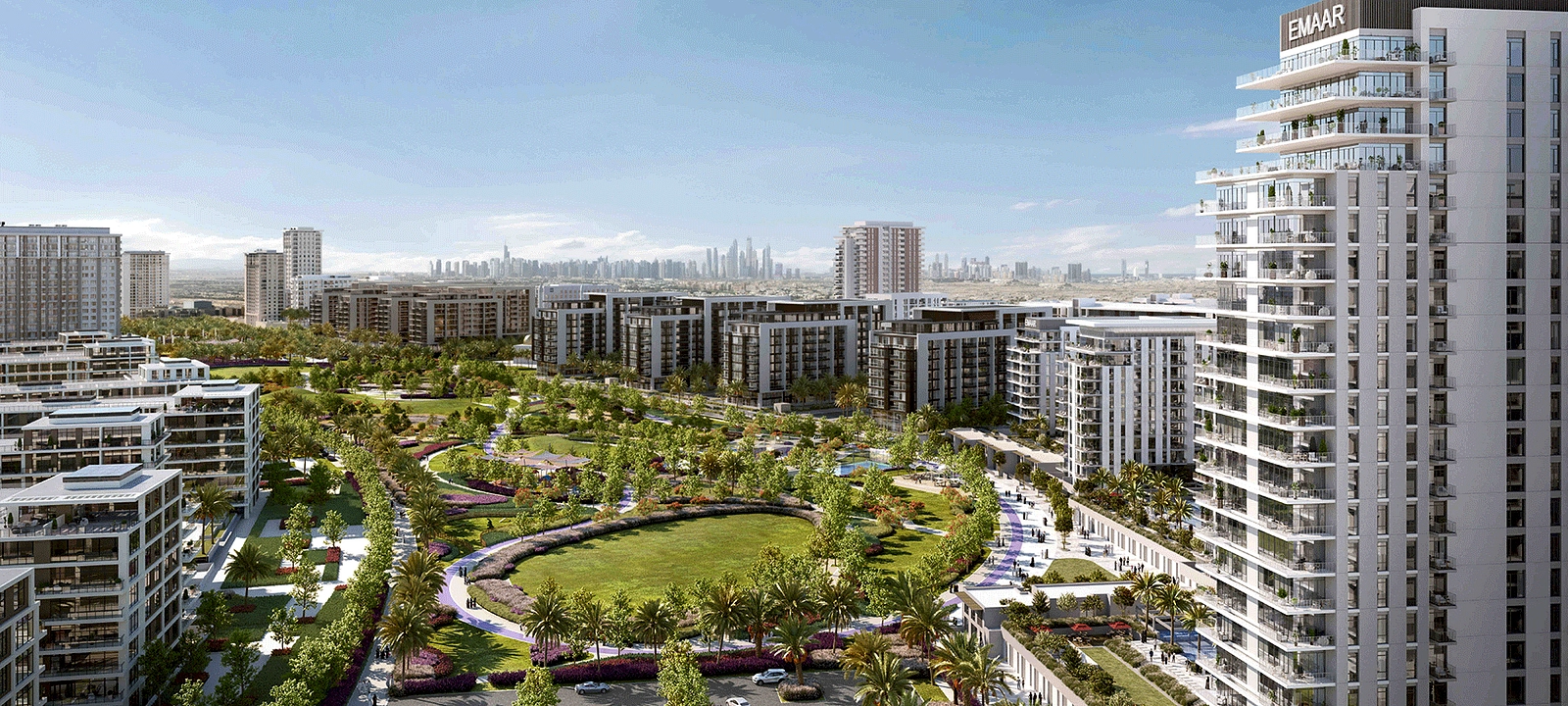
Buying an off-plan property in Dubai can begin with something as simple as choosing a unit and paying a reservation amount. The serious work, however, should happen before that money leaves your account.
A proper off-plan due diligence process should answer much more than whether you like the development.
Is the developer licensed? Is the project officially registered? Does it have the appropriate escrow structure? What exactly are you buying? Is the apartment competitively priced? What happens if the project is delayed? How much must you pay at handover? Can you sell before completion? How much similar property will reach the market around the same time?
These questions matter even more in the current market. Off-plan transactions accounted for about 74.8% of Dubai residential sales during H1 2026, with approximately 59,300 deals recorded. At the same time, Dubai delivered around 24,800 residential units during the first half, while market conditions became increasingly selective.
CBRE’s Q2 2026 review also describes Dubai residential property as moderating, with softer demand, lower transaction activity and new supply easing some pricing pressure.
That does not make off-plan property unattractive.
It means buyers should be more careful about which project, which unit and which price they accept.
Off-Plan Due Diligence Checklist at a Glance
| Check | What You Should Verify | Why It Matters |
|---|---|---|
| Developer | DLD licensing and track record | Reduces developer risk |
| Project registration | Official DLD project status | Confirms project legitimacy |
| Escrow account | Project-specific escrow details | Protects payment structure |
| Broker | RERA licence | Confirms authorised intermediary |
| Exact unit | Number, floor, size, layout, view | Determines what you actually own |
| Purchase price | Total price and price per sq ft | Helps prevent overpaying |
| Ready comparables | Nearby completed property | Gives real market evidence |
| Payment plan | Every instalment and deadline | Shows true affordability |
| SPA | Completion, default, resale and other terms | Governs the transaction |
| Oqood | Provisional registration | Protects registration position |
| Construction status | Official completion percentage | Helps verify progress |
| Future supply | Competing handovers | Affects rent and resale |
| Future rent | Conservative comparable estimate | Determines projected return |
| Service charges | Likely recurring ownership costs | Affects net yield |
| Mortgage plan | Future borrowing feasibility | Reduces handover risk |
| Exit strategy | Hold, rent or resell | Determines what type of property suits you |
The best time to answer these questions is before reserving, not after signing the SPA.
1. Check Whether the Developer Is Licensed
Start with the developer itself.
Dubai Land Department maintains an official Licensed Developers search facility that can be used to verify developers operating within its regulatory framework.
This should be one of the first checks.
Do not assume a developer is properly authorised because:
- it has a large showroom
- the advertisements look professional
- influencers are promoting it
- a broker says it is reputable
- the launch event is crowded
Regulatory verification and marketing presence are two different things.
Go beyond licensing
A licence answers:
Can this developer operate?
Your investment research should also answer:
How well does this developer build?
Look at previously completed properties and consider:
- construction quality
- finishing
- common areas
- lifts
- landscaping
- maintenance
- building management
- how the property looks several years later
Visiting an older completed development can tell you more about a developer than a showroom model.
2. Check Whether the Project Is Officially Registered
The developer may be licensed, but you should also verify the particular project.
DLD’s Project Status Enquiry allows customers to check a real estate project’s official details and completion percentage.
DLD also states that its real estate project registration service enables developers to register projects and open escrow accounts for qualifying off-plan sales.
Do not treat these two checks as interchangeable.
You want to confirm both:
developer
and:
project.
3. Check the Project Status Through DLD
If construction has already started, find out how far it has actually progressed.
DLD’s Project Status Enquiry exists specifically to provide information on project completion percentages and project details.
This is especially useful when you are comparing two developments.
For example:
Project A
Launch stage
5% complete
Handover several years away
Project B
65% complete
Handover significantly closer
Project A may provide:
- longer payment period
- broader unit choice
- potentially earlier pricing
Project B provides:
- more construction visibility
- shorter wait
- lower completion uncertainty
Neither is automatically better.
But they carry different risk profiles.
4. Verify the Escrow Account
The project’s escrow structure is one of the most important checks before buying off-plan property in Dubai.
Dubai’s Law No. 8 of 2007 establishes a framework under which payments made by off-plan purchasers or project financiers are deposited into an escrow account opened in the name of the relevant real estate development project.
DLD’s project-registration service also explicitly links registration of qualifying off-plan developments with opening the project’s escrow account.
What you should verify
Confirm:
- exact project name
- developer
- project number where applicable
- official escrow information
- payment instructions
Do not transfer a substantial amount simply because payment details arrive by WhatsApp or email.
Cross-check them.
What escrow does not guarantee
Escrow is important protection, but it does not guarantee:
- construction will finish exactly on schedule
- your apartment will appreciate
- your rental yield will meet projections
- your property will be easy to resell
It addresses the project-payment framework.
It does not turn every project into a good investment.
5. Check the Broker’s RERA Status
If you are buying through an agent, verify the broker.
DLD’s Licensed Real Estate Brokers service allows customers to search brokers licensed by RERA.
DLD also maintains a separate directory of licensed real estate brokerage companies.
This is a quick check and should become standard practice.
Verify the individual, not just the company
A brokerage company may be licensed.
You should still check the person representing you where appropriate.
DLD’s broker search supports searches using details including:
- broker
- office
- mobile number
- area
- ORN.
6. Check That the Project Can Legally Be Marketed Off-Plan
Dubai’s implementing regulations state that where a project is marketed through a broker, the project must be registered with DLD and the broker must be appropriately approved and licensed.
DLD also states that off-plan properties that are not registered with its Escrow Account Department cannot be showcased for Dubai property advertising.
This reinforces a useful principle:
A buyer should be able to connect the advertisement to a registered project, developer and authorised sales channel.
7. Check the Exact Unit You Are Buying
Do not stop at the development name.
An excellent project can contain mediocre units.
Verify your exact:
- unit number
- tower/building
- floor
- property type
- bedrooms
- area
- balcony
- parking allocation where applicable
- orientation
- view
These details should be consistent across your reservation documents and SPA.
If you thought you were reserving a high-floor waterfront one-bedroom, that should be clearly identifiable in the paperwork.
8. Study the Floor Plan Carefully
A good floor plan can be more valuable than a few extra square feet.
Compare usable space.
Look for
- practical living room
- sensible bedroom dimensions
- wardrobe space
- storage
- efficient kitchen
- usable balcony
- sensible entrance
- privacy between bedrooms and living areas
Be careful with
- long corridors
- awkward corners
- oversized balconies
- unusually narrow bedrooms
- wasted entrance space
- difficult furniture placement
Future tenants and buyers pay for how a property feels and functions, not only its advertised square footage.
9. Check the Property’s Actual Size
Do not assume advertised area means entirely internal living space.
Ask how the property’s area is calculated and examine the floor plan carefully.
Consider:
- internal area
- balcony/terrace
- storage
- other included components
Suppose two apartments are both advertised around 800 sq ft.
One may have a huge balcony and comparatively small interior.
The other may provide much more usable indoor space.
They are not necessarily equal investments.
10. Check the Price per Square Foot
Headline price is only one valuation tool.
Calculate:
Purchase Price ÷ Property Area
Suppose:
Apartment A
Price: AED1.2 million
Area: 600 sq ft
Price per sq ft:
AED2,000
Apartment B
Price: AED1.35 million
Area: 800 sq ft
Price per sq ft:
AED1,687.50
Apartment B costs more overall.
But you are paying considerably less per square foot.
That does not automatically make B better because location, floor, developer and view still matter.
It simply gives you a better basis for comparison.
11. Compare the Price With Nearby Ready Property
This is one of the most important checks an off-plan investor can perform.
Imagine:
Off-plan one-bedroom:
AED1.6 million
Comparable ready apartment:
AED1.2 million
Premium:
AED400,000
The off-plan property costs about:
33.3% more.
Ask what you are receiving for that difference.
Possible valid reasons may include:
- larger unit
- superior location
- stronger developer
- significantly better specifications
- protected waterfront position
- rare layout
- newer building
But the reason should not simply be:
“The developer offers a great payment plan.”
Payment timing and property value are separate questions.
12. Compare the Project With Other New Launches
Ready property is only one benchmark.
Compare competing off-plan developments too.
Build a table like this:
| Factor | Project A | Project B | Project C |
|---|---|---|---|
| Price | AED1.2m | AED1.3m | AED1.45m |
| Area | 700 sq ft | 780 sq ft | 800 sq ft |
| AED/sq ft | AED1,714 | AED1,667 | AED1,813 |
| Handover | 2028 | 2029 | 2028 |
| Payment plan | 60/40 | 70/30 | 50/50 |
| Developer | A | B | C |
| View | Internal | Park | Water |
This forces the decision away from sales presentation and toward comparable value.
13. Check Whether the View Is Really Protected
Views can materially affect property values in Dubai.
Premiums are frequently attached to:
- waterfront
- park
- golf
- skyline
- landmark views
But an empty plot is not a protected view.
Study:
- master plan
- neighbouring parcels
- future phases
- planned building heights where available
A property overlooking vacant land today may overlook another tower at handover.
14. Check the Floor Premium
Developers often price higher floors at premiums.
That can be reasonable.
But calculate what you are actually paying.
Suppose:
Floor 12:
AED1.3 million
Floor 35:
AED1.45 million
Premium:
AED150,000
Ask whether future tenants or purchasers are likely to pay enough extra for the higher floor to justify that premium.
For an investment property, the most expensive unit is not automatically the most profitable.
15. Check the Full Payment Plan
Never evaluate an off-plan purchase using only the reservation amount.
Suppose:
Purchase price:
AED1.5 million
10% booking:
AED150,000
50% during construction:
AED750,000
20% handover:
AED300,000
20% post-handover:
AED300,000
Your real commitment is:
AED1.5 million
not:
AED150,000.
Before signing, know exactly:
- what is due immediately
- what is due each year
- what is due at handover
- what remains afterward
16. Check Whether Payments Are Date-Linked or Construction-Linked
This distinction can matter greatly.
Date-linked plan
Payments fall due on predetermined dates.
Construction-linked plan
Payments are linked to agreed project milestones or completion percentages.
DLD’s FAQ states that where an investor’s payment schedule is tied to project completion, the investor is entitled to know the completion percentage and can verify progress through official channels.
Make sure you understand which system applies to your SPA.
17. Check the Handover Payment Carefully
A large percentage at handover can create substantial liquidity risk.
Suppose:
Property price:
AED2 million
40% at handover:
AED800,000
Ask yourself now:
Where will that AED800,000 come from?
Possible sources could include:
- savings
- future income
- asset sale
- qualifying finance
What should not be the plan is:
“I will work it out later.”
18. Check Whether Your Mortgage Assumption Is Realistic
Financing can help at or around completion where a property and borrower qualify.
But do not treat future mortgage approval as guaranteed.
The current Central Bank framework states that the maximum LTV for property being purchased off-plan is 50%, regardless of purpose, value or purchaser category.
That is a regulatory ceiling.
Banks can still:
- approve less
- impose eligibility conditions
- decline a project
- decline a borrower
If mortgage financing is essential to making the handover payment, investigate the financing path well before signing.
19. Check the Sale and Purchase Agreement
The SPA is one of the most important documents in the transaction.
Do not focus only on the glossy payment-plan summary.
Review provisions relating to:
- exact property
- total purchase price
- instalments
- completion
- extensions
- handover
- purchaser default
- developer obligations
- assignment/resale
- notices
- area changes
- dispute procedures
For financially significant or unclear contractual terms, obtaining appropriate independent professional advice may be sensible.
20. Check When the SPA Must Be Provisionally Registered
DLD’s Initial Sale Registration service states that the SPA must be entered into the provisional register within 90 days from the date of signing.
The service is used for registering off-plan units or plots whose price has not yet been fully paid.
The issued document is a:
Provisional Registration e-Certificate.
This should not be treated as an optional administrative detail.
21. Check Oqood Registration
You will frequently hear provisional off-plan registration referred to as Oqood registration.
DLD’s current Initial Sale Registration service operates through the Real Estate Developers Portal — Oqood.
Make sure your transaction progresses beyond an internal developer booking record.
The formal registration framework helps establish the purchase within Dubai’s property system.
22. Check the Registration Fees
DLD’s current Initial Sale Registration service formally lists:
- seller: 2% of sale value
- purchaser: 2% of sale value
- Knowledge fee: AED10
- Innovation fee: AED10
- developer self-registration fee for provisional sale: AED1,000.
The SPA or commercial agreement should be checked to establish how applicable transaction expenses are allocated in your particular purchase.
Do not assume the advertised property price includes all registration costs.
23. Check Whether You Can Resell Before Handover
Some investors buy intending to exit during construction.
If that is part of your strategy, investigate it before signing.
DLD’s current FAQ states that assignment or resale before final registration can be possible after obtaining a No Objection Certificate from the developer.
But the practical conditions may vary by:
- developer
- SPA
- project
- amount already paid
- transfer procedure
Ask specifically:
What percentage must I have paid before I can sell?
Do not assume every project follows the same rule.
24. Check the Buyer-Default Clauses
Payment plans are contractual obligations.
Dubai’s legal framework contains procedures addressing purchaser default on off-plan contracts. Law No. 19 of 2020 amended the framework governing the Interim Property Register and purchaser contractual defaults.
The practical lesson for a buyer is simple:
Do not enter a payment schedule that only works if everything goes perfectly.
If your ability to continue depends on:
- rapid resale
- salary increases
- guaranteed mortgage approval
- immediate capital appreciation
the investment has additional financial risk.
25. Check the Construction Completion Risk
No off-plan purchase completely eliminates construction risk.
However, risk can differ dramatically between:
- launch-stage project
- project with foundations underway
- 50% completed building
- development close to handover
DLD’s Project Status Enquiry and Dubai REST provide official ways to monitor development progress.
Use them.
26. Check Dubai REST
Dubai REST is particularly useful for off-plan buyers.
DLD states that off-plan project information can include:
- project completion percentage
- actual project photographs
- escrow-account number
- payments due.
This gives buyers an official source alongside information provided by the developer.
For a multi-year investment, monitor the project throughout construction rather than checking only before purchase.
27. Check How Much Competing Supply Is Coming
A property may look excellent today but face very different competition when completed.
This matters particularly because Dubai’s supply picture is changing.
Cavendish Maxwell reported a record 24,800 residential deliveries during H1 2026, while CBRE says increasing supply is already contributing to easing pricing pressure.
Before buying an apartment scheduled for 2029, investigate what else may arrive between now and 2029.
Ask:
- how many nearby projects are under construction?
- how many apartments do they contain?
- what unit types dominate?
- when are they expected to complete?
28. Check the Number of Competing Units, Not Just Towers
Five projects could mean:
500 homes.
Or:
5,000 homes.
The number of project names alone is not enough.
DLD’s Real Estate Data resources include datasets covering developments, units, developers and other real estate information that can assist deeper market analysis.
For an investment apartment, competing units matter because those homes may eventually compete for:
- tenants
- buyers
- resale listings
29. Check Whether Your Unit Is Differentiated
High supply does not automatically make an area a poor investment.
But it makes differentiation more important.
Useful differentiators might include:
- better developer
- larger internal area
- lower acquisition price
- lower price per square foot
- corner layout
- park frontage
- waterfront
- genuinely protected view
- good position within the community
A generic one-bedroom apartment may face hundreds of near-identical competitors.
30. Check Realistic Future Rent
Do not accept a rental projection simply because it appears in a sales presentation.
If a AED1.2 million apartment is promoted with expected rent of:
AED96,000
the projected gross yield is:
8%.
Now test rent at:
AED80,000.
Gross yield becomes:
6.67%.
That difference can materially affect the investment.
Use comparable ready property to establish realistic assumptions wherever possible.
31. Check Net Yield, Not Only Projected Gross Yield
Gross rental yield is:
Annual Rent ÷ Purchase Price × 100
Net return needs to account for recurring expenses.
Suppose:
Purchase price:
AED1.2 million
Future rent:
AED84,000
Gross yield:
7%
Estimated annual expenses:
Service charges: AED12,000
Maintenance: AED3,000
Management: AED4,200
Vacancy allowance: AED3,000
Net operating income:
AED61,800
Simplified net yield against price:
5.15%
That is a very different investment from an advertised 7%.
32. Check Service Charges
Service charges can significantly affect apartment returns.
For completed jointly owned properties, DLD provides a Service Charge Index that allows users to check RERA-approved service fees. Its current enquiry interface includes the 2026 budget year.
For a future off-plan building, final service charges may not yet have a historical track record.
You can still compare:
- estimates provided for the project
- similar completed developments
- older buildings from the same developer
Do not ignore service charges simply because handover is years away.
33. Check Whether the Amenities Justify Their Cost
Amenities can help attract tenants.
But they also need to be maintained.
A project offering:
- several pools
- large landscaped areas
- concierge
- lounges
- cinema
- extensive gyms
- multiple common facilities
may be attractive.
It may also become expensive to operate.
The investment question is not:
Does the building have impressive amenities?
It is:
Will those amenities produce enough rental or resale value to justify their long-term cost?
34. Check the Handover Timeline Against Your Strategy
Imagine two similar apartments.
Property A
Handover in 12 months.
Property B
Handover in 42 months.
Property B may offer a longer payment plan.
Property A may begin producing rental income much sooner.
An income investor may value the shorter timeline.
A buyer accumulating capital over several years may prefer the longer one.
There is no universally correct choice.
35. Check Whether the Investment Works With Zero Appreciation
This is one of the best off-plan tests.
Assume:
Property value at handover = your purchase price.
Would you still want the property?
If yes, perhaps because:
- projected net rent is good
- location is strong
- property suits personal use
- you have a long holding period
then the investment does not depend entirely on speculation.
If the answer is:
“No, I only want it because I expect to sell it for 25% more,”
then the strategy carries greater market risk.
36. Check Whether You Can Hold Instead of Flip
Before buying, ask:
Could I complete the property and keep it if resale becomes difficult?
That is an important resilience test.
A buyer who can:
- complete payments
- take handover
- rent the property
- wait for a better resale market
has more options.
A buyer who must sell before handover has fewer.
37. Check the Exit Strategy Before You Buy
There are three common strategies.
Hold and rent
Focus on:
- realistic rent
- service charges
- tenant demand
- net yield
Sell after completion
Focus on:
- resale liquidity
- owner-occupier demand
- future competing supply
- building quality
Sell during construction
Focus on:
- assignment provisions
- developer NOC
- payment threshold
- future investor demand
The correct property can be different for each strategy.
38. Check the Current Market Rather Than Relying on Old Performance
Dubai has experienced several years of strong real estate growth, but investors should not automatically project previous gains into the future.
The latest H1 2026 Cavendish Maxwell data shows total residential sales value of AED221.4 billion, down 15.7% year on year, while off-plan remained the dominant transaction type.
CBRE similarly reports a moderation in Q2 2026 as additional supply improved buyer choice and softened pricing pressure.
This environment makes comparative due diligence more important.
Buyers can ask tougher questions.
39. Check Whether Marketing Claims Can Be Verified
Be particularly careful with claims such as:
- guaranteed appreciation
- guaranteed resale
- guaranteed mortgage approval
- guaranteed rental yield
- guaranteed view
- “last unit”
- “prices increase tomorrow”
Ask for evidence.
If a material claim affects why you are purchasing, it should ideally be supported by formal documentation rather than only a conversation.
40. Check Everything Before Paying the Reservation Amount
A reservation payment can create both financial and psychological commitment.
Once money is paid, buyers often become less willing to walk away.
That is why the strongest order is:
research first → verify → compare → calculate → review → reserve.
Not:
reserve → become emotionally committed → start researching.
A 10-Minute Off-Plan Red-Flag Test
Before going deeper, ask these ten questions:
- Can I verify the developer through DLD?
- Can I verify the project?
- Can I verify the escrow structure?
- Can I verify the broker?
- Is the unit clearly identified?
- Is the price competitive with ready property?
- Can I afford every instalment?
- Is the future rent assumption realistic?
- Is future supply manageable?
- Would I keep the property if it did not appreciate before handover?
Several “no” answers should slow the purchase process considerably.
Detailed Off-Plan Property Checklist
Before reserving an off-plan property in Dubai, verify:
- developer licensing
- developer track record
- completed developments
- project registration
- project status
- escrow-account details
- broker licence
- brokerage licence
- exact unit number
- building/tower
- property type
- floor
- orientation
- layout
- internal usability
- balcony
- advertised area
- parking
- current and future view
- neighbouring plots
- master plan
- total property price
- price per square foot
- ready-property comparables
- competing off-plan projects
- payment schedule
- construction-linked versus date-linked payments
- handover payment
- post-handover amount
- transaction/registration expenses
- SPA terms
- completion provisions
- purchaser-default provisions
- developer obligations
- assignment conditions
- developer NOC requirements
- Oqood/provisional registration
- official construction progress
- future supply
- expected tenant
- realistic rent
- estimated service charges
- projected gross yield
- projected net yield
- mortgage strategy
- liquidity reserve
- exit strategy
The project should make sense as a property investment before the payment plan makes it look convenient.
Frequently Asked Questions
What should I check first before buying an off-plan property in Dubai?
Start by verifying the developer and exact project through Dubai Land Department. Then check the escrow structure, broker, unit, price and SPA before making a substantial financial commitment.
How can I check if an off-plan project is registered?
DLD provides Project Status Enquiry for checking project completion and details, while its Real Estate Data services provide further project and developer information.
How do I verify a Dubai developer?
Dubai Land Department maintains an official Licensed Developers service. You should also research the developer’s completed projects and construction quality.
How do I verify the property’s escrow account?
Project and escrow information can be checked through DLD services, including Dubai REST and project-status resources. Dubai law requires qualifying off-plan purchaser payments to operate through the relevant project escrow framework.
How do I verify the real estate broker?
DLD maintains a searchable list of RERA-licensed brokers and a directory of licensed brokerage companies.
What is Oqood registration?
Oqood forms part of DLD’s provisional registration system for off-plan transactions. DLD’s current Initial Sale Registration service requires the SPA to be registered in the provisional register within 90 days of signing.
What document do I receive after initial registration?
DLD lists the issued document as a Provisional Registration e-Certificate.
Should I compare an off-plan property with ready property?
Yes. Ready properties provide evidence of existing prices, rents, service charges and building quality, making them a valuable benchmark for deciding whether an off-plan premium is justified.
Is price per square foot important?
Yes. It helps reveal value differences that total property prices can hide. It should be considered alongside layout, location, view, developer and quality.
What should I check in the payment plan?
Check the booking amount, all construction instalments, handover amount, post-handover obligations, payment dates or milestones and the total property price.
Can I get a mortgage on an off-plan property?
Potentially. The current CBUAE regulatory ceiling for mortgages on off-plan property is 50% LTV, although lenders can approve less and apply their own eligibility requirements.
Can I sell my off-plan property before handover?
Potentially. DLD’s FAQ says resale is possible after obtaining a No Objection Certificate from the developer, but the SPA and developer’s specific requirements should be checked.
How can I monitor construction?
DLD’s Project Status Enquiry and Dubai REST provide official project information. Dubai REST includes completion percentages, actual project photographs and escrow information.
How can I check service charges?
DLD’s Service Charge Index provides RERA-approved fees for completed jointly owned properties and currently supports the 2026 budget year.
Should I believe the developer’s projected rental yield?
Treat it as a projection rather than guaranteed income. Compare the figure with actual rents in comparable completed properties and calculate net return after expected expenses.
Is off-plan property still popular in Dubai?
Yes. Off-plan represented around 74.8% of Dubai residential transactions in H1 2026, although the wider market is becoming more selective as new supply enters.
The Final Check Before Buying Dubai Off-Plan Property
Buying off-plan successfully is less about finding the most exciting development and more about eliminating avoidable uncertainty.
Start with the developer.
Then verify the project.
Confirm the escrow structure.
Verify the broker.
Understand exactly which unit you are buying.
Study the layout and future view.
Calculate the price per square foot.
Compare the property with completed alternatives.
Compare it with competing launches.
Understand every instalment.
Read the SPA.
Confirm provisional registration.
Research future supply.
Calculate conservative rental income.
Include future ownership costs.
And decide how you will exit before you enter.
Dubai provides buyers with a substantial regulatory framework for doing many of these checks. Developers and projects can be verified through DLD, project completion can be monitored officially, RERA-licensed brokers can be searched, off-plan payments operate within a project escrow framework, and qualifying initial sales are provisionally registered.
But those protections address the transaction framework.
They cannot answer the investment question for you.
A properly registered apartment can still be overpriced.
A licensed developer can still launch a unit at an unattractive valuation.
A good payment plan can still leave an unaffordable handover balance.
And a beautiful project can still compete with thousands of similar apartments when completed.
Before paying the reservation amount, ask three final questions:
Would I buy this property if there were no flexible payment plan?
Would I still be comfortable owning it if its value were unchanged at handover?
Could I complete every payment if I were unable to resell during construction?
If the answer to all three is yes—and the regulatory, project and investment checks also stand up—the purchase starts from a much stronger position.
HAMZ International Real Estate can help buyers compare Dubai off-plan projects, examine project and developer information, analyse unit pricing and payment plans, compare ready-property alternatives and evaluate whether an opportunity fits their intended investment strategy.
Sources & Fact-Checking
Dubai Land Department — Initial Sale Registration
Official information on provisional registration, the Oqood channel, current initial-sale fees, the 90-day SPA registration requirement and provisional registration certificates.
Dubai Land Department — Project Status Enquiry
Allows buyers to check official project completion percentages and project information.
Dubai Land Department — Detailed Project Status
Provides access to the Project Status enquiry interface through DLD and Dubai REST.
Dubai Land Department — Licensed Developers
Official developer-verification directory.
Dubai Land Department — Register Real Estate Project
Supports the official project-registration process and establishment of an escrow account for qualifying off-plan sales.
Dubai Legislation Portal — Law No. 8 of 2007 on Escrow Accounts
Supports Dubai’s project-specific escrow framework for payments from off-plan purchasers and project financiers.
Dubai Land Department — Dubai REST
Supports access to completion percentages, actual project images, escrow-account details and purchaser payment information.
Dubai Land Department — Licensed Real Estate Brokers
Official RERA broker-verification service.
Dubai Land Department — Licensed Brokerage Companies
Official directory for checking real estate brokerage companies.
Dubai Land Department — Service Charge Index
Supports checking RERA-approved service charges for jointly owned properties.
Dubai Land Department — Service Charge Index Tool
Provides the project-level service-charge enquiry interface, including the current 2026 budget year.
Dubai Land Department — Frequently Asked Questions
Provides official guidance on initial registration, off-plan resale subject to developer NOC, construction progress and related buyer questions.
Central Bank of the UAE — Mortgage Loan Regulations
Supports the current maximum 50% LTV framework for property being purchased off-plan.
Cavendish Maxwell — Dubai Residential Market Performance H1 2026
Supports current residential-market data, including off-plan’s 74.8% transaction share and broader H1 2026 activity.
CBRE — UAE Real Estate Market Review Q2 2026
Supports the current moderation in Dubai’s residential market and the effect of new supply on pricing pressure.
Read Also: How to Choose a Dubai Off-Plan Property