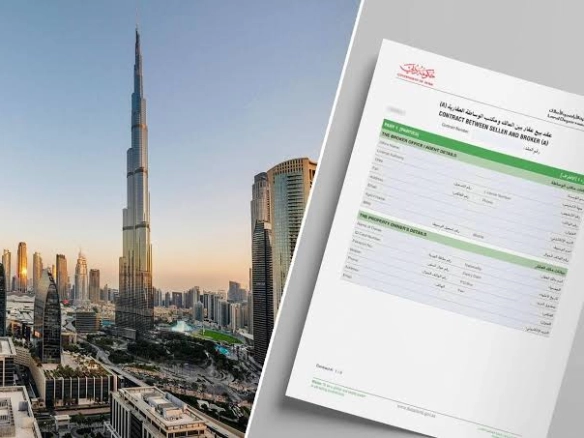

A title deed is one of the most important documents in a completed-property transaction. It identifies the registered property and records the ownership interest recognised by Dubai Land Department.
However, receiving a photograph or PDF copy of a deed from a seller does not complete the verification process. Before signing a contract or paying a deposit, buyers should independently verify the Dubai title deed and compare its details with the seller, physical property and proposed sale agreement.
This guide explains how the verification process works, what information to check and which warning signs should make you pause a transaction.
What Is a Dubai Property Title Deed?
A Dubai property title deed is an official ownership document issued following registration of a property interest with Dubai Land Department.
Depending on the property and ownership arrangement, it may contain information such as:
- Title deed number
- Year of issue
- Owner’s name
- Property type
- Plot or unit number
- Building or project
- Registered area
- Ownership share
- Related property identifiers
The title deed is different from an advertisement, reservation form, sale agreement or payment receipt. Those documents may support a transaction, but they do not independently prove registered ownership of a completed property.
Why Should You Verify a Dubai Title Deed?
Title deed verification helps establish whether:
- The document corresponds with official records
- The seller is connected to the registered ownership
- The property details match the unit being marketed
- The registered area matches the advertised size
- Multiple owners are involved
- The document may have been altered
- Additional checks are required before transfer
A convincing-looking document is not enough. Digital editing makes it possible to change names, unit numbers and other information on copied documents.
Verification should be completed independently through official Dubai Land Department services.
Information Needed to Verify the Title Deed
Before starting the online check, request the necessary details from the seller or broker.
These may include:
- Title deed number
- Title deed year
- Property type
- Owner’s full name
- Property or unit number
- Project or building name
The Dubai Land Department verification service provides options to validate the property or validate the owner and property together.
If a seller or broker refuses to provide enough information for verification, do not proceed until the concern has been resolved.
How to Verify a Dubai Property Title Deed Online
Step 1: Open the Official Verification Service
Access the Verify Title Deed service provided by Dubai Land Department.
Make sure you are using an official government service rather than an unfamiliar website that requests unnecessary personal or financial information.
Step 2: Select the Verification Option
The service may provide options such as:
- Validate Property
- Validate Owner and Property
Where owner information is available, checking both the owner and property provides an additional comparison point.
Step 3: Enter the Title Deed Number
Type the title deed number exactly as it appears on the document.
Pay attention to:
- Missing digits
- Additional numbers
- Altered formatting
- Blurred sections
- Numbers that appear digitally edited
A single incorrect digit can produce an unsuccessful verification.
Step 4: Select the Title Deed Year
Choose the year associated with the title deed.
If the year supplied by the seller does not produce a valid result, ask whether a more recent title deed was issued following a mortgage, ownership amendment or another registered transaction.
Step 5: Select the Property Type
Choose the relevant property type, such as an apartment, villa or land.
The property type must correspond with the document and the actual property being offered.
Step 6: Enter the Owner’s Name Where Required
For owner-and-property verification, enter the owner’s name as recorded on the title deed.
Names should be compared carefully because spelling, order and transliteration can vary. Minor formatting differences may need clarification, but significant name differences should not be ignored.
Step 7: Complete the Verification
Complete the security check and submit the information.
A successful validation confirms that the entered information corresponds with the system’s verification criteria. It does not eliminate the need to inspect the property, review the sale contract and complete the formal transfer process.
Step 8: Compare the Result With the Documents
Do not stop after receiving a successful result. Compare the verified details with:
- Seller’s identification
- Physical property
- Advertisement
- Contract F
- Property map
- Mortgage information
- Developer records
- Tenancy documents
All important information should tell the same story.
What to Check on a Dubai Title Deed
1. Owner’s Name
The owner’s name should correspond with the identification presented by the seller.
Check:
- Full legal name
- Spelling
- Name order
- Nationality or identification details where shown
- Ownership share
If the registered owner is a company, verify the company’s legal name and the authority of the person signing on its behalf.
2. Number of Registered Owners
Some properties have more than one owner.
Confirm:
- Number of owners
- Ownership percentage held by each person
- Whether all owners have agreed to sell
- Whether representatives hold valid authority
- How the sale proceeds will be handled
Do not assume that one co-owner can independently sell the entire property.
3. Property Type
The title deed should correctly describe the property as an apartment, villa, land parcel or another recognised property type.
Investigate any mismatch between the document and the property being marketed.
4. Unit and Plot Numbers
Compare the unit and plot information with:
- Door or unit number
- Building records
- Property map
- Developer statement
- Advertisement
- Sale contract
This check helps prevent confusion between similar units in the same building or development.
5. Project or Building Name
The project information should correspond with the actual location.
Be particularly careful when developments have similar names, several phases or multiple towers.
6. Registered Area
Compare the official area with the size used in the advertisement and price calculation.
Clarify whether the marketed size includes:
- Internal space
- Balcony
- Terrace
- Common-area allocation
- Garden
- Roof area
- Storage
- Parking
Use the registered measurement when comparing the property’s price per square foot with similar transactions.
7. Ownership Share
Confirm whether the seller owns:
- The entire property
- A percentage of the property
- A specific legal interest
- A leasehold or usufruct right
The sale contract should reflect the exact ownership interest being transferred.
8. Parking Allocation
Parking may appear in supporting property records or maps rather than as a prominent feature on the title deed.
Confirm:
- Number of spaces
- Parking identifiers
- Location
- Whether the space is exclusive
- Whether the space is included in the sale
Visit the parking area rather than relying entirely on the listing description.
Match the Dubai Title Deed to the Seller
A valid title deed does not automatically prove that the person communicating with you is authorised to sell the property.
Verify the Seller’s Identification
Compare the registered owner’s name with the seller’s:
- Emirates ID
- Passport
- Official contact details
- Sale contract
- Banking information
Do not accept unexplained differences between the ownership record and the person requesting payment.
Verify a Power of Attorney
A representative may act for the owner under a valid power of attorney.
Confirm that the document:
- Identifies the owner
- Identifies the representative
- Covers the relevant property
- Authorises the sale
- Remains valid
- Has completed any required authentication
- Covers the handling of sale proceeds where relevant
Consider obtaining independent legal advice before relying on a power of attorney, especially when the owner is outside the UAE.
Verify a Company Seller
When a company owns the property, request and review:
- Trade licence
- Company registration documents
- Memorandum or constitutional documents
- Shareholder information where required
- Board resolution
- Authorised signatory documents
- Power of attorney where applicable
The person signing Contract F and completing the transfer must have proper authority to represent the company.
Does Title Deed Verification Show a Mortgage?
Do not assume that basic title deed validation provides every detail about mortgages, liens or restrictions affecting a property.
Ask whether the property has an existing mortgage and obtain the relevant supporting documents.
For a mortgaged property, review:
- Mortgage provider
- Outstanding balance
- Liability letter
- Settlement amount
- Mortgage-release procedure
- Validity of bank documents
- Payment sequence
- Expected completion period
Mortgage settlement should be coordinated through the banks and authorised registration process. Do not rely on a promise that the seller will repay the loan after receiving the purchase money.
Check the Property Status Separately
In addition to verifying the title deed, buyers can use the Dubai Land Department Property Status Enquiry service to investigate available information using property details such as the area and land number.
Depending on the transaction, further checks may be needed to determine:
- Registration status
- Ownership type
- Transfer restrictions
- Mortgage position
- Developer requirements
- Outstanding obligations
- Whether the property can be transferred
A title deed check is one part of due diligence, not the entire process.
Confirm the Developer’s NOC Position
A developer-issued electronic no-objection certificate is generally required for transferring a completed property in a freehold development.
Before completing the purchase, check:
- Whether the seller can obtain the NOC
- Outstanding service charges
- Developer instalments
- Community penalties
- Unapproved property alterations
- NOC fee
- Processing period
- Validity period
A valid title deed does not guarantee that the developer will issue an NOC immediately.
Check Outstanding Service Charges
Request recent service charge statements and compare the charges with the RERA-approved Service Charge Index.
Confirm:
- Amount currently due
- Previous unpaid invoices
- Sinking-fund contributions
- Chiller charges
- Community penalties
- Special assessments
- Responsibility for settlement
Outstanding amounts may delay the NOC and transfer.
Verify the Property’s Occupancy Status
A title deed does not necessarily establish whether the property is vacant or rented.
For a tenanted unit, request:
- Tenancy agreement
- Ejari record
- Tenant’s name
- Annual rent
- Payment schedule
- Lease expiry date
- Security deposit
- Renewal history
- Copies of legal notices
- Outstanding rent information
The sale of a property does not automatically terminate an existing tenancy.
If you intend to occupy the property, understand the tenancy position and applicable notice requirements before buying.
Inspect the Physical Property
A verified title deed confirms registered information, not the condition of the property.
Arrange an inspection covering:
- Air-conditioning
- Electrical systems
- Plumbing
- Water pressure
- Leakage
- Mould
- Doors and windows
- Kitchen
- Bathrooms
- Flooring
- Balcony
- Appliances
- Parking
- Common areas
For villas, inspect the roof, drainage, water tanks, garden, boundary walls and swimming pool where applicable.
Also check whether extensions or structural alterations received the required approvals.
Off-Plan Properties May Not Have a Final Title Deed
An off-plan unit that is still under development may not yet have a final title deed.
Instead, the buyer should verify:
- Developer’s licensing status
- Project registration
- Project status
- Escrow account
- Sale and purchase agreement
- Unit details
- Payment plan
- Oqood or provisional registration
Dubai Land Department states that the signed off-plan sale and purchase contract should be registered in the provisional register within 90 days of signing.
A reservation form, payment receipt or marketing brochure should not be presented as a final title deed.
Warning Signs of a Suspicious Title Deed
Be cautious if you notice:
- Blurred identification numbers
- Inconsistent fonts
- Misaligned text
- Altered names
- Missing pages
- Property details that differ from the advertisement
- A seller who refuses online verification
- An owner name that does not match the seller
- An unverifiable power of attorney
- Pressure to pay before checking the document
- Requests to send money to a personal account
- A completed property offered without ownership documentation
- An off-plan reservation form described as a title deed
Pause the transaction until every inconsistency has been explained and independently verified.
What to Do After Verifying the Title Deed
Successful title deed verification should be followed by broader due diligence.
Complete these checks before transfer:
- Verify the seller
- Confirm the agency and broker
- Review the property status
- Inspect the property
- Check the tenancy
- Review service charges
- Confirm mortgage arrangements
- Obtain the developer NOC
- Review Contract F
- Protect the deposit
- Confirm payment instructions
- Prepare the required identification
- Complete registration through an authorised channel
After the transfer, check the new title deed immediately.
Confirm that it correctly records:
- Buyer’s full legal name
- Property details
- Ownership share
- Registered area
- Mortgage status where applicable
Report any discrepancy promptly.
Dubai Title Deed Verification Checklist
Before buying a completed Dubai property, confirm that you have:
- Obtained the title deed number
- Confirmed the title deed year
- Checked the property type
- Used the official verification service
- Matched the owner’s name
- Matched the unit and plot numbers
- Checked the registered area
- Confirmed the ownership share
- Verified every co-owner
- Reviewed any power of attorney
- Verified company authority where applicable
- Investigated any mortgage
- Checked the property status
- Confirmed parking
- Reviewed the tenancy
- Checked service charge balances
- Confirmed the NOC process
- Inspected the property
- Reviewed the sale agreement
- Verified the new title deed after transfer
Frequently Asked Questions
Can I verify a Dubai property title deed online?
Yes. Dubai Land Department provides an online Verify Title Deed service. The check may require the title deed number, year, property type and owner’s name.
Is a photocopy of a title deed sufficient?
No. A copied document should be independently checked against official records. It should also be matched with the seller’s identification and the physical property.
Can a valid title deed still have a mortgage?
A property can be subject to a mortgage. Buyers should investigate the mortgage position separately and review the required settlement and release procedures.
What if the seller’s name is different from the title deed?
Ask for a clear legal explanation. The person may be an authorised representative, but a valid power of attorney or other legal authority must be verified.
Can several people own one Dubai property?
Yes. A title deed may record multiple owners and their respective shares. Every required owner must participate directly or through valid legal authority.
Does an off-plan property have a title deed?
An off-plan unit may initially be recorded through Oqood or Dubai’s provisional property register. The final title deed is generally issued after completion and completion of the required registration process.
Does title deed verification replace a property inspection?
No. Verification confirms official property information. It does not reveal defects, maintenance problems or the condition of the building.
When does the buyer officially become the owner?
For a completed property, the buyer becomes the registered owner through the official transfer process and issuance of the title deed in the buyer’s name.
Final Thoughts
Verifying a Dubai title deed is a straightforward but essential part of buying property. It helps confirm that the ownership document corresponds with official records and that the seller’s information matches the property being offered.
However, title deed verification should be combined with seller checks, property inspection, mortgage review, service charge verification and careful contract review.
HAMZ helps buyers verify Dubai property records, evaluate transaction documents and approach the purchase process with greater clarity and confidence.