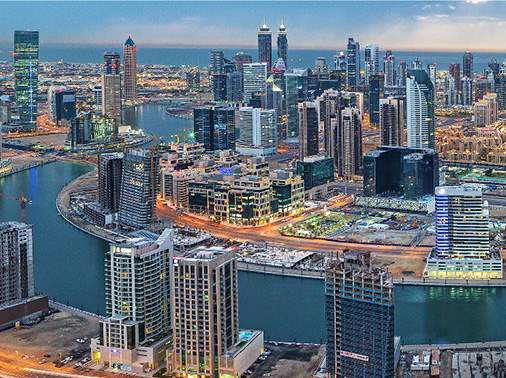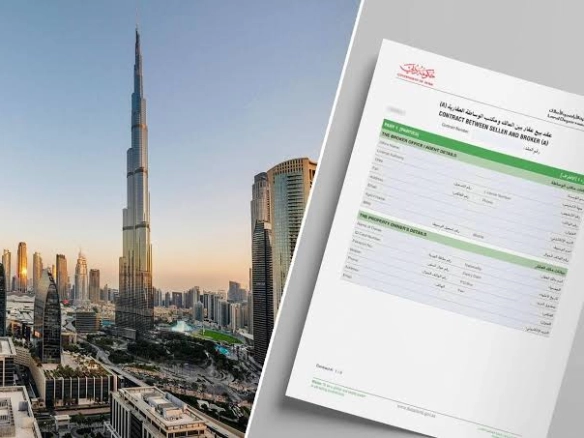

Buying property in Dubai from overseas is possible without UAE residency, an Emirates ID or a local business. International buyers can purchase freehold property in designated areas, complete much of the transaction remotely and receive a title deed registered in their name.
The process is comparatively accessible, but purchasing from another country creates additional risks. Buyers may be relying on online listings, virtual viewings, overseas bank transfers and representatives they have never met in person. Currency movements, financing restrictions and unfamiliar contracts can also change the real cost of an investment.
A successful overseas purchase therefore depends on more than choosing an attractive apartment. The buyer must verify the property, seller, developer, broker, payment instructions and registration process before transferring substantial funds.
This guide explains how to buy property in Dubai from abroad, including ownership rules, financing, fees, remote completion, off-plan purchases, due diligence and post-purchase management.
Can You Buy Property in Dubai Without Living in the UAE?
Yes. Foreign nationals who do not reside in the UAE may purchase property in Dubai’s designated freehold areas.
The UAE Government confirms that both expatriate residents and foreigners who live outside the UAE can acquire freehold ownership in areas authorised for foreign ownership. Freehold ownership generally gives the buyer ownership of the property and an interest in the land on which it stands, subject to the applicable development structure.
A non-resident buyer does not normally need:
- UAE citizenship
- A UAE residence visa
- An Emirates ID
- A locally incorporated company
- A UAE-based employment contract
A valid passport is ordinarily the primary identity document for an overseas individual buyer. The Dubai Land Department’s ownership-transfer requirements specifically accommodate passport copies for non-resident owners.
Foreign ownership is not automatically permitted across every part of Dubai. Buyers should confirm that the property is within a designated freehold area before signing or paying a reservation deposit.
Popular freehold locations include:
- Downtown Dubai
- Business Bay
- Dubai Marina
- Palm Jumeirah
- Dubai Hills Estate
- Jumeirah Village Circle
- Dubai Creek Harbour
- Mohammed Bin Rashid City
- Dubai South
- Dubai Harbour
- Bluewaters Island
- Dubai Islands
- Arabian Ranches
- Emirates Hills
- Jumeirah Golf Estates
- DAMAC Hills
The legal position should be checked against the specific plot and title rather than assumed from the community name alone.
Overseas Purchase at a Glance
| Question | General position |
|---|---|
| Can a non-resident buy in Dubai? | Yes, in designated foreign-ownership areas |
| Is a UAE visa required? | No |
| Is an Emirates ID required? | Not generally for a non-resident individual purchase |
| Can the transaction be completed remotely? | Often yes, subject to the transaction structure and current trustee procedures |
| Can an overseas buyer obtain a mortgage? | Potentially, but lender choice and loan-to-value ratios may be more restrictive |
| Is there annual property tax? | Dubai does not impose a conventional annual property tax on residential owners |
| Is there a purchase-registration fee? | Yes; the standard DLD sale-registration charge totals 4% of the sale value |
| Does property ownership automatically provide residency? | No; ownership and immigration status are separate |
| Can the property be rented out? | Yes, subject to applicable tenancy or holiday-home requirements |
These are general principles. Property type, nationality, sanctions screening, financing, ownership structure and the buyer’s source of funds can affect the process.
Why Overseas Buyers Choose Dubai
Dubai appeals to international property buyers for several reasons.
Freehold ownership
Foreign buyers can obtain registered ownership in a wide range of established and developing communities. The title is recorded through the Dubai Land Department rather than relying solely on a private contract with the seller or developer.
No conventional annual property tax
Dubai does not impose a recurring residential property tax comparable to those charged in many global cities. Owners must still budget for service charges, maintenance, insurance and property-management costs.
Rental demand
Dubai attracts residents, professionals, entrepreneurs and tourists from around the world. That creates demand across long-term residential rentals and professionally operated holiday homes.
Rental performance is highly property-specific. A waterfront address does not automatically produce a better net return than a well-selected apartment in a more affordable community.
International accessibility
Dubai International Airport and Al Maktoum International Airport support travel from major global markets. This matters to buyers who plan to use the property periodically or oversee it from abroad.
Residency possibilities
Some property owners may qualify for UAE residence options if they satisfy the current valuation and eligibility requirements. However, a buyer should never treat residency as automatic or base a purchase solely on a marketing promise about visas.
Ready Property or Off-Plan Property?
The first major decision is whether to buy a completed resale property or an off-plan unit under development.
| Factor | Ready property | Off-plan property |
|---|---|---|
| Physical inspection | Usually possible | Limited to plans, samples and show units |
| Rental income | Potentially available after completion | Begins only after handover |
| Payment | Usually required at transfer, with or without finance | Often divided across a payment plan |
| Price certainty | Based on an existing unit and current condition | May include a launch-stage or future-location premium |
| Completion risk | Low construction risk | Delay and execution risk remain |
| Financing | Generally easier to assess | Depends on project stage and lender approval |
| Service-charge evidence | Historical statements may be available | Future charges are estimates |
| Registration | Title transfer through DLD | Initial registration, followed by title issuance after completion |
Ready property may suit overseas buyers who prioritise immediate use, visible quality or rental income. Off-plan property can offer staged payments and access to new developments, but requires deeper scrutiny of the developer, project registration, escrow account and contract.
Step-by-Step: Buying Property in Dubai from Overseas
1. Define the purpose of the purchase
Clarify why you are buying before comparing developments.
Possible objectives include:
- Long-term rental income
- Short-term holiday-home income
- Capital appreciation
- Personal use
- Future relocation
- Portfolio diversification
- Property-linked residency eligibility
Each objective points toward different properties. A family villa may provide long-term value and personal utility but require more maintenance. A small apartment in a central district may be easier to rent and manage remotely.
Set a total budget that includes acquisition costs rather than looking only at the advertised price.
2. Choose the right ownership area
Confirm that foreign buyers may own the specific property. Do not rely exclusively on an agent’s verbal assurance or a general statement that the neighbourhood is “freehold.”
For investment purchases, compare:
- Historic transaction activity
- Current competing supply
- Rental demand
- Tenant profile
- Vacancy risk
- Service charges
- Road and public-transport access
- Future construction
- Building management
- Exit liquidity
For personal use, also consider schools, healthcare, travel time, noise, walkability and access to daily services.
3. Appoint a licensed broker
Use a broker whose licence and professional details can be verified through the Dubai Land Department.
Ask for:
- The brokerage’s trade name
- The agent’s broker-registration details
- The property’s permit number
- Written confirmation of commission
- Disclosure of any relationship with the seller or developer
- A clear explanation of who receives each payment
The DLD provides online facilities for checking licensed brokers, developers, title deeds, permits and project status. Verification should happen independently rather than through a link or screenshot supplied by the person being checked.
4. Shortlist and inspect the property
If possible, visit Dubai before buying. A short inspection trip can reveal issues that photographs and virtual tours do not show.
For ready property, inspect:
- Actual view and orientation
- Natural light
- Traffic and construction noise
- Internal condition
- Water damage or defects
- Air-conditioning performance
- Common areas
- Parking allocation
- Building occupancy
- Lift capacity
- Nearby plots and future construction
If travelling is impractical, appoint an independent surveyor or inspection company. Request a live video walkthrough rather than relying only on edited marketing footage.
For rented property, obtain the tenancy contract, Ejari details, rent-payment schedule and information about any notices or disputes. The buyer must understand whether the transaction involves vacant possession or the continuation of an existing tenancy.
5. Verify the seller and title
For a resale purchase, confirm:
- The seller’s identity
- The authenticity of the title deed
- The exact unit, plot and parking details
- Whether the property is mortgaged
- Whether the seller has legal authority to sell
- Whether any power of attorney is valid and sufficient
- Whether service charges or developer balances remain unpaid
Dubai Land Department provides a title-deed verification service. A conveyancer or qualified lawyer can also review the ownership records and transaction documents.
If the property is mortgaged, the transaction will require a mortgage-settlement and release process. The timing, liability letter, bank coordination and payment structure should be documented before the buyer commits.
6. Review the sale agreement
In a typical secondary-market transaction, the buyer and seller enter into the prescribed sale agreement, commonly associated with Form F.
The agreement should accurately address:
- Purchase price
- Deposit
- Completion deadline
- Financing conditions
- Vacant-possession terms
- Existing tenancy
- Furniture or other included items
- Mortgage settlement
- Developer NOC
- Default consequences
- Refund conditions
- Outstanding service charges
- Responsibility for transfer and agency fees
- Conditions relating to powers of attorney
Do not sign a blank or incomplete agreement. Important promises made by email, messaging app or telephone should be written into the contract where legally appropriate.
Independent legal review is particularly valuable when buying remotely, buying through a company, using a power of attorney or purchasing a tenanted or mortgaged property.
7. Pay the deposit securely
A resale buyer is often asked to provide a deposit after signing the sale agreement. The amount and holding arrangements should be clearly documented.
Before sending money:
- Confirm the recipient’s legal identity
- Verify bank details through a separate trusted channel
- Reject last-minute account changes until independently authenticated
- Obtain a formal receipt
- Confirm whether the funds are refundable and under what circumstances
- Avoid transferring money to an unexplained personal or third-party account
Email interception and payment-redirection fraud are international risks. A genuine-looking email chain is not sufficient verification for a large transfer.
8. Arrange financing if required
Some UAE banks provide mortgages to overseas buyers, but eligibility is lender-specific.
Banks may evaluate:
- Nationality and country of residence
- Age
- Employment or business income
- Credit history
- Existing liabilities
- Currency of earnings
- Property type and location
- Valuation
- Source of funds
- Intended use of the property
The UAE Central Bank’s mortgage framework sets maximum loan-to-value limits, but banks may apply more conservative internal limits to non-residents.
For expatriate owner-occupiers, the regulatory maximum for a first property below AED 5 million can reach 80%. This should not be interpreted as a guaranteed offer to an overseas buyer. Non-resident products frequently require a larger deposit and may carry different rates, fees and documentation requirements.
Obtain mortgage pre-approval before signing an unconditional agreement. Also account for:
- Property valuation fees
- Bank arrangement fees
- Mortgage-registration fees
- Life insurance
- Property insurance
- Early-settlement conditions
- Currency-conversion costs
A buyer earning in sterling, euros, rupees or another currency is exposed to exchange-rate movements because UAE property is priced in dirhams. The UAE dirham is pegged to the US dollar, so buyers should consider their home currency’s movement against the dollar as well as the dirham.
9. Obtain the developer’s NOC
For many completed properties, the master developer must issue a no-objection certificate before transfer.
The process typically confirms that:
- Service charges are settled
- There are no relevant developer balances
- The seller has met applicable obligations
- The developer does not object to the transfer
The NOC process, cost and validity period vary. The sale agreement should specify who pays the fee and who is responsible for clearing outstanding amounts.
10. Complete the transfer
A completed-property sale is registered through the Dubai Land Department and an authorised real estate registration trustee.
The DLD’s official sale-registration service permits transactions between the parties or their legally authorised representatives. The department has also introduced remote registration procedures involving document verification, audiovisual identity checks and secure payment mechanisms.
Remote availability and requirements should be confirmed with the authorised trustee for the specific transaction. The age, wording, attestation and scope of a power of attorney can determine whether it is accepted.
At completion, the transaction generally involves:
- Identity documents
- Original or verified title information
- Signed contractual documents
- Developer NOC where required
- Manager’s cheques or approved payment arrangements
- DLD and trustee fees
- Mortgage documents, if applicable
- A valid power of attorney if a representative attends
Once registration is completed, the buyer receives an electronic title deed or ownership certificate.
Can You Complete the Purchase Without Visiting Dubai?
Often, yes.
Three common approaches are available:
Remote registration
Depending on current service availability and transaction eligibility, the parties may complete identity verification and registration through remote procedures coordinated by an authorised registration trustee.
Power of attorney
The buyer may appoint a trusted person to act on their behalf. The power of attorney must be properly drafted, signed, legalised or attested where required, translated into Arabic if necessary and accepted by the relevant Dubai authorities.
Avoid giving unnecessarily broad powers. The document should clearly define whether the representative may:
- Sign the sale agreement
- Pay or receive funds
- Apply for an NOC
- Complete registration
- Receive the title deed
- Arrange a mortgage
- Lease or manage the property
Personal attendance
Some buyers prefer to travel for final transfer even when earlier stages are completed remotely. This can simplify banking, identity verification and last-minute document issues.
The best route depends on the property, seller, financing structure and the buyer’s location.
Buying Off-Plan Property from Overseas
Off-plan purchases can usually be handled remotely, but the buyer should independently confirm that the project and sale are properly registered.
Before paying a developer, verify:
- The developer is licensed
- The project is registered with DLD
- The advertised unit exists in the project records
- The project has an approved escrow account
- Payments are being directed to the correct project escrow account
- The payment plan matches the sale and purchase agreement
- The initial sale will be registered in the provisional register
- The anticipated completion date and delay provisions
- Assignment or resale restrictions
- Cancellation and default clauses
- Handover and defect procedures
- Estimated service charges
- Post-handover payment obligations
Dubai’s escrow framework applies to developers receiving money for off-plan sales. DLD’s Dubai REST service allows investors to view information such as project completion, actual project images, escrow account details and payments due.
Never transfer an off-plan instalment to an account simply because the salesperson says it is associated with the developer. Match the beneficiary and account information against independently verified project documentation.
How Much Does It Cost to Buy from Overseas?
The property price is only one part of the required capital.
Typical acquisition costs
| Cost | Indicative basis |
|---|---|
| DLD sale-registration fee | 4% in total under the official fee schedule |
| Registration trustee fee | AED 4,000 plus VAT for a sale of AED 500,000 or more; AED 2,000 plus VAT below AED 500,000 |
| Title deed | AED 250 |
| Apartment or villa map | AED 250 |
| Knowledge and innovation fees | Generally AED 10 each where applicable |
| Agency commission | Commonly negotiated as a percentage plus VAT |
| Developer NOC | Varies by developer and property |
| Conveyancing or legal review | Varies by complexity |
| Property inspection | Varies by size and scope |
| Mortgage fees | Valuation, arrangement, registration and insurance costs may apply |
| Currency and banking fees | Depends on the buyer’s bank and transfer method |
The DLD’s statutory schedule allocates a 2% registration charge to the seller and 2% to the buyer. In market practice, contracts frequently place the full 4% cost on the buyer. The signed agreement must state the actual allocation.
For a straightforward cash purchase, an overseas buyer might reserve approximately 6%–8% above the property price for acquisition expenses. A financed, furnished or legally complex purchase may require more.
Example budget
For a property priced at AED 2 million:
| Item | Illustrative amount |
|---|---|
| Purchase price | AED 2,000,000 |
| DLD fee at 4% | AED 80,000 |
| Trustee fee plus VAT | AED 4,200 |
| Title deed and map | AED 500 |
| Agency fee at 2% plus VAT | AED 42,000 |
| Inspection and legal costs | Variable |
| Bank and currency costs | Variable |
This example is not a quotation. NOC charges, mortgage costs, deposit arrangements and other expenses can materially change the total.
Taxes: Dubai and Your Home Country
Dubai does not impose a conventional annual property tax on residential ownership. Residential property treatment under UAE VAT rules also differs from commercial property: the first supply of a qualifying new residential building may be zero-rated, while subsequent residential supplies are generally exempt. Commercial property is ordinarily subject to 5% VAT.
An overseas buyer may still have tax obligations in their country of residence or citizenship.
Possible issues include:
- Declaring overseas rental income
- Capital gains tax on sale
- Wealth or net-worth taxes
- Inheritance or estate tax
- Foreign-asset reporting
- Tax residence implications
- Treatment of mortgage interest and expenses
- Company-ownership reporting
Dubai’s tax treatment does not override another country’s rules. Obtain cross-border tax advice before choosing whether to buy personally, jointly or through a company.
Property Ownership and UAE Residency
Buying property does not automatically make the buyer a UAE resident.
Property owners may qualify for a residence route if they meet the applicable conditions. The UAE’s Golden Residency framework identifies real estate investment of at least AED 2 million as a qualifying threshold, subject to documentary, ownership, financing and immigration requirements.
Rules can differ according to:
- Property valuation
- The buyer’s ownership share
- Joint ownership
- Mortgaged status
- Amount already paid
- Number of qualifying properties
- Property completion status
- Health insurance and immigration documentation
The buyer should confirm current eligibility with the relevant immigration and land-registration authorities before purchasing. A broker’s marketing statement should not be treated as visa approval.
Managing the Property from Another Country
Overseas ownership continues after transfer. Someone must supervise the property, collect rent, deal with tenants and respond to maintenance issues.
A property manager may handle:
- Marketing and viewings
- Tenant screening
- Tenancy contracts
- Ejari registration support
- Rent collection
- Maintenance coordination
- Move-in and move-out inspections
- Service-charge administration
- Utility coordination
- Owner reporting
Evaluate management fees against the actual scope of service. Low-cost management may exclude leasing commission, emergency call-outs, inspections, maintenance supervision or holiday-home operations.
For short-term rentals, the operator must follow Dubai’s holiday-home licensing and operational requirements. Gross nightly revenue should not be confused with net owner income after platform fees, management, cleaning, utilities, furnishing replacement, vacancy and tourism-related expenses.
Common Mistakes Overseas Buyers Make
Buying from marketing material alone
Renders and promotional videos cannot show actual noise, building condition, traffic or view obstruction.
Focusing only on gross yield
A quoted rental yield may exclude service charges, vacancy, management fees, repairs, furnishing and financing costs.
Using an unverified representative
Check the broker, company, permit and authority of every person involved.
Sending funds to the wrong account
Verify beneficiary details independently and treat any last-minute bank-account change as a high-risk event.
Signing before obtaining mortgage approval
An agreement may expose the buyer’s deposit if financing is later refused.
Ignoring service charges
Two similarly priced apartments can produce different net returns because of building-level operating costs.
Assuming every project qualifies for residency
Residency depends on official rules and the buyer’s circumstances, not simply the advertised sale price.
Choosing ownership structure too late
Personal, joint and corporate ownership can have different banking, succession, compliance and tax consequences.
Underestimating currency risk
A favourable property price can be offset by an adverse exchange-rate movement before completion.
Overseas Buyer Due-Diligence Checklist
Before signing or transferring money, confirm the following:
Buyer preparation
- Passport has sufficient validity
- Purchase budget includes all costs
- Funds are available and documented
- Mortgage pre-approval is in place if required
- Home-country tax advice has been obtained
- Preferred ownership structure has been reviewed
Broker and property
- Broker licence is verified
- Advertising permit is verified
- Property lies in an eligible ownership area
- Title deed is authentic
- Seller identity matches the title
- Unit and parking details are correct
- Mortgage status is known
- Service charges and outstanding balances are known
- Tenancy status is documented
Off-plan property
- Developer is approved
- Project is registered
- Escrow account is verified
- Initial registration is confirmed
- Payment schedule is understood
- Completion and default provisions are reviewed
- Assignment restrictions are understood
Completion
- Sale agreement reflects all negotiated terms
- Payment instructions are independently verified
- NOC requirements are clear
- Transfer appointment or remote procedure is confirmed
- Power of attorney is accepted where applicable
- Title deed is checked after registration
After completion
- Property insurance is arranged
- Management responsibility is assigned
- Utilities and community accounts are updated
- Tenancy documentation is registered where required
- Rental income and expense records are maintained
- Home-country reporting requirements are followed
Is Buying Dubai Property from Overseas a Good Investment?
It can be, but location alone does not determine performance.
The strongest overseas investments usually combine:
- A realistic entry price
- Sustainable end-user or tenant demand
- Manageable service charges
- Good building or community management
- Practical transport access
- Limited operational complexity
- A clear resale audience
- Conservative rental assumptions
Buyers should compare verified registered transactions, current competing listings and achievable rents. Asking prices show seller expectations; they do not prove completed market value. Similarly, advertised rents do not confirm what tenants have paid.
A sensible investment model should include:
- Expected annual rent
- Vacancy allowance
- Service charges
- Management fees
- Maintenance
- Insurance
- Furnishing replacement
- Mortgage costs
- Leasing or platform fees
- Currency exposure
Net yield is more useful than an attractive gross percentage.
Frequently Asked Questions
Can I buy a Dubai property using only my passport?
A valid passport is generally the central identification document for an individual non-resident purchaser. Additional compliance, banking, financing or power-of-attorney documents may be required.
Do I need a UAE bank account?
Not necessarily for every cash transaction, but a UAE account can simplify payments, mortgage servicing, rental income and property expenses. The trustee, developer, bank and property manager should confirm acceptable payment arrangements.
Can I get a Dubai mortgage while living abroad?
Potentially. Several banks offer non-resident financing, but eligibility, deposit requirements and accepted countries vary. Obtain pre-approval before entering an unconditional purchase contract.
Can I buy through a company?
Potentially, subject to DLD rules, acceptable jurisdiction and required company documentation. Corporate ownership should be reviewed with legal and tax advisers because it can create additional compliance and banking obligations.
Can I buy jointly with my spouse?
Yes, where the purchase and registration documents properly record the ownership shares. Consider succession, mortgage and home-country tax implications before deciding the percentages.
Do I need a lawyer?
A lawyer is not compulsory for every standard transaction, but independent legal or conveyancing advice is valuable for overseas, company-owned, mortgaged, tenanted or off-plan purchases.
How long does buying property in Dubai take?
A straightforward cash resale can complete relatively quickly once the agreement, NOC, payment and registration documents are ready. Mortgages, powers of attorney, overseas attestations and seller loan settlements can extend the timeline.
Can I rent the property while living overseas?
Yes. A licensed property manager can operate a long-term rental, while short-term rentals require compliance with Dubai’s holiday-home rules.
Does buying property guarantee a Golden Visa?
No. Property ownership and visa approval are separate. The investment must satisfy the current valuation and eligibility requirements, and the applicant must complete the immigration process.
What is the safest way to transfer money?
Use regulated banking channels, verify the recipient independently and follow the authorised trustee or registered developer’s documented procedure. Do not send money solely on the strength of an email or messaging-app instruction.
Final Verdict
Buying property in Dubai from overseas is legally possible and can be completed without becoming a UAE resident. Dubai’s freehold framework, electronic property services and remote transaction options make the market accessible to international purchasers.
Accessibility should not be confused with simplicity. An overseas buyer must verify the ownership, parties, project, payment route and contractual terms at every stage. The safest approach is to begin with a defined investment objective, use licensed professionals, model the complete cost and refuse to transfer funds until all essential checks are independently complete.
Read Also: How Non-Residents Can Buy Property in Dubai: Complete Guide
At HAMZ, we believe overseas property buyers should receive evidence, context and honest risk analysis—not just a list of available units. Every purchase should be assessed against the buyer’s objectives, complete acquisition costs, realistic net returns, legal position and long-term exit strategy.